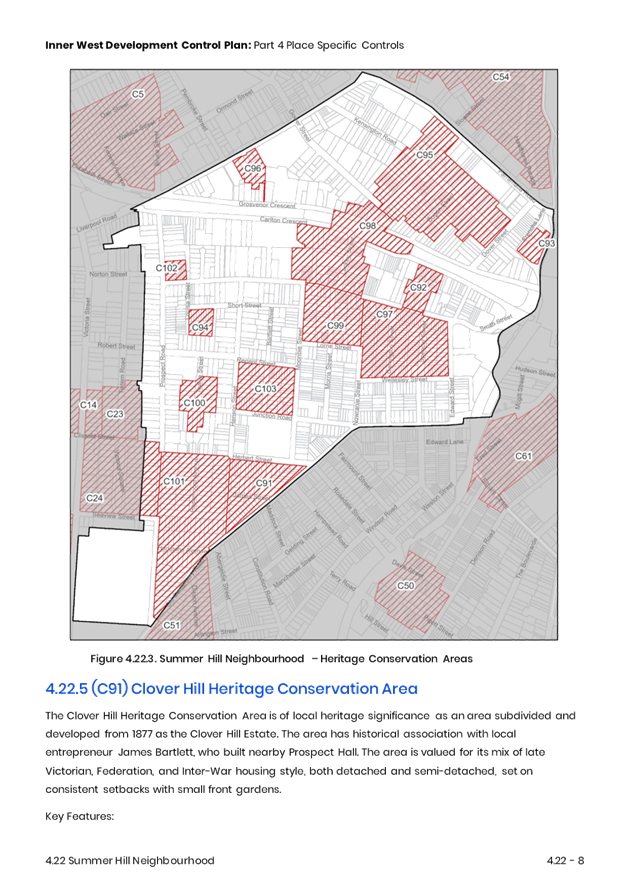
Extraordinary Council Meeting
TUESDAY 28 APRIL 2026
7:30 PM
|
|
Extraordinary Council Meeting 28 April 2026 |
Live Streaming of Council Meeting
In the spirit of open, accessible and transparent government, this meeting of the Inner West Council is being streamed live on Council’s website. Any part of this meeting that is held in closed session will not be recorded.
Council meetings are streamed live on Council’s website. This allows our community greater access to Council proceedings, decisions and debate.
Accessibility
Inner West Council is committed to ensuring people with a disability have equal opportunity to take part in Council and Committee Meetings. At the Council Chambers at Ashfield, there is a hearing loop service available to assist persons with a hearing impairment. If you have any other access or disability related participation needs and wish to know more, call 9392 5536.
Persons in the public gallery are advised that under the Local Government Act 1993, a person may NOT record a Council meeting without the permission of Council.
Any persons found recording without authority will be expelled from the meeting.
“Record” includes the use of any form of audio, video and still camera equipment or mobile phone capable of recording speech.
An audio recording of this meeting will be taken for the purpose of verifying the accuracy of the minutes.
Statement of Ethical Obligations
The Mayor and Councillors are bound by the Oath/ Affirmation of Office made at the start of the Council term to undertake their civic duties in the best interests of the people of the Inner West Council and to faithfully and impartially carry out the functions, powers, authorities and discretions vested in them under the Local Government Act or any other Act, to the best of their skill and judgement.
It is also a requirement that the Mayor and Councillors disclose conflicts of interest in relation to items listed for consideration on the Agenda or which are considered at this meeting in accordance with Council’s Code of Conduct and Code of Meeting Practice.
|
|
Extraordinary Council Meeting 28 April 2026 |
|
AGENDA |
1 Acknowledgement of Country
2 Apologies and Request for Remote Attendance
3 Statement of Ethical Obligations
4 Disclosures of Interest (Part 4 (Pecuniary Interests) and Part 5 (non-pecuniary conflicts of interest) of Council’s Code of Conduct)
5 Moment of Quiet Contemplation
6 Reports for Council Decision
ITEM Page
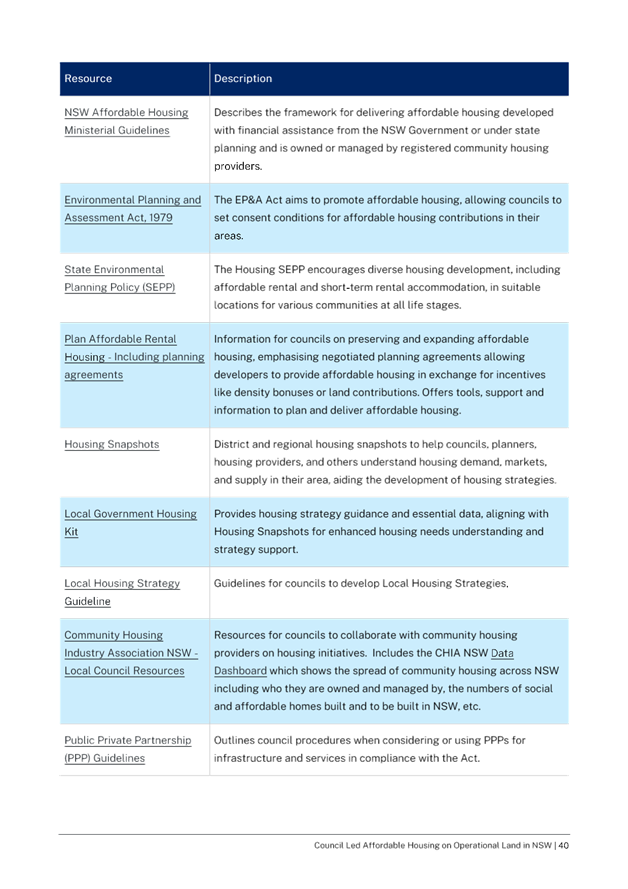
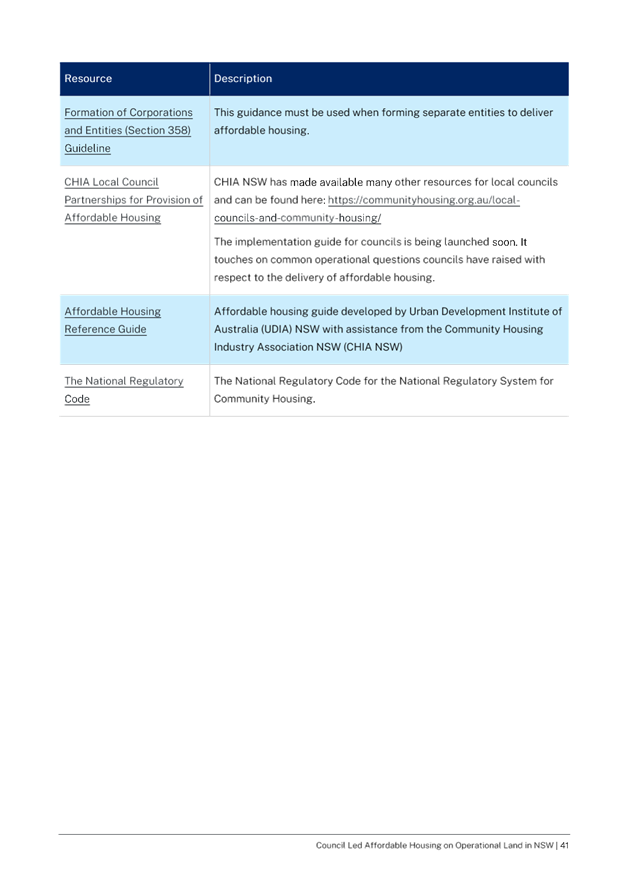
C0426(2) Item 1 Inner West Affordable Housing Policy 4
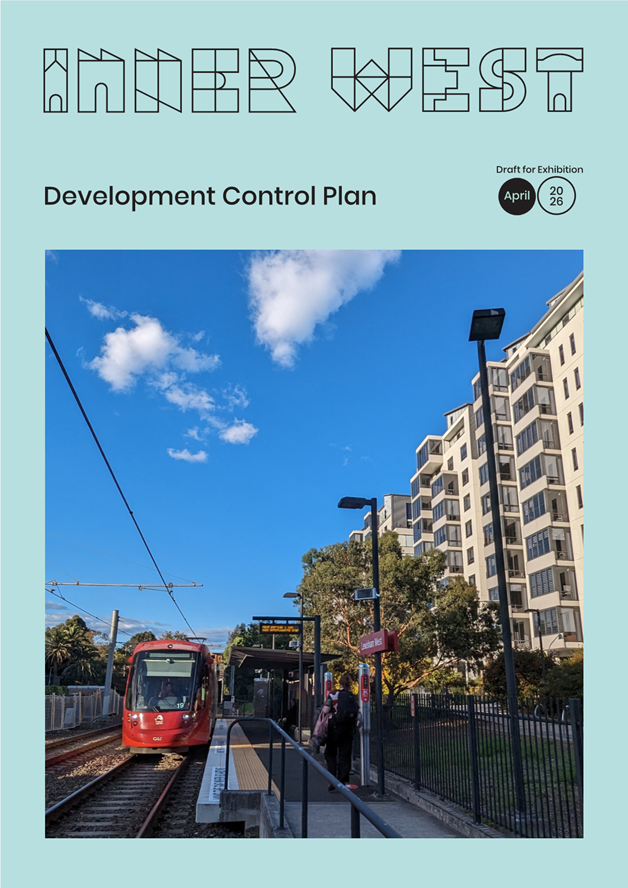
C0426(2) Item 2 Public Exhibition - Draft Inner West Development Control Plan 102
7 Reports with Confidential Information
Reports appearing in this section of the Business Paper are confidential in their entirety or contain confidential information in attachments.
The confidential information has been circulated separately.
ITEM Page
C0426(2) Item 3 Leichhardt Park Aquatic Centre - Project Update 800
|
|
Extraordinary Council Meeting 28 April 2026 |
Subject: Inner West Affordable Housing Policy
Prepared By: Simone Plummer - Director Planning
|
RECOMMENDATION
1. That Council publicly exhibit the draft Inner West Affordable Housing Policy for a period of at least 28 days beginning in May and seek feedback from relevant stakeholders and the community on the proposed policy.
2. That following the conclusion of the exhibition period, the draft Inner West Affordable Housing Policy, including Engagement Outcomes Report and any recommended changes to the policy, be brought back to Council at the August 2025 Council meeting.
|
STRATEGIC OBJECTIVE
This report supports the following strategic directions contained within Council’s Community Strategic Plan:
|
2: Liveable, connected neighbourhoods and transport 4: Healthy, resilient and caring communities |
|
|
EXECUTIVE SUMMARY
In compliance with the Code of Meeting Practice issued by the Office of Local Government in 2025, Council has not held any pre-meeting briefings in respect of the matters discussed in this report. This report is therefore the first time Council has been presented with the relevant information to inform its decision making on the matters in this report.
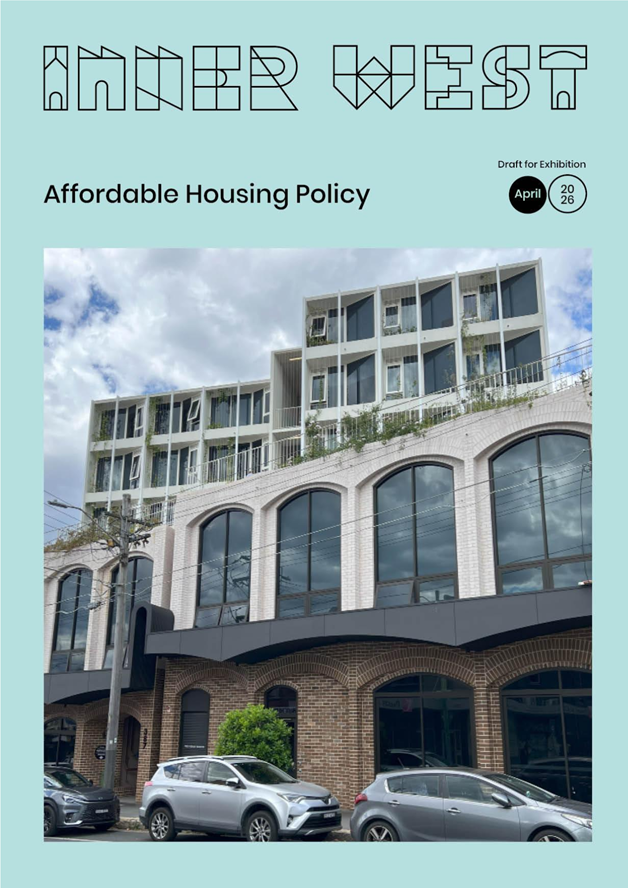
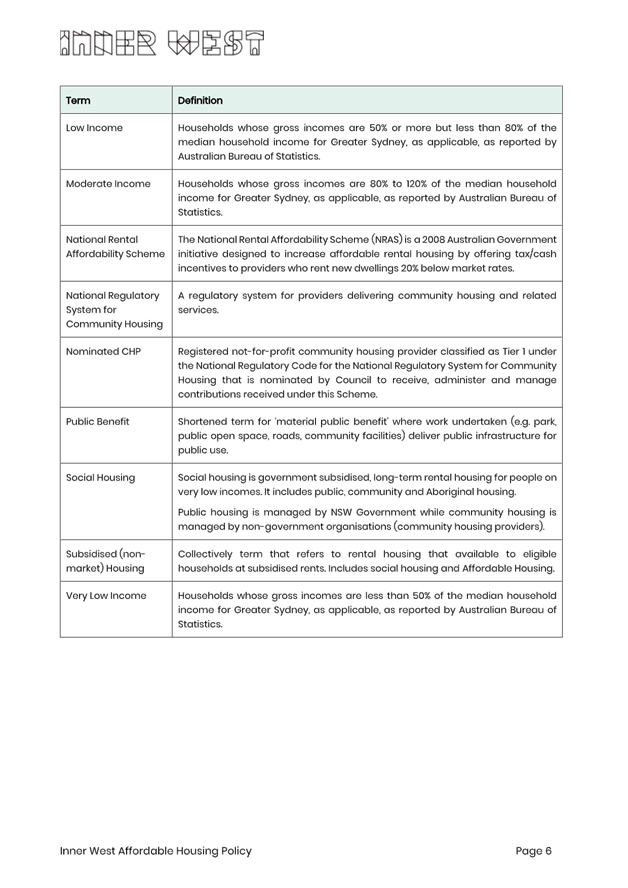
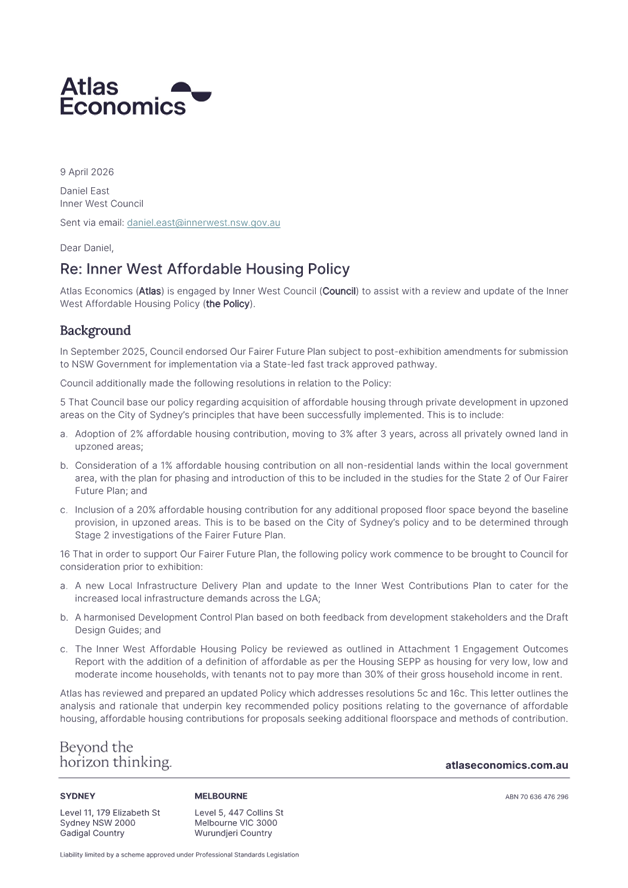
This report sets out the outcomes of Council’s review of the 2022 Inner West Affordable Housing Policy and presents a new draft Inner West Affordable Housing Policy (Attachment 1).
The report recommends that Council publicly exhibit the draft Policy for 28 days to seek feedback from the community and key stakeholders, before Council finalises the Policy and considers adopting it.
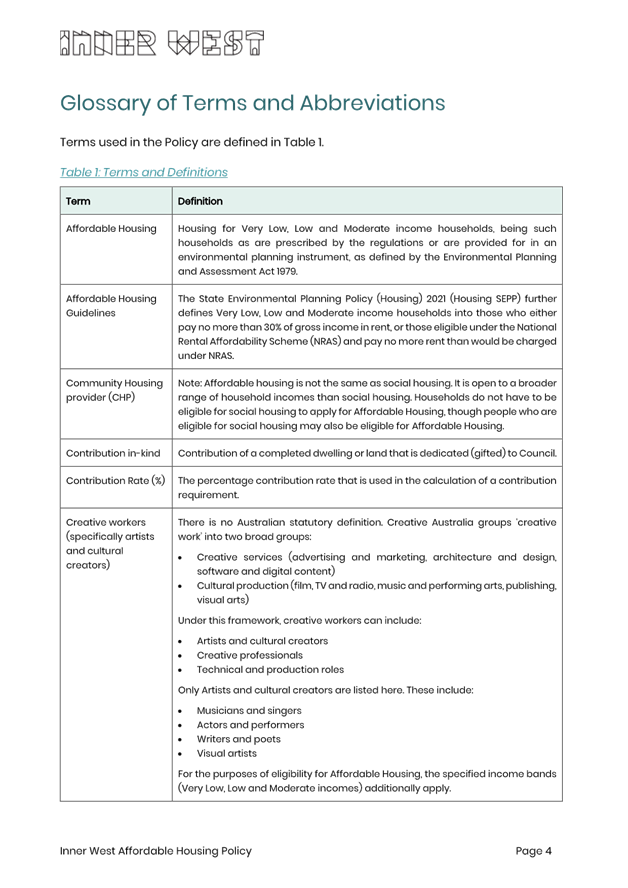
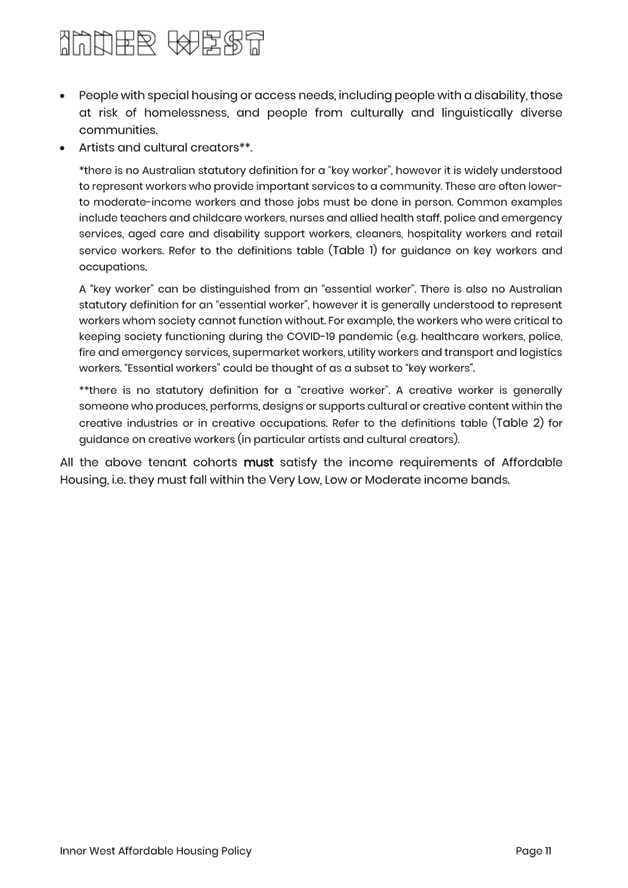
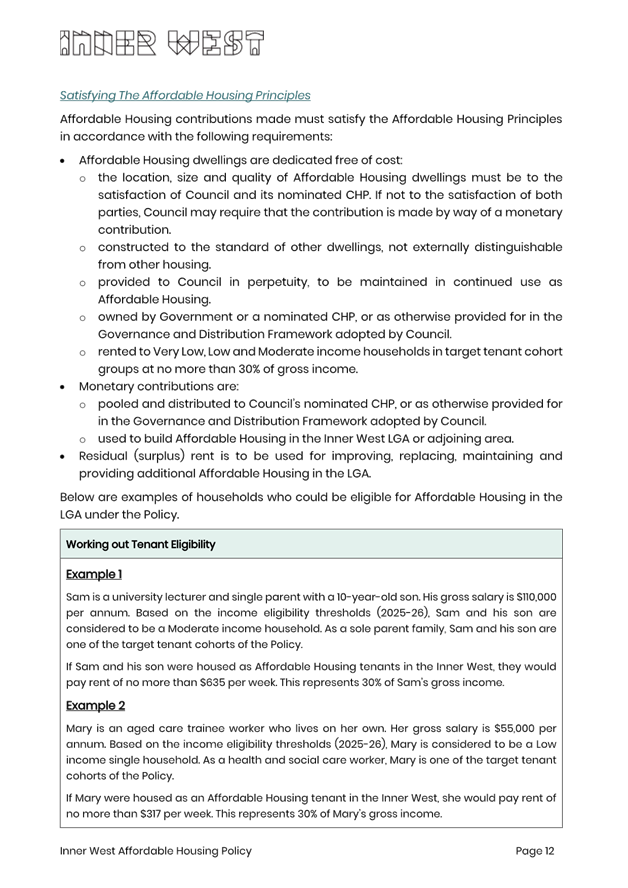
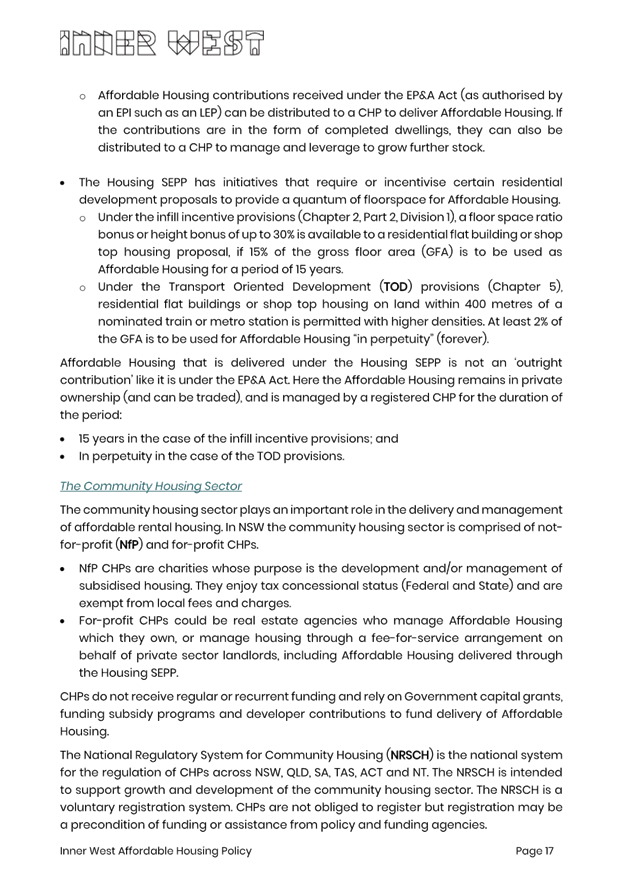
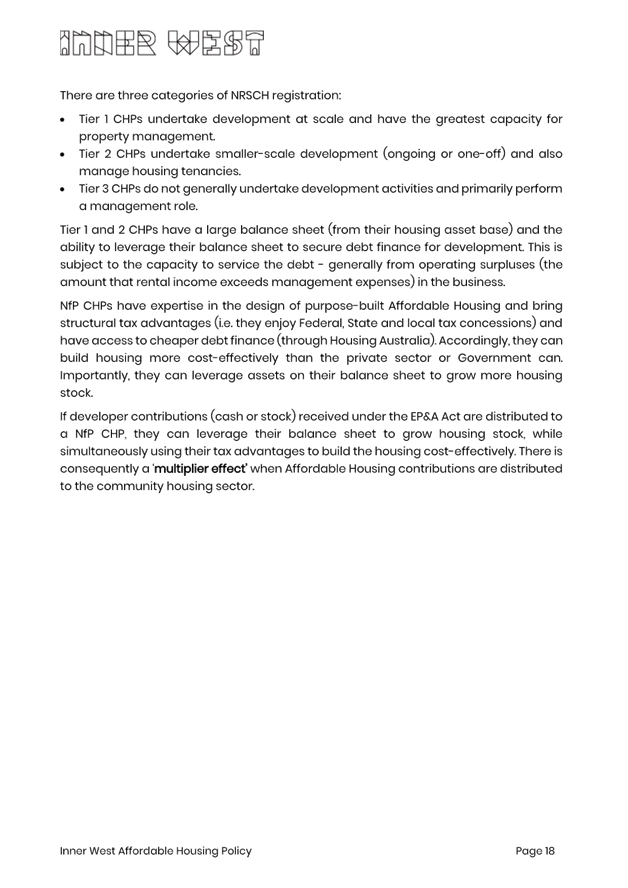
The draft Policy sets out Council’s objectives, principles and delivery priorities for increasing the supply of affordable rental housing for Very Low, Low and Moderate income households. It focuses on priority cohorts, including key/essential workers; older people (including older women); young people; families in need (including women and children escaping domestic violence); Aboriginal and Torres Strait Islander peoples; people with disability or at risk of homelessness; culturally and linguistically diverse communities; and artists and cultural creators.
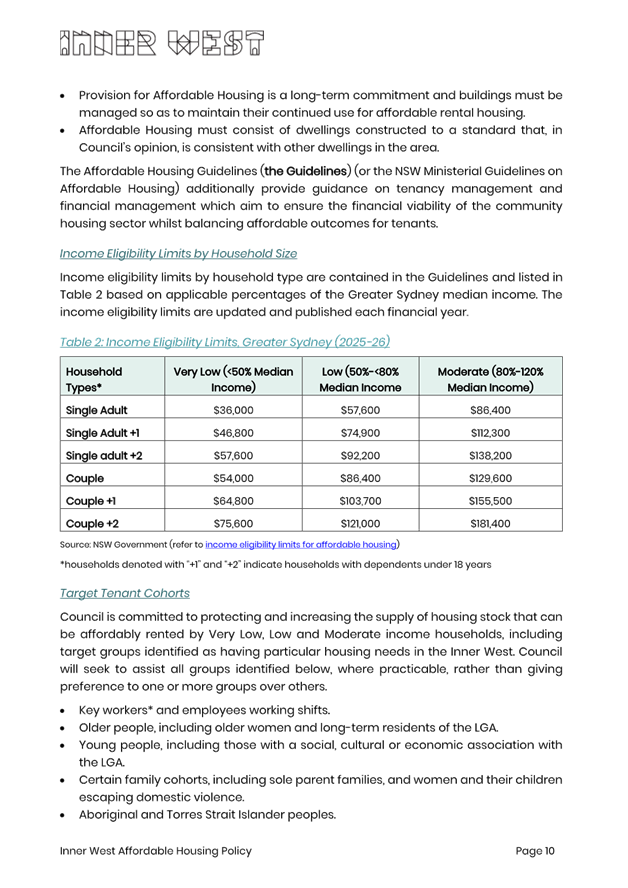
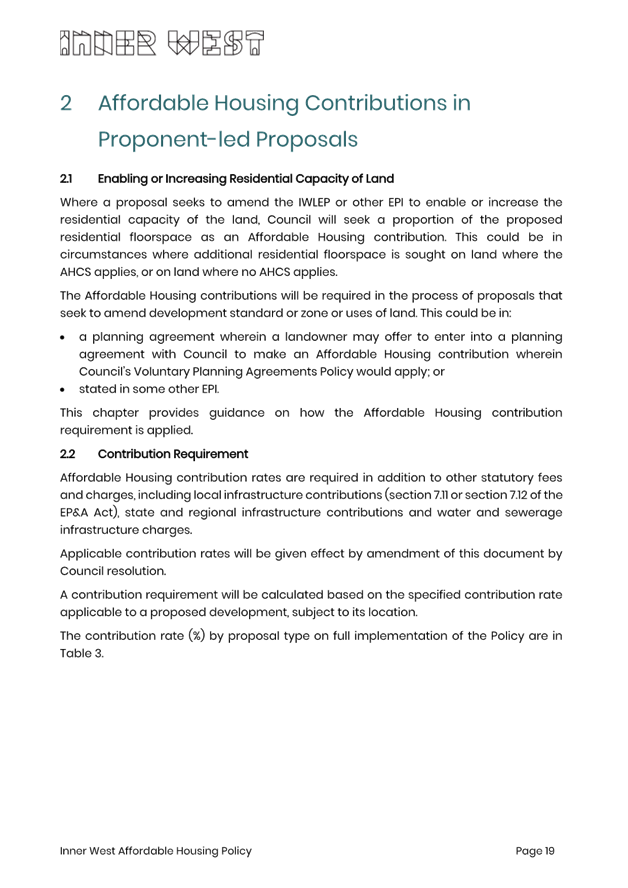
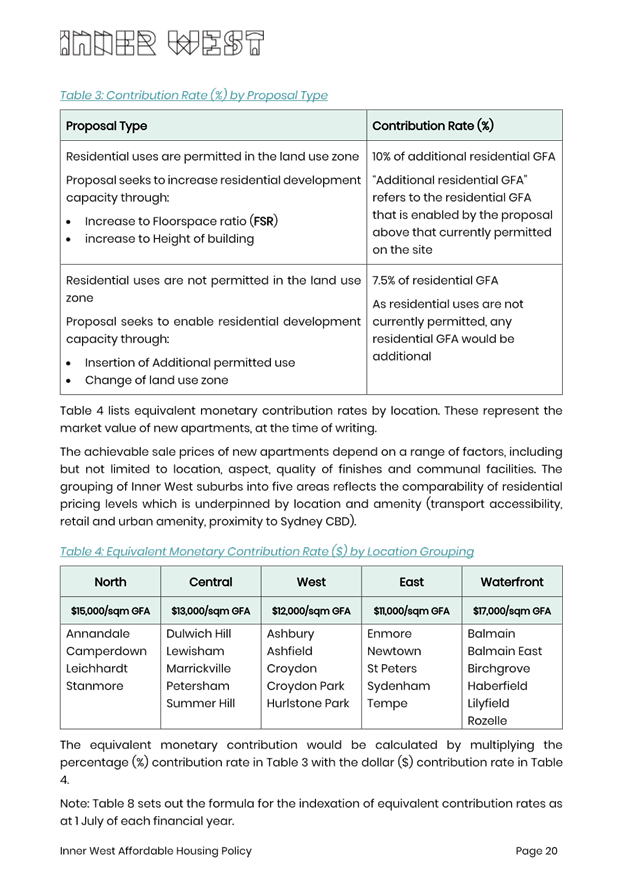
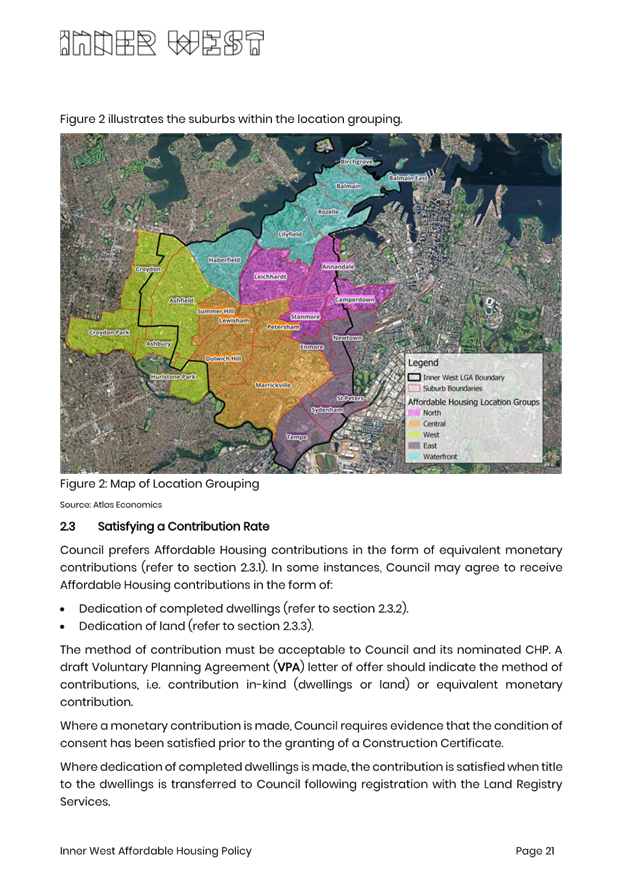
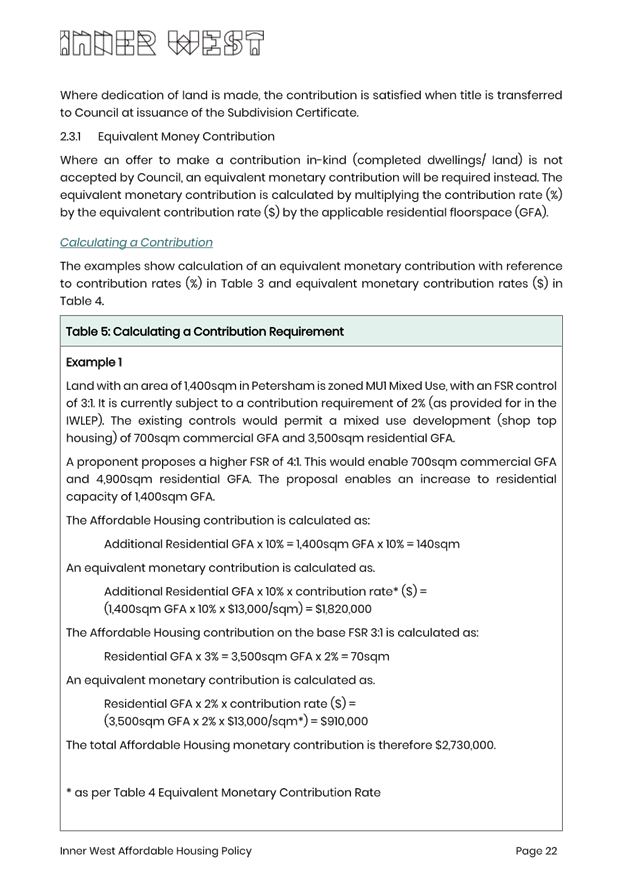
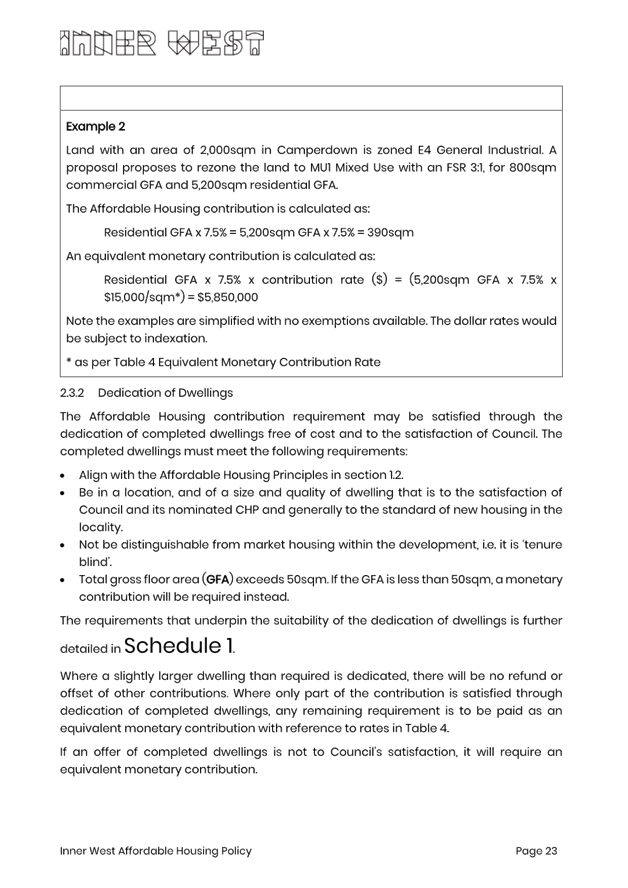
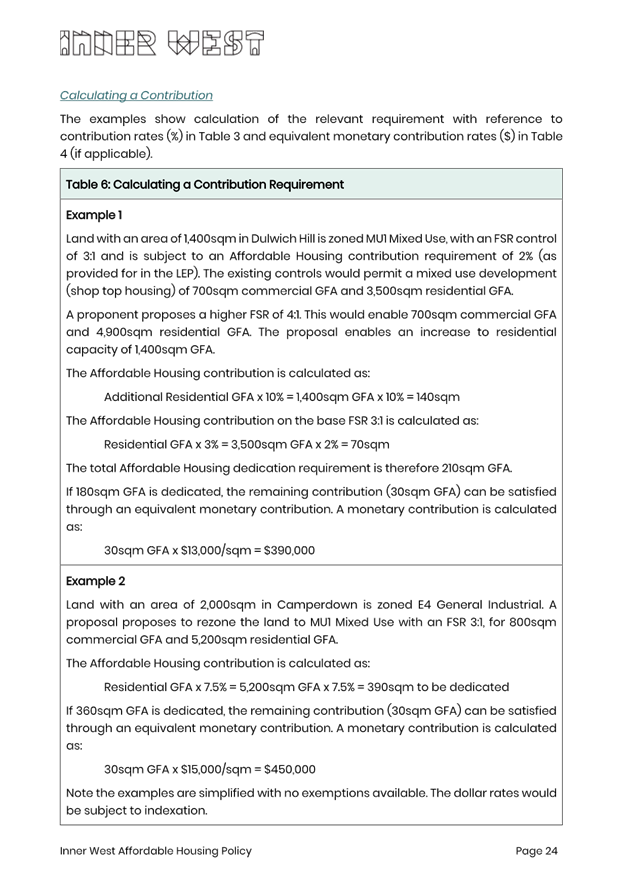
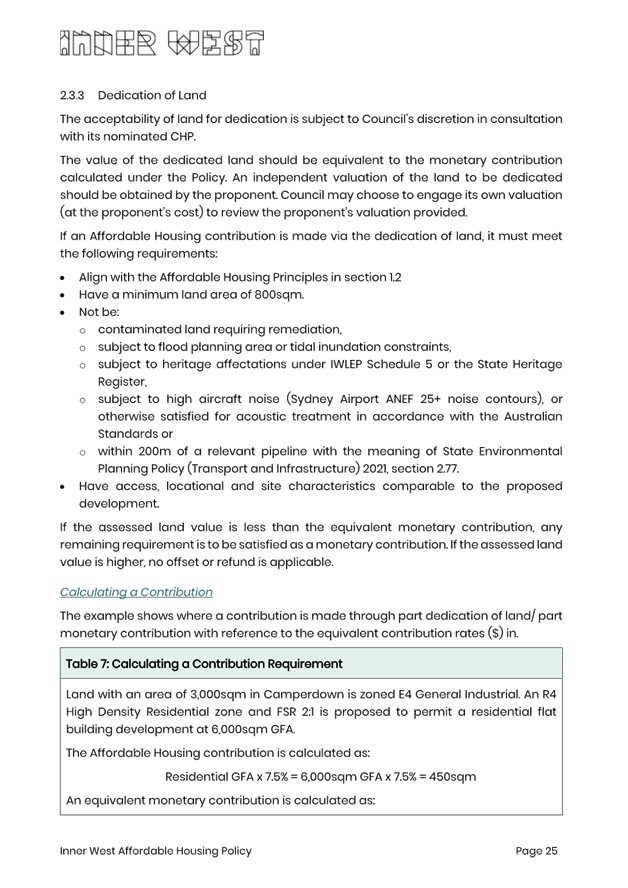
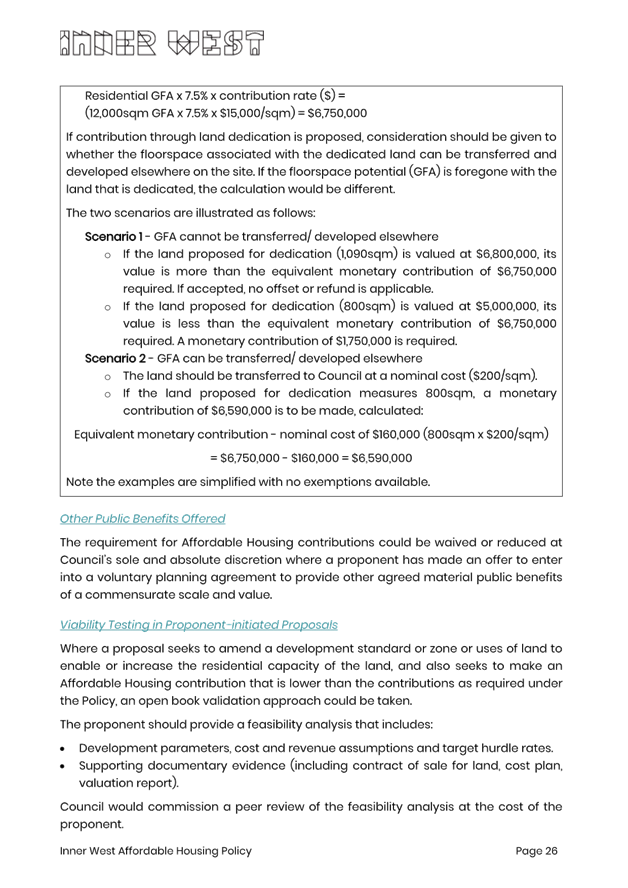
A central feature of the draft Policy is a proposed contributions framework to help secure Affordable Housing through Council/State-led precinct planning and proponent-led planning proposals. The draft Policy flags that Council will prepare an Affordable Housing Contribution Scheme (AHCS) for uplift land under precinct planning, based on up-to-date feasibility analysis. For proponent-led proposals that seek to amend Inner West Local Environmental Plan 2022 (IWLEP) to increase or enable residential capacity, the draft Policy proposes an Affordable Housing contribution of 10% of additional residential gross floor area where residential uses are already permitted, and 7.5% where residential uses are not currently permitted. Proponents may make contributions through a monetary payment, dedication of dwellings, dedication of land, or a combination of these options, subject to the draft Policy’s requirements.
BACKGROUND
At the Council meeting held on 30 September 2025, Council resolved the following in part:
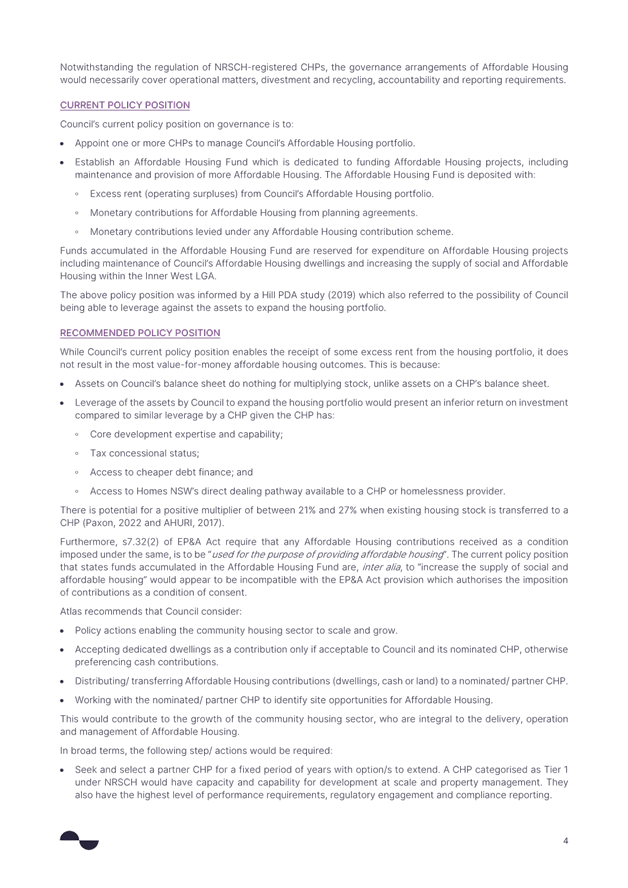
5. That Council base our policy regarding acquisition of affordable housing through private development in upzoned areas on the City of Sydney’s principles that have been successfully implemented. This is to include:
a) Adoption of 2% affordable housing contribution, moving to 3% after 3 years, across all privately owned land in upzoned areas;
b) Consideration of a 1% affordable housing contribution on all non-residential lands within the local government area, with the plan for phasing and introduction of this to be included in the studies for the State 2 of Our Fairer Future Plan; and
c) Inclusion of a 20% affordable housing contribution for any additional proposed floor space beyond the baseline provision, in upzoned areas. This is to be based on the City of Sydney’s policy and to be determined through Stage 2 investigations of the Fairer Future Plan.
16. That in order to support Our Fairer Future Plan, the following policy work commence to be brought to Council for consideration prior to exhibition:
a) A new Local Infrastructure Delivery Plan and update to the Inner West Contributions Plan to cater for the increased local infrastructure demands across the LGA;
b) A harmonised Development Control Plan based on both feedback from development stakeholders and the Draft Design Guides; and
c) The Inner West Affordable Housing Policy be reviewed as outlined in Attachment 1 Engagement Outcomes Report with the addition of a definition of affordable as per the Housing SEPP as housing for very low, low and moderate income households, with tenants not to pay more than 30% of their gross household income in rent.
At the Council meeting held on 17 February 2026, Council considered initial procedural advice on the preparation of the new Affordable Housing Policy and City of Sydney’s Affordable Housing Program (per Council’s 30 September 2025 resolution), Council resolved the following in part:
4. That the draft Affordable Housing Policy for community consultation be reported to the April 2026 council meeting.
Atlas Economics was appointed in January 2026 to assist in the review of the Inner West Affordable Housing Policy (adopted 2022) and preparation of new Affordable Housing Policy and Contributions Scheme. The new draft Policy is at Attachment 1.
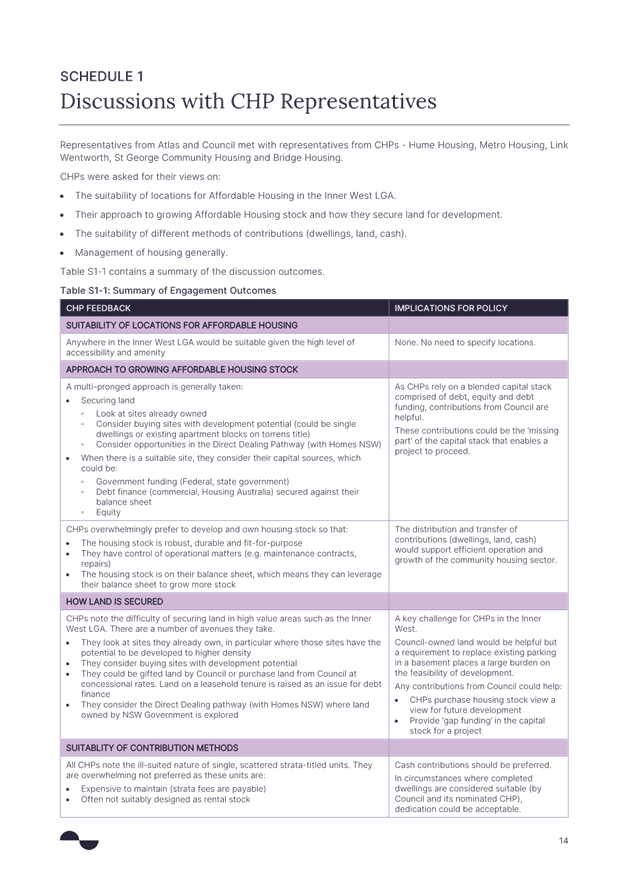
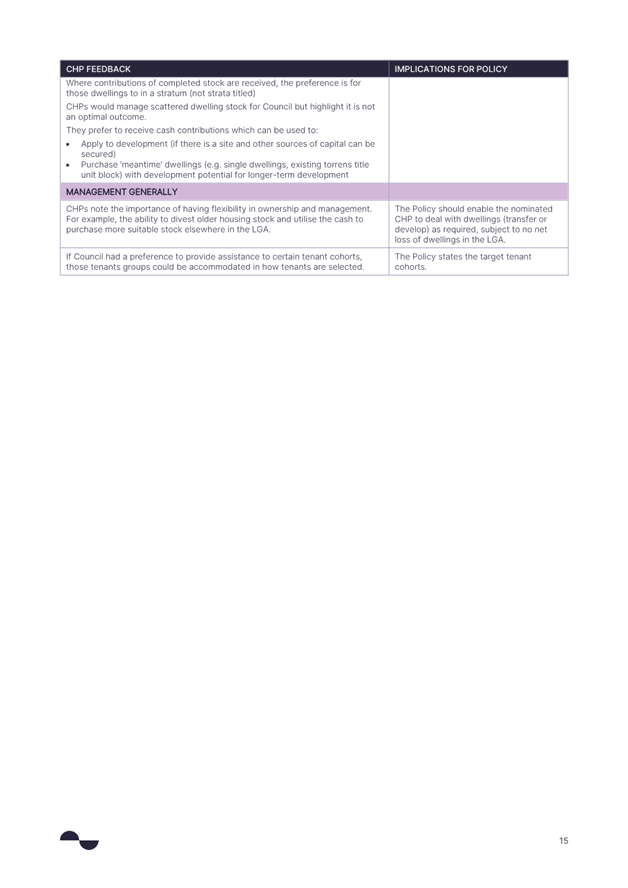
Informal Engagement with Community Housing Providers
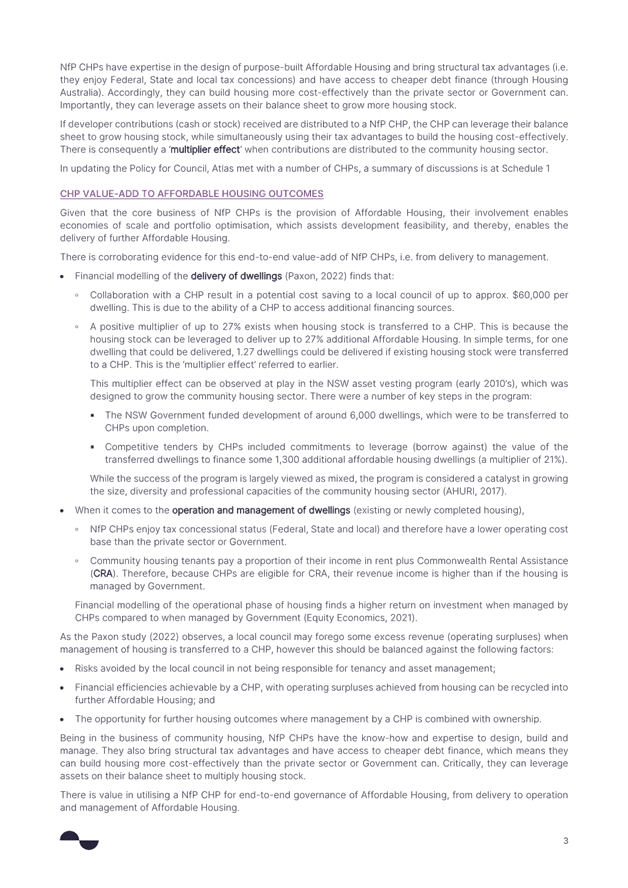
To assist the draft Policy preparation, Atlas held informal discussions with the following Community Housing Providers (CHPs) that have current or potential future involvements in the Inner West:
· St George Housing - Monday 23 February 2026
· Metro Housing - Monday 23 February 2026
· Link Wentworth - Monday 23 February 2026
· Hume Housing – Tuesday 17 February 2026
· Bridge Housing – Friday 27 February 2026
Topics covered included:
1. views on the suitability of locations for Affordable Housing,
2. approaches to growing Affordable Housing stock,
3. how CHPs secure land for development, and
4. the suitability of different methods of contributions (completed dwellings, monetary contributions and land).
Feedback from the CHPs on this is available in supporting analysis prepared by Atlas at Attachment 2.
Review of the City of Sydney’s Affordable Housing Program
As outlined in the officer report to Council’s 17 February 2026 meeting, Atlas’ review also includes an appraisal of City of Sydney’s Affordable Housing Program, specifically the following contribution rates:
· Non-residential developments
A rate of 1% on all developments containing non-residential uses, applied to the total non-residential floor area. Analysis of this will be incorporated into broader economic feasibility testing for Our Fairer Future Plan Phase 2.
· Planning Proposal Land
A rate on any land subject to a Planning Proposal for residential uplift, applied to the additional residential floor area achievable under the Planning Proposal. Currently, various rates of between 12 and 21% apply depending on location, but City of Sydney propose to change this to a flat rate of 20%.
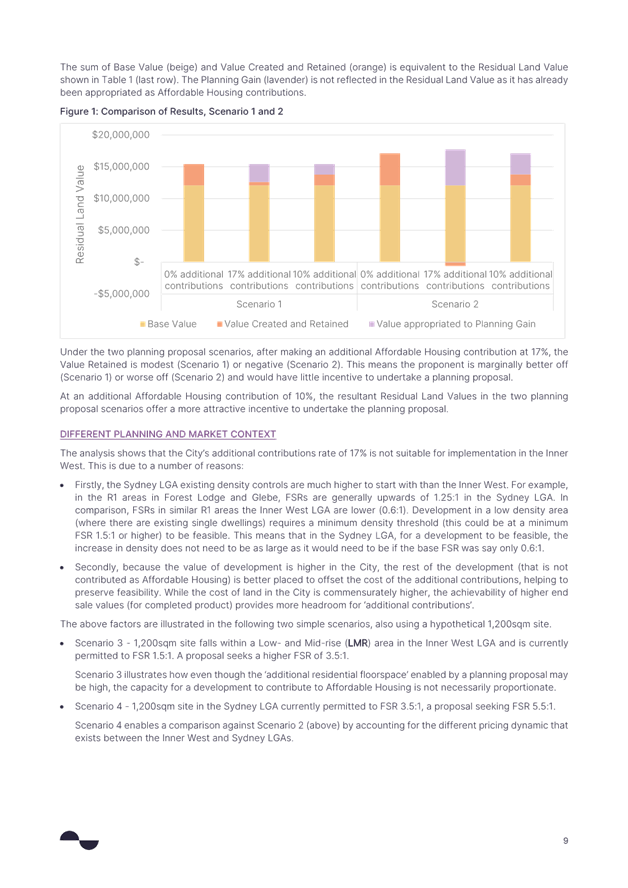
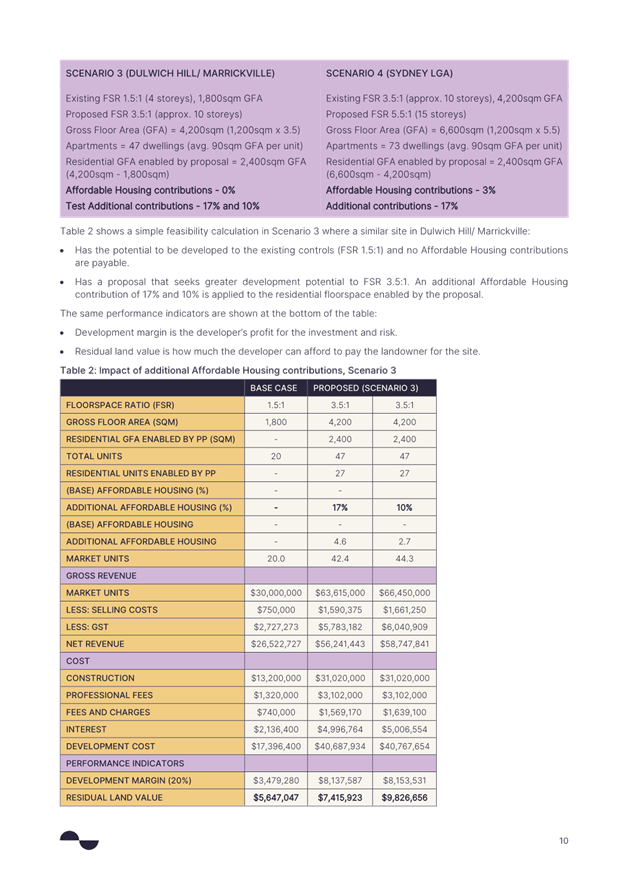
Atlas has undertaken notional testing of the proposed City of Sydney rate of 20% on nine example Planning Proposals and Housing Delivery Authority proposals in the Inner West. In summary, Atlas’ analysis does not support this particular rate for implementation in Inner West LGA, for the following reasons:
1. The City of Sydney’s existing planning controls are higher to start with than the Inner West.
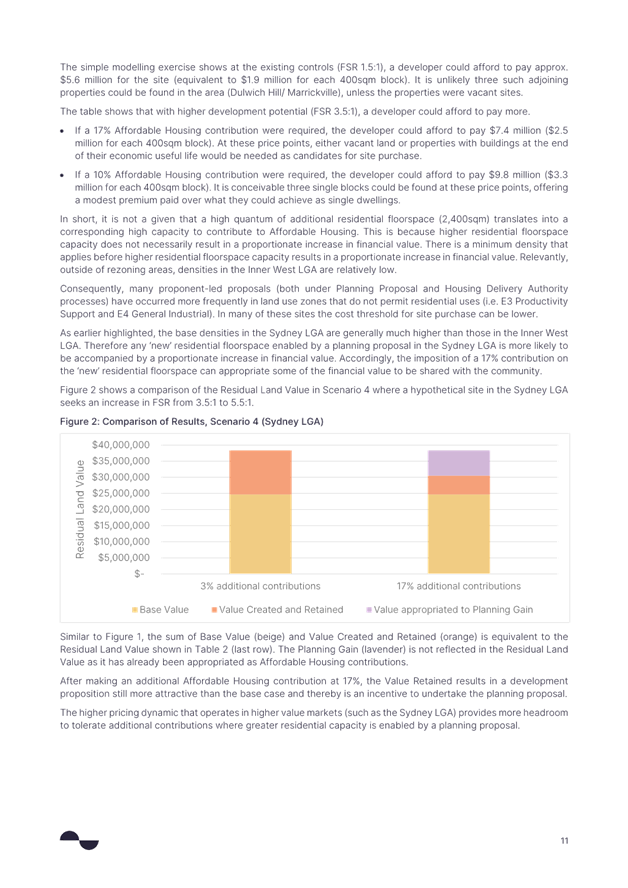
2. The value of development is naturally higher in the City of Sydney and therefore, the rest of the development (that is not dedicated as Affordable Housing) is better placed to offset the Affordable Housing contribution (20% of residential planning uplift), helping to preserve feasibility.
3. Many proponent-led proposals received in Inner West LGA are on sites where housing is currently prohibited (e.g. Zone E3 Productivity Support or E4 General Residential) and a rezoning is proposed as part of the proposal. A single flat rate of 20% would apply to all residential GFA proposed on the site and would likely be unachievable in these circumstances.
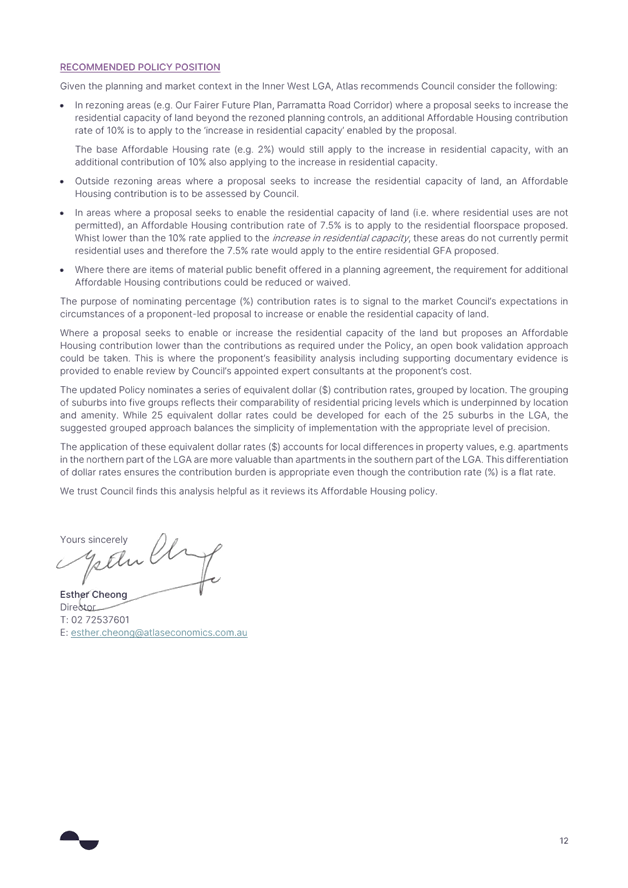
In zones where residential uses are not permitted, i.e. sites zoned E3 Productivity Support or E4 General Industry, a separate lower percentage has been proposed at 7.5%. While the percentage for industrial areas is lower than the 10% residential rate, these areas do not currently allow residential development and therefore the quantum of affordable housing will be higher because it will be applied across the entire residential component of the development. While they are flat rates that will apply to the local government area, the equivalent monetary contribution rate by location grouping takes account of local variations in land value. Any rate that is higher than 10% for residential or 7.5% for industrial areas will likely not be feasible.
Further information on this is available at Attachment 2.
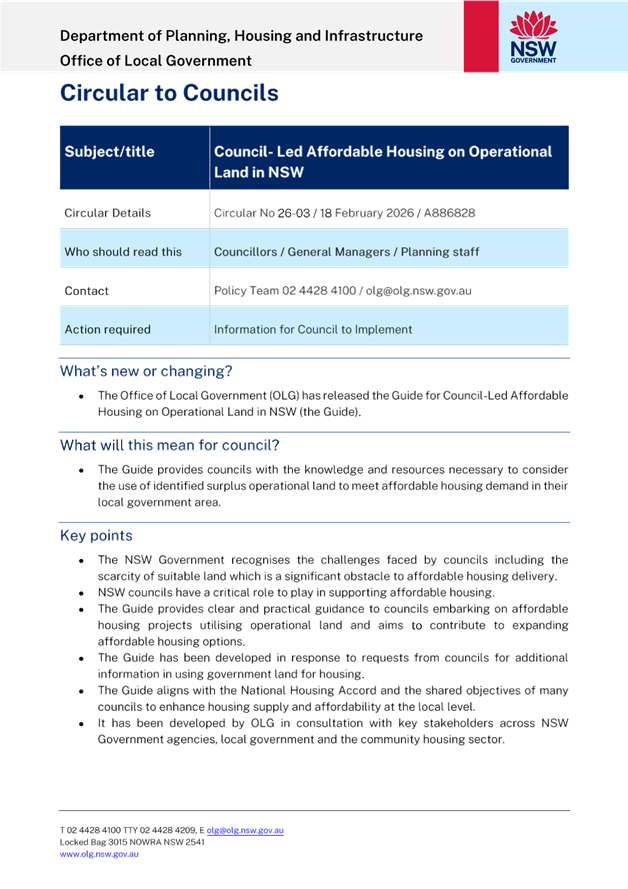
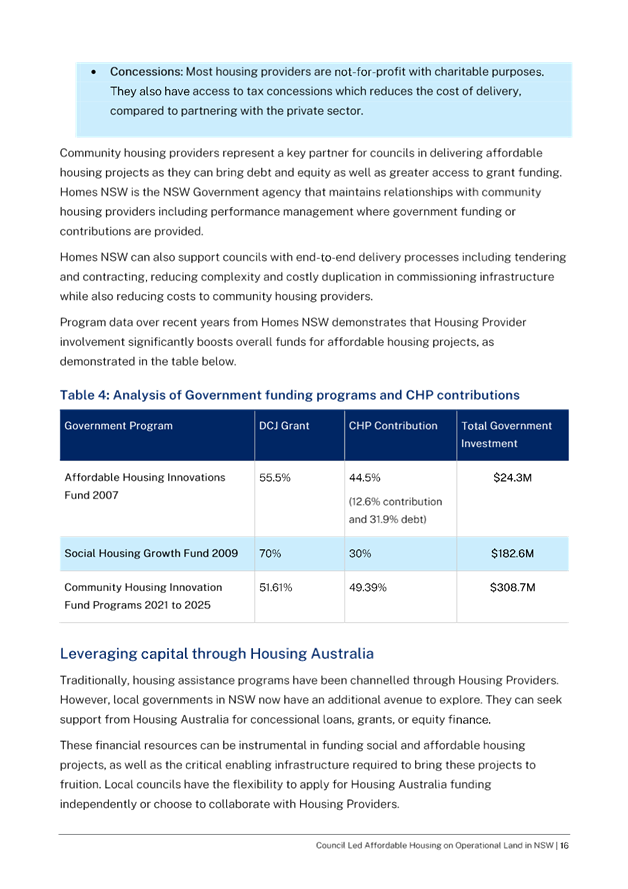
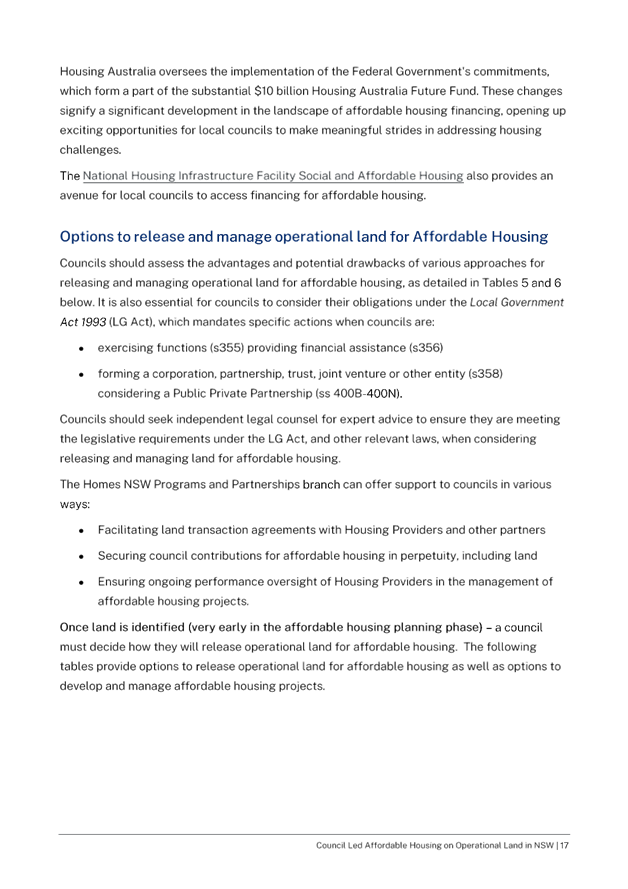
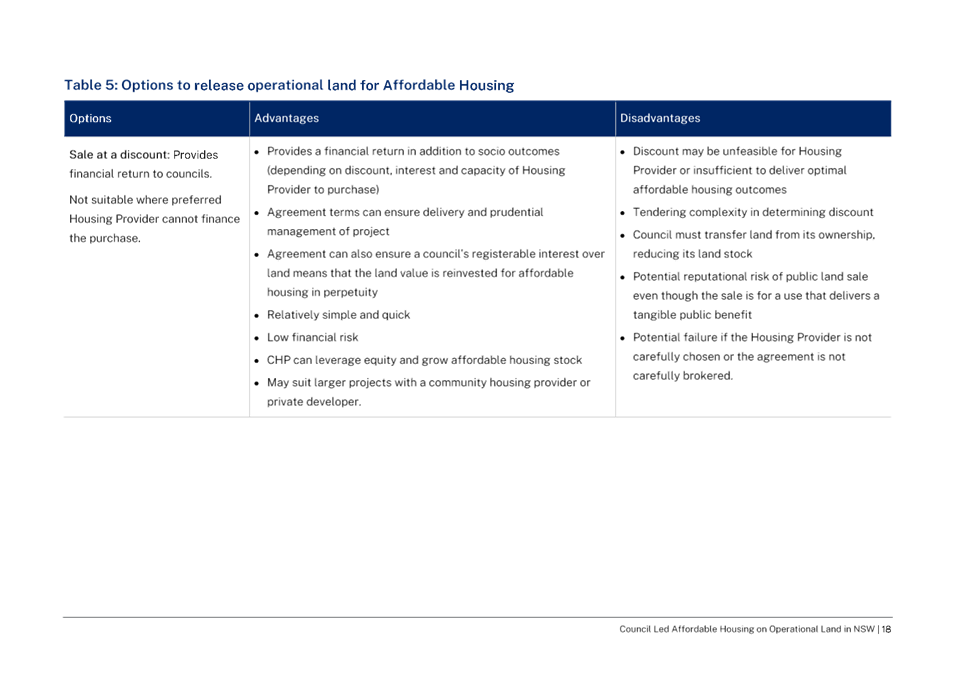
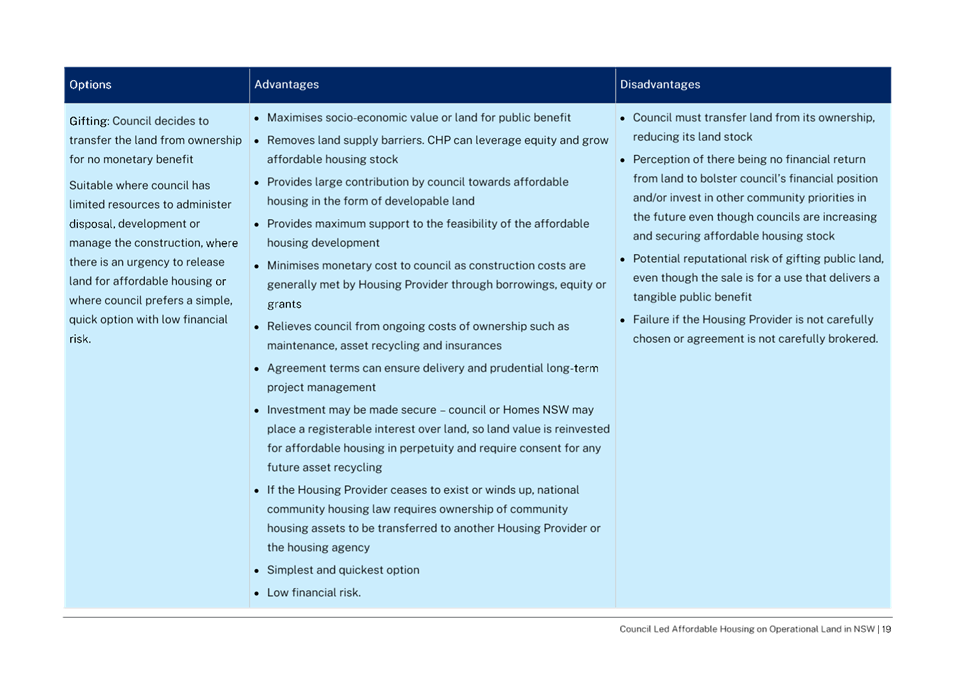
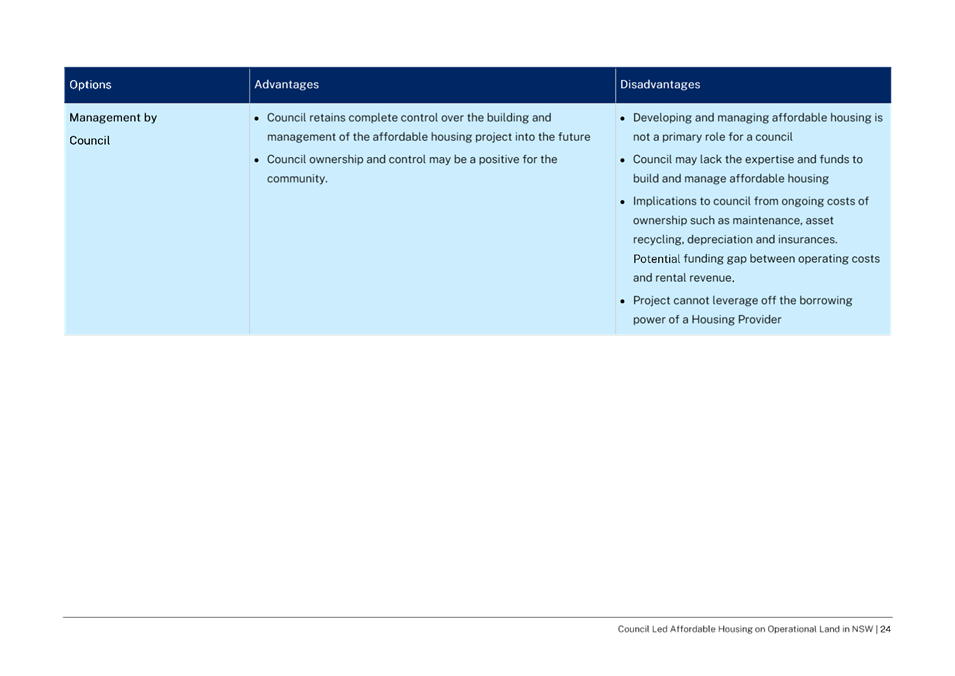
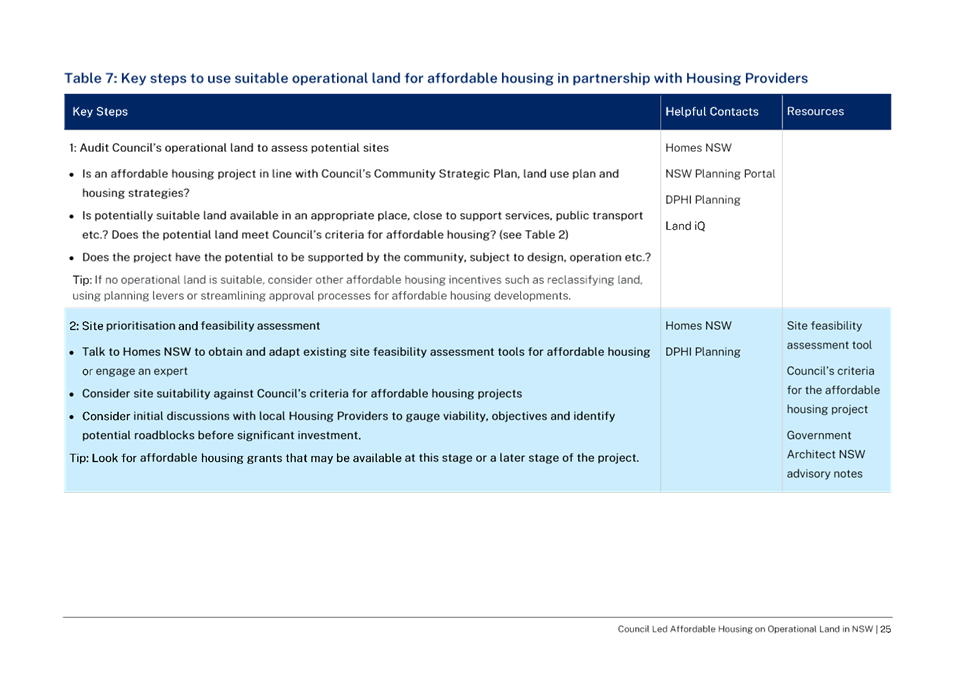
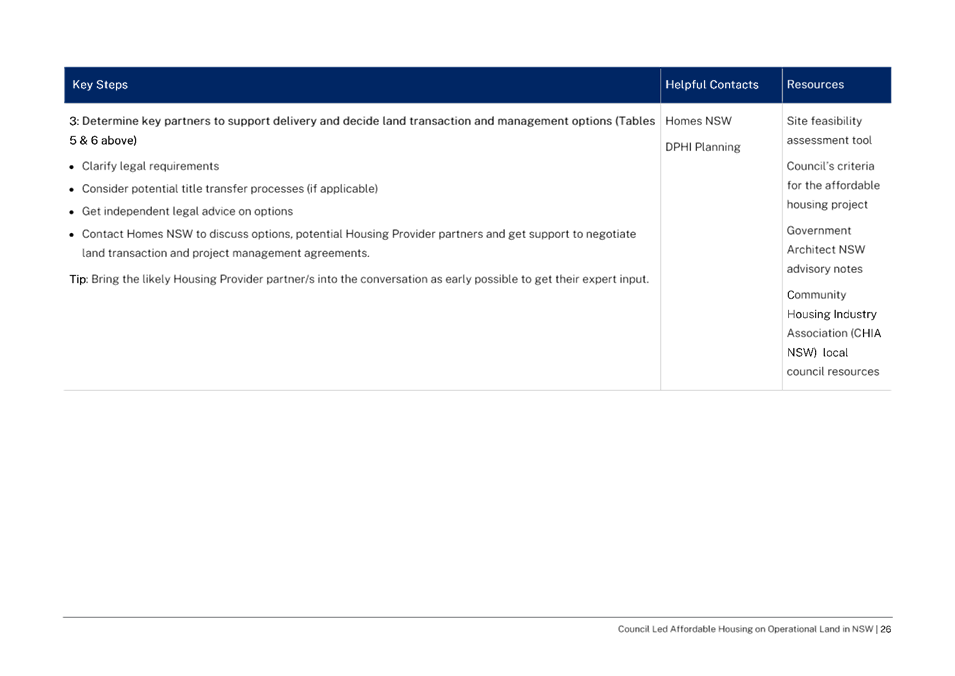
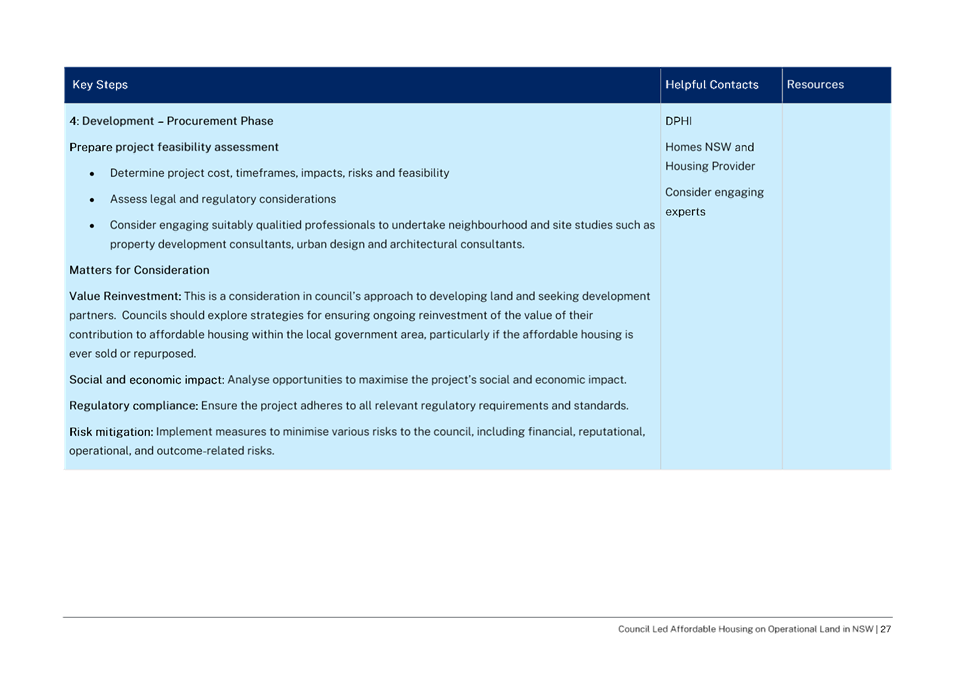
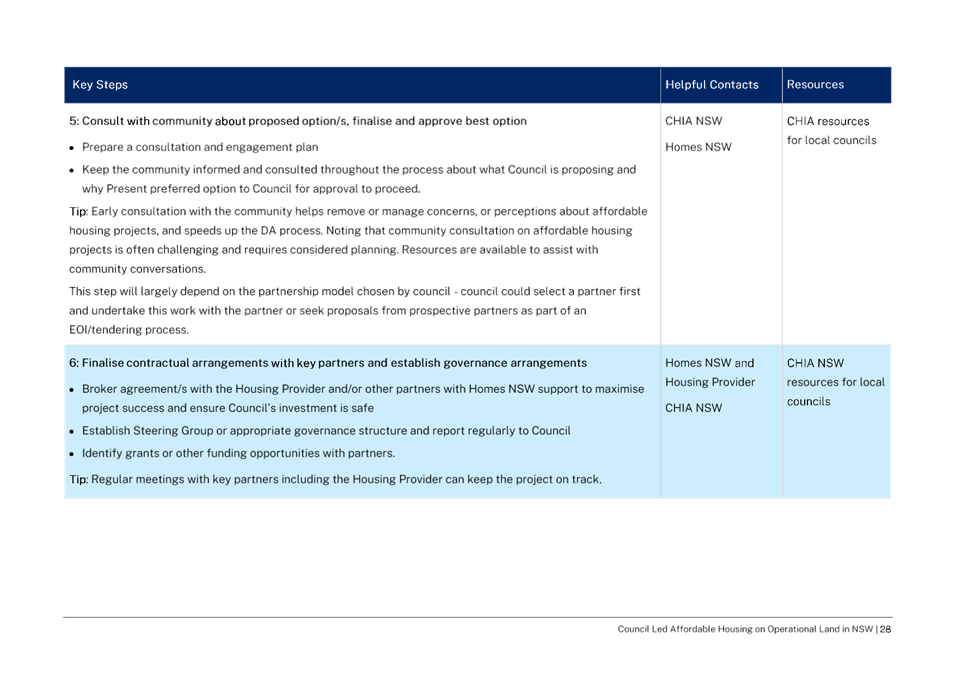
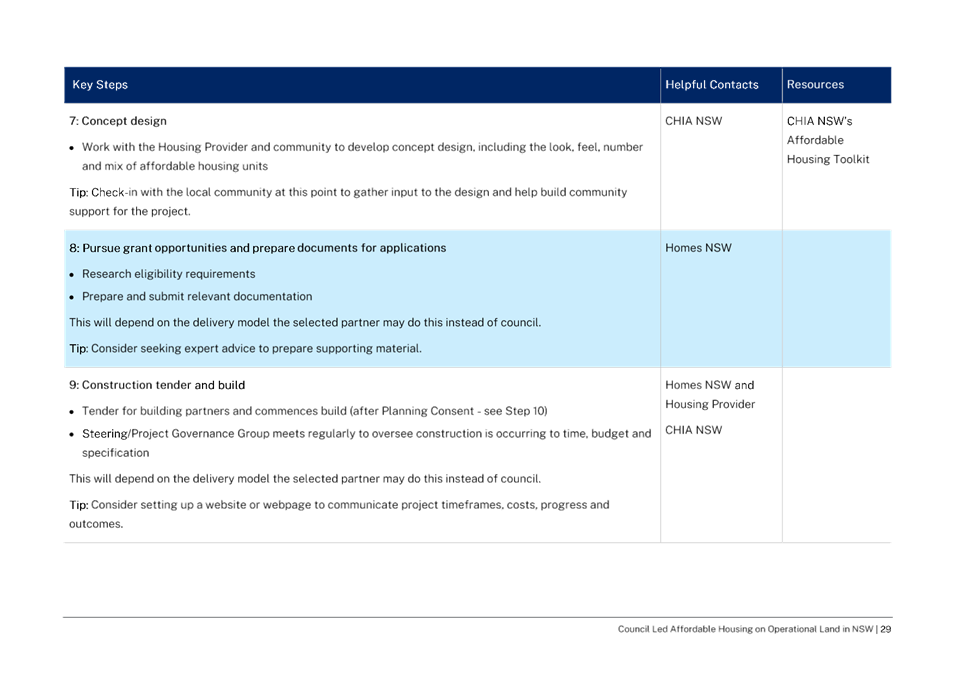
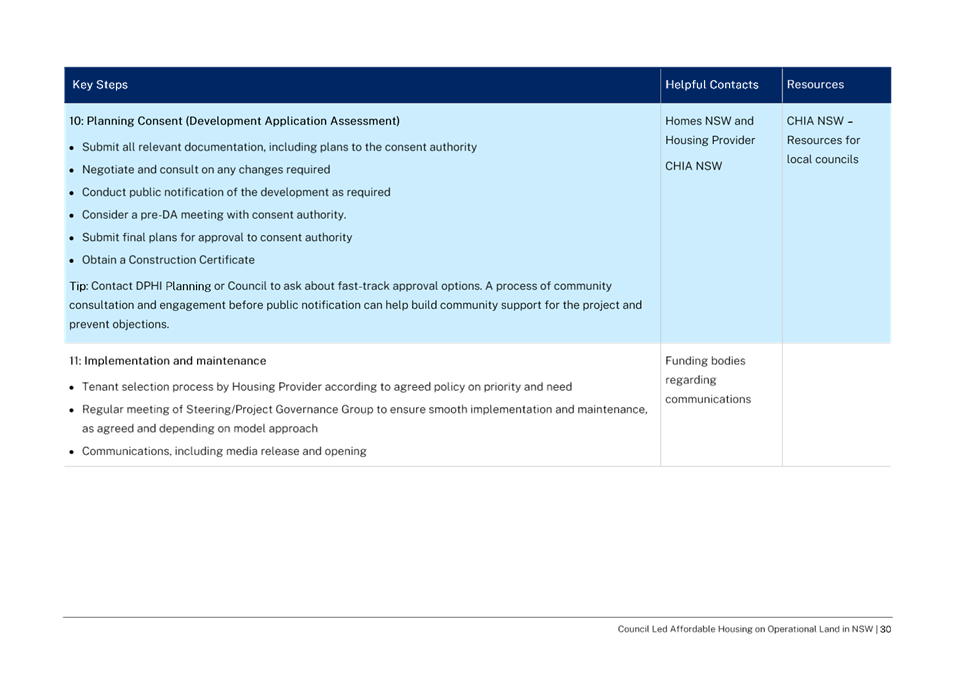
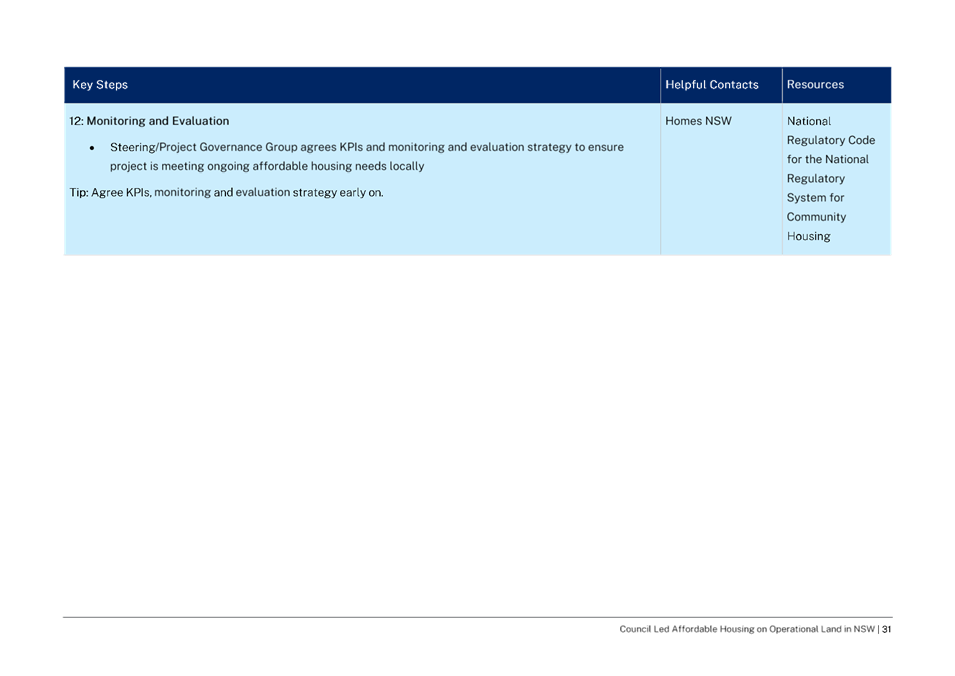
Guide for Council-led Affordable Housing on Operational Land in NSW
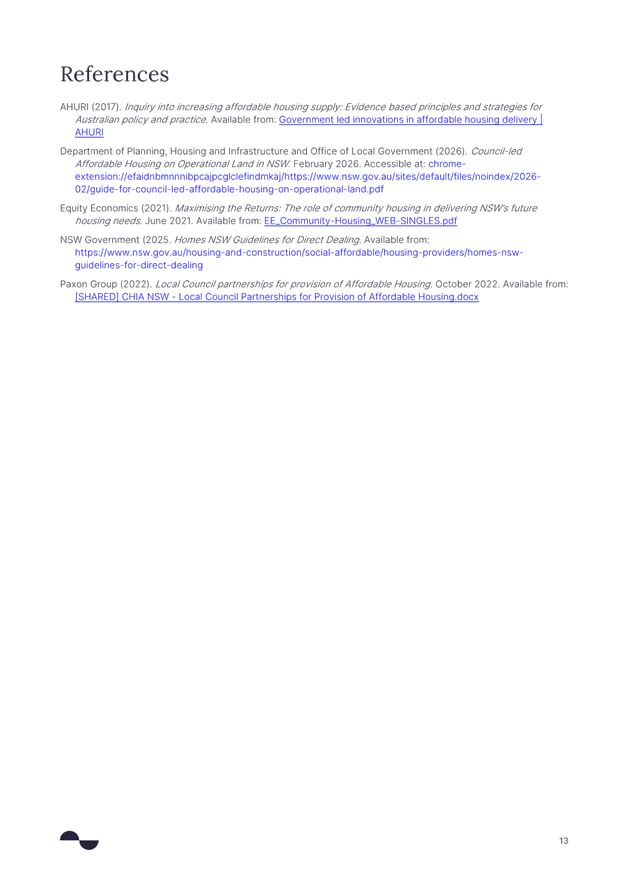
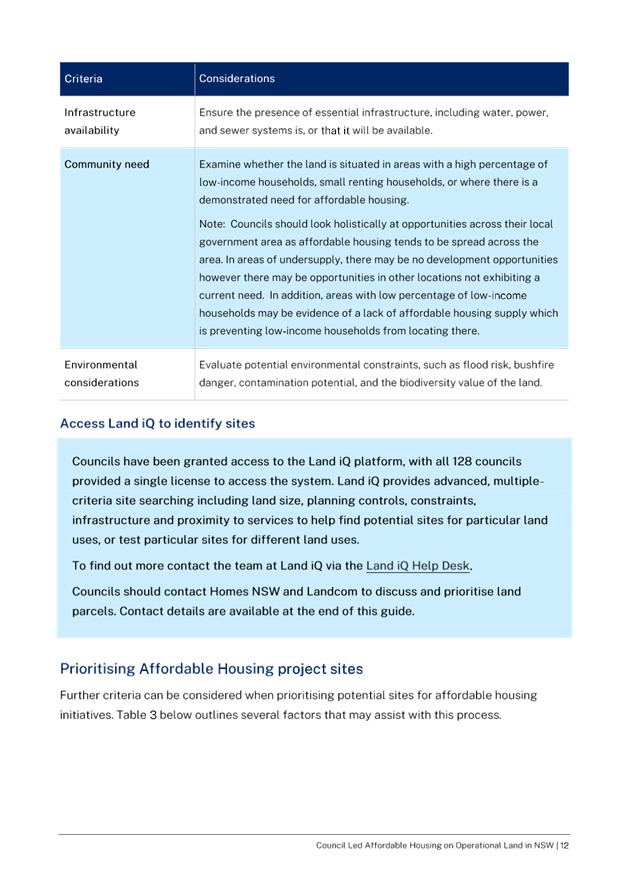
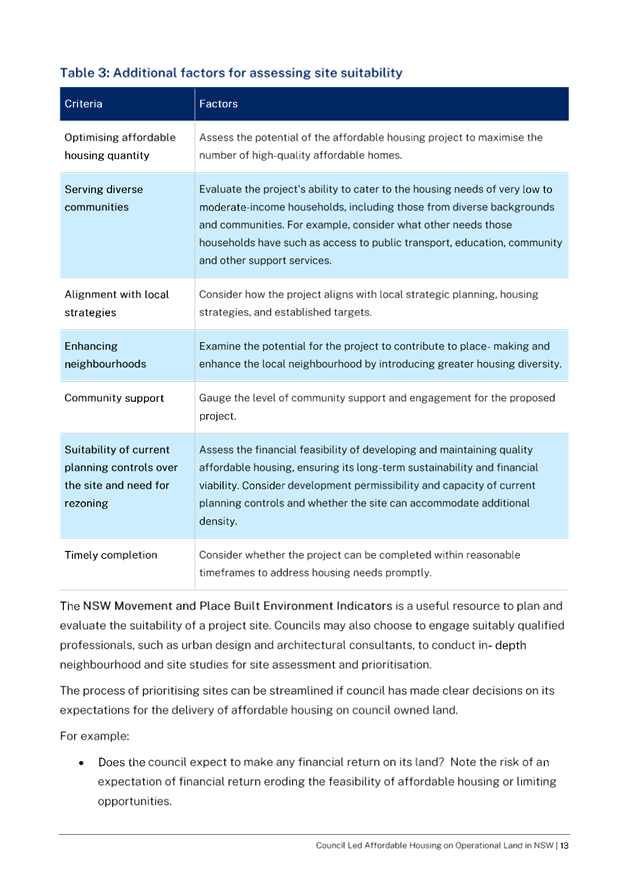
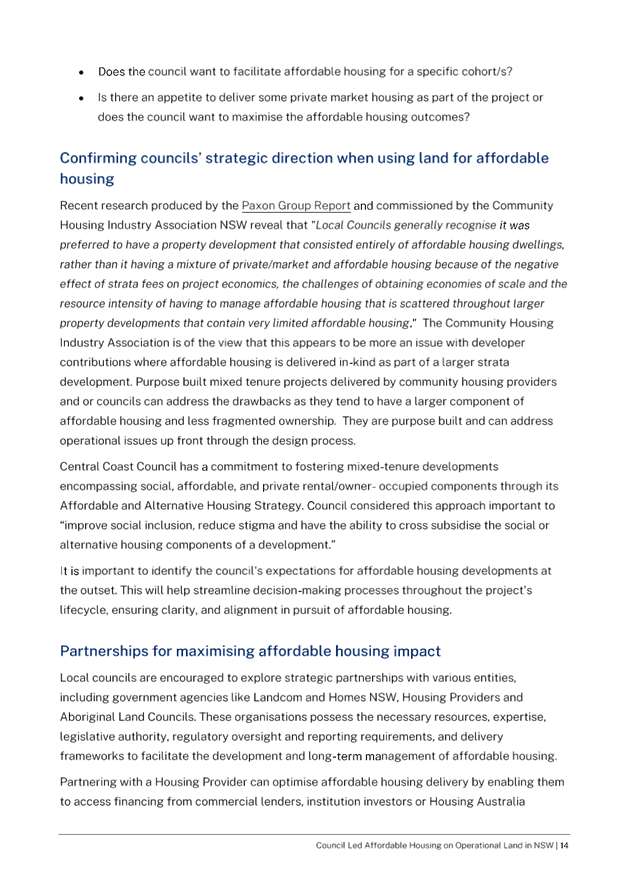
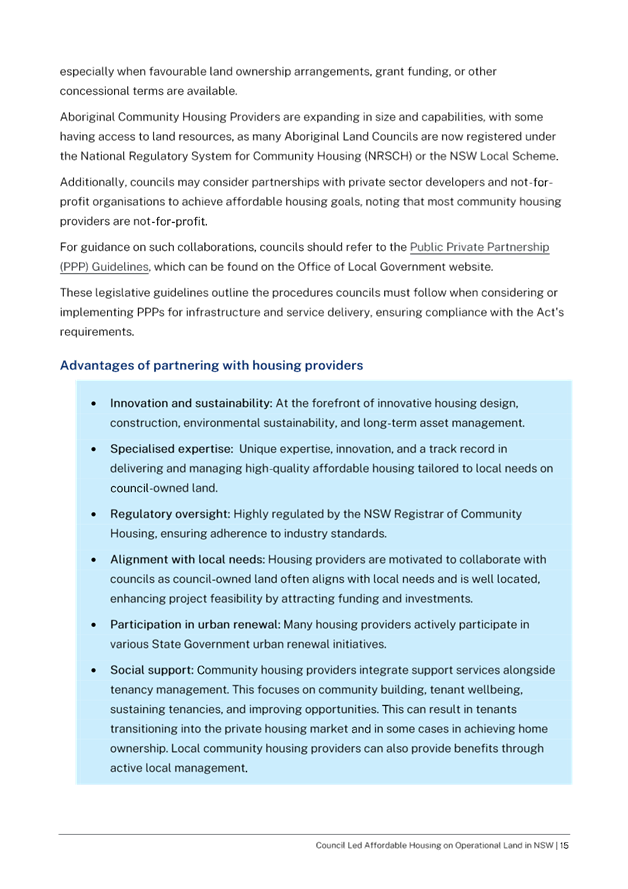
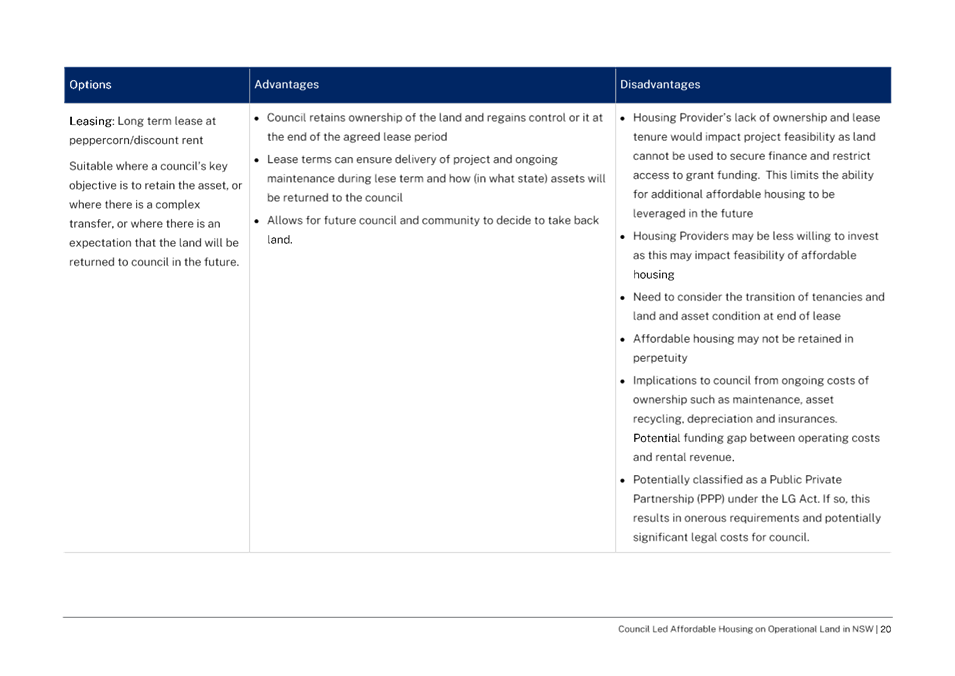
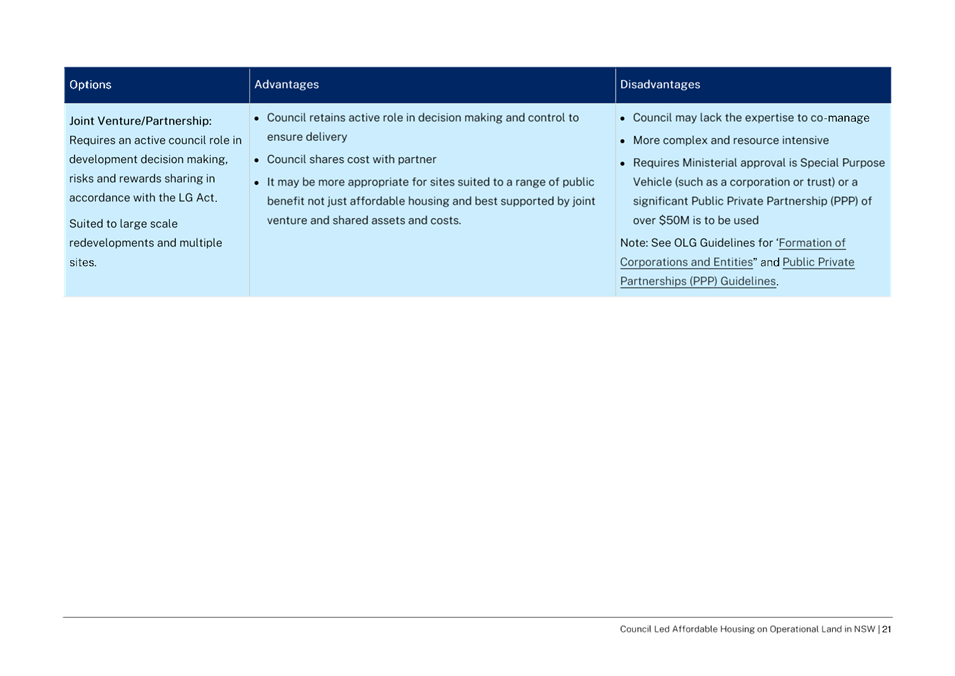
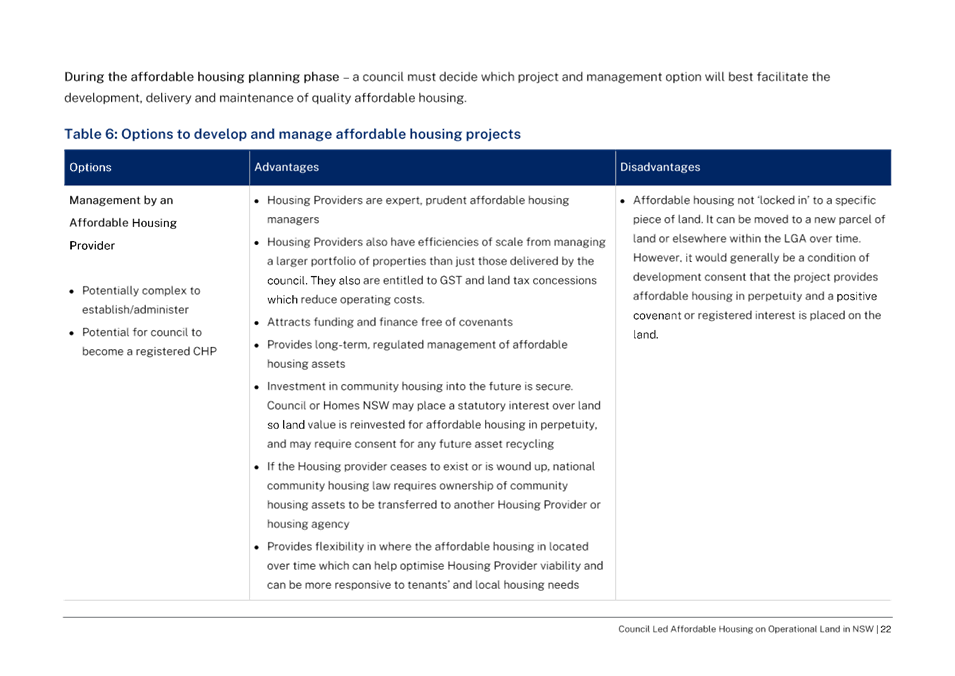
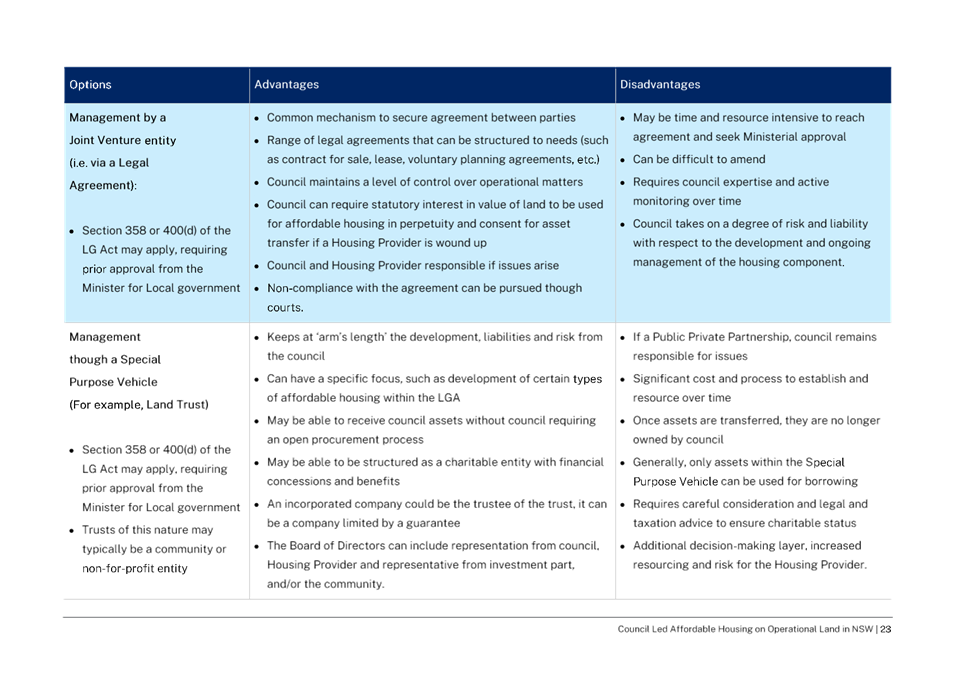
In February 2026, the NSW Office of Local Government issued a new guide to assist councils to explore using operational land for Affordable Housing (included at Attachment 3).
This guide acknowledges a record-low supply of long-term rental homes is placing a significant financial strain on tenant cohorts seeking Affordable Housing. It recognises that the cost of suitably located land is often a significant barrier to creating more Affordable Housing and seeks to assist councils in leveraging under-utilised operational land to facilitate such projects.
This guide has been taken into account in the preparation of the draft Policy, specifically use and management policy positions. The steps outlined above will be followed as governance and distribution arrangements are prepared at a future stage.
DISCUSSION
The draft Policy
The draft Policy contains the following components:
1. Strategic Context
2. Affordable Housing Contributions in proponent led proposals
3. Administration and Implementation
Key Changes from Current Affordable Housing Policy
The key changes between the current and proposed draft policies can be summarised as follows:
|
Topic |
2022 Adopted Policy |
Draft Policy |
|
Tenant Selection and Rent-setting |
· Rent setting in line with definition of Affordable Housing: no more than 30% of a household’s gross income · Tenants must be Very Low, Low, Moderate income households · Target cohorts include Key workers, young and elderly residents, CALD, families, people with disability and people with indigenous backgrounds |
· No change to rent-setting · All cohorts from the current Policy, plus inclusion of Artists and cultural creators |
|
Affordable Housing Contribution Rate Council will seek for Proponent-led Proposals |
15% of additional residential GFA sought by a proposal (above that which is currently allowed) |
· For sites where residential is already permitted: 10% of additional residential GFA sought (above that which is currently allowed) · For sites where residential is not currently permitted: 7.5% of residential GFA sought (above that which is currently allowed) |
|
Method of contributing Affordable Housing (monetary or in-kind) |
· Preference for in-kind contributions: on-site dwellings · Dwelling contributions: mix of sizes, ‘tenure blind’, consistent with Apartment Design Guide · Monetary contribution option available · Planning Agreements using RLV (Residual Land Value) uplift sharing |
· Preference for equivalent monetary contributions. In-kind options are alternatives, subject to Council’s and CHP’s agreement · In-kind options: dwelling and land dedication options available · Dedicated dwellings allowed (minimum GFA of 50sqm) · Land dedication option specified (minimum land area of 800sqm) |
|
Monetary Contribution Calculation |
50% of land value increase captured via VPA |
GFA × Contribution Rate (%) × Location based $/sqm rate |
|
Indexation |
No fixed formula for contribution indexation |
Annual
indexation linked to median strata prices (NSW Rent & Sales Report). |
|
Exemptions |
Not explicitly listed |
Social housing, boarding houses, group homes, superlot subdivision with no net additional lots |
|
Governance of Affordable Housing |
· Appoint 1+ CHPs to manage Council’s portfolio · Establish an Affordable Housing Fund reserved for funding projects including maintenance and provision of more housing · Informed by Hill PDA Study (2019), which referenced possibility of leveraging against assets to expand portfolio |
· Nominate 1+ not for profit CHP to transfer cash and in-kind contributions to, in order to leverage and invest in Inner West and allow a more proactive growth of community housing sector · Prioritise Tier 1 CHPs and/or those with Inner West experience · Work with nominated CHP/s to identify opportunity sites · Partnerships for fixed period of 5 years, with option to extend · Single CHP initially to concentrate distributions. · Options for use of funds in early stage (before a critical mass achieved): - purchase existing dwellings, - aggregate funds for developments, - land and funding packages where land is made available by supplementary sources for Affordable Housing dwellings, - leveraging to maximise quantum of dwellings · Arrangements will be delivered through a Governance and Distribution Framework |
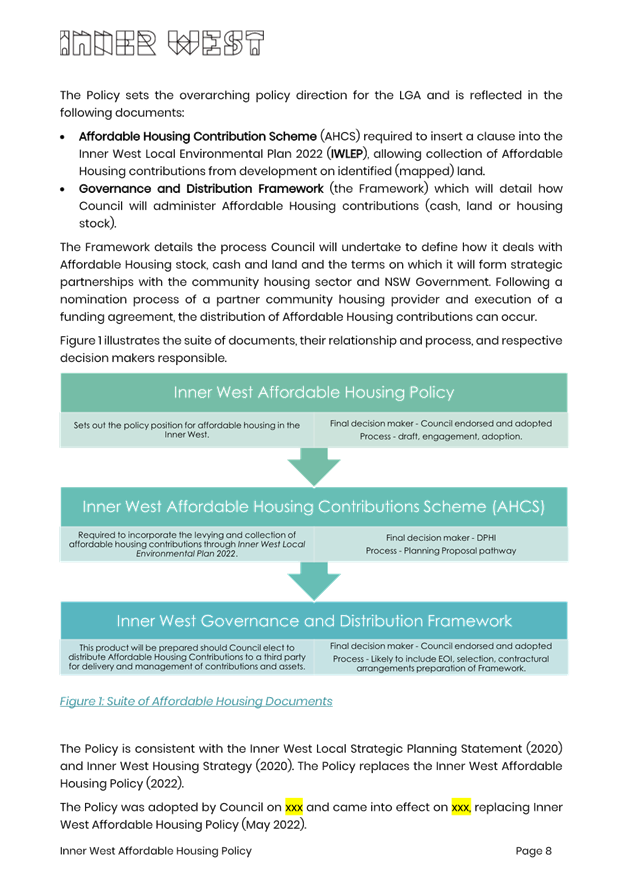
Affordable Housing Contribution Scheme (AHCS)
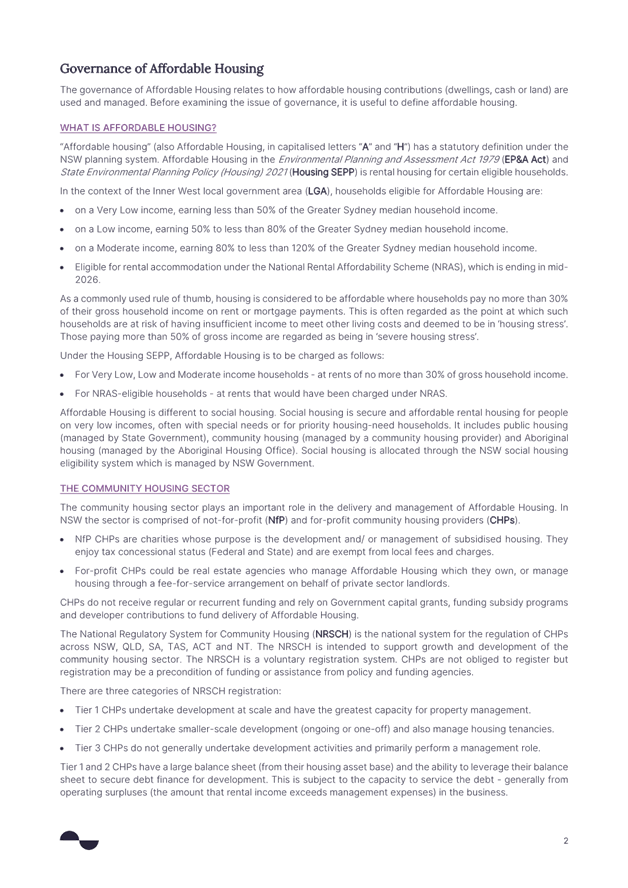
The draft Policy states that an AHCS will be prepared by Council. An AHCS is the mechanism required to implement Affordable Housing Contributions through IWLEP. It requires preparation of a Planning Proposal and endorsement of the NSW Department of Planning, Housing and Infrastructure. It is proposed to bring the draft AHCS Planning Proposal to Council in August together with the Engagement Outcomes Report on the draft Policy.
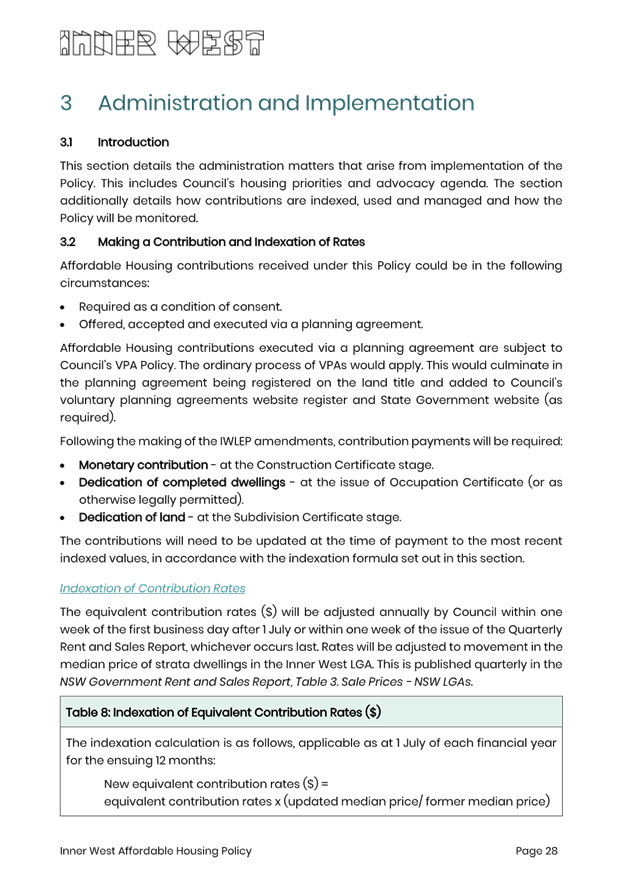
Once in place, the AHCS will apply a contribution rate on any land proposed for housing uplift under Council or State-led precinct planning. This AHCS will be informed by up-to-date feasibility analysis, will initially apply to housing uplift land under Our Fairer Future Plan Phase 1 and will factor in Council’s resolution of 30 September 2025: “adoption of the officers recommendation for a 2% affordable housing contribution, moving to 3% after 3 years, across all privately owned land in upzoned areas.”
The AHCS will be updated over time – informed by new feasibility testing – to incorporate further Council or State-led housing uplift over time.
Proponent-led proposals
Under the draft Policy, for any proponent-led proposal that seeks to amend IWLEP to allow additional housing uplift, Council will seek a proportion of the additional residential floorspace as an Affordable Housing contribution.
This could apply on land outside of an AHCS, but could also apply within an AHCS, where a proponent seeks floorspace above that achieved by the Council or State-led precinct planning.
The following contribution rates will be sought:
|
On sites where residential uses are already permitted |
10% of the additional residential Gross Floor Area (GFA) proposed* |
|
On sites where residential uses are not already permitted |
7.5% of the additional residential GFA proposed |
* Meaning residential GFA proposed above that currently permitted on the site by environmental planning instruments
Contributions can be mdade via planning agreement in the form of equivalent monetary contributions, or in-kind dedication of dwellings or land, or a combination of these three forms. They must be to the satisfaction of Council and its nominated CHP and follow requirements in the draft Policy.
Current and Future Management of Affordable Housing
Council currently owns and manages 25 affordable housing units within the LGA. These units are currently managed on Council’s behalf by Link Wentworth Housing Limited, under a Property Management Agreement. This CHP is responsible for managing and coordinating all tenancy and property matters ensuring compliance with statutory Affordable Housing requirements, including tenure periods, tenant queries and establishing maximum rent amounts (in conjunction with Council).
Council also manages an Affordable Housing Fund, which comprises funds allocated for Affordable Housing initiatives, including monetary contributions received from Planning Agreements with proponents.
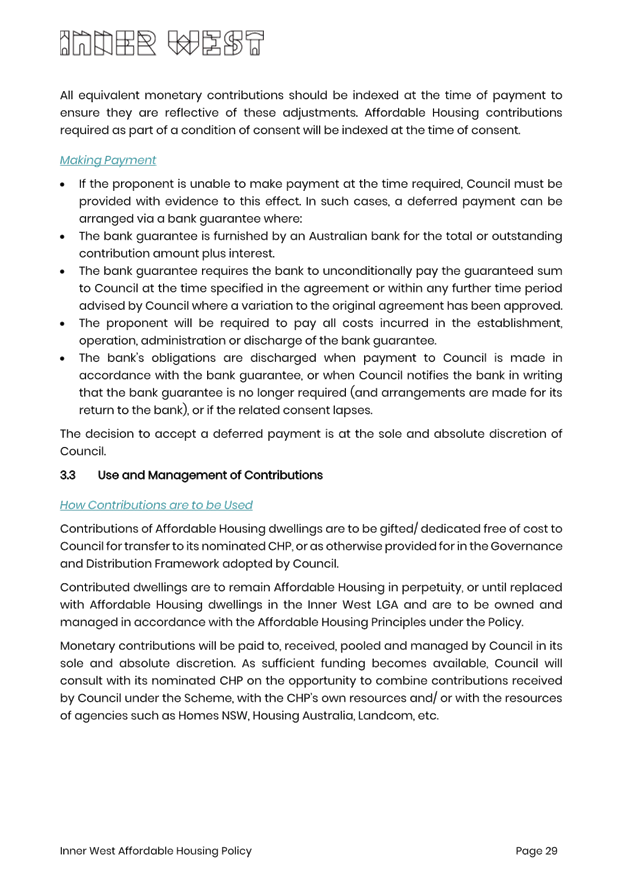
The draft Policy proposes the appointment of a not-for-profit CHP to own and manage Affordable Housing stock on Council’s behalf. Under this arrangement, all monetary and in-kind contributions would be distributed to the nominated CHP/s, who will take on ownership and management responsibilities during their term.
To enact these positions, the draft Policy proposes that a Governance and Distribution Framework be prepared by Council. The Framework is a public facing document endorsed by Council that outlines how and to who Affordable Housing Contribution Funds are distributed to. In order to prepare the Framework, a formal process of selection, appointment and contractual and funding agreements will be required. This process will be reported separately to the Policy and AHCS.
The benefits of the proposed approach, in terms of growing and leveraging contributions for Affordable Housing stock in the LGA (outlined in further detail in Attachment 2). These matters will be discussed in detail in a future report to Council on the Governance and Distribution Framework.
Advocacy
The draft Policy carries over and simplifies the advocacy positions in the current Policy, namely that Council will:
· advocate for a minimum target of 30% of new dwellings on government-owned land be designated as subsidised housing (Affordable Housing or Social Housing) in perpetuity and managed by a CHP,
· work with Property NSW for securing under-utilised or surplus government land,
· continue to collaborate with other councils and actively lobby relevant NSW Government ministers and agencies to encourage a more comprehensive approach to provision of Affordable Housing, and
· advocate for cash contributions paid in lieu of a loss of low-rental housing within the LGA to be retained by Council.
Engagement Plan
The draft Policy will be exhibited online for 4 weeks in May 2026 and community feedback to be sought via Your Say Inner West (YSIW). The exhibition will be promoted to YSIW subscribers by email and via social media and digital notice boards at libraries and services centres.
Council’s Housing for All Local Democracy Group and other relevant stakeholders such as Homes NSW, Aboriginal Housing Office, NSW Department of Planning, Housing and Infrastructure, Community Housing Industry Association (CHIA), Faith Housing Alliance, Shelter NSW, CHPs and other not for profit housing providers will also be consulted directly.
In addition, a roundtable will also be organised with CHIA, Faith Housing Alliance, CHPs and other not for profit housing providers.
During the engagement, Council officers will be available to discuss the project in-person with members of the community, at Ashfield Service Centre on Tuesdays, Wednesdays and Thursdays, between 9am and 5pm.
LEGAL AND RISK IMPLICATIONS
Further consideration of the Governance and Distribution Framework and procedure will be provided as this element of the Policy is further developed.
FINANCIAL IMPLICATIONS
There are no financial implications associated with the implementation of the proposed recommendations outlined in the report.
|
1.⇩ |
Draft Affordable Housing Policy |
|
2.⇩ |
Supporting Analysis for Draft Affordable Housing Policy (Atlas Economics) |
|
3.⇩ |
NSW Government Circular and Guide for Council Led Affordable Housing on Operational Land |
|
|
Extraordinary Council Meeting 28 April 2026 |
Subject: Public Exhibition - Draft Inner West Development Control Plan
Prepared By: Simone Plummer - Director Planning
|
RECOMMENDATION
1. That Council endorse the draft Inner West Development Control Plan and Solar Panels Policy on front roof planes in Heritage Conservation Areas for a 28-day consultation period in accordance with the requirements of Environmental Planning and Assessment Act 1979.
2. That the community consultation of the draft Inner West Development Control Plan be undertaken as outlined in this report and include: a) Newsletter notification to the whole LGA; b) At least two targeted feedback sessions with industry professionals; and c) A ‘meet the planner’ community drop-in session.
3. That Council delegate authority to the Director Planning to make any minor changes to correct any omissions, errors or inconsistencies to the draft Inner West Development Control Plan prior to exhibition.
4. That Council receive a post exhibition report for its consideration.
|
STRATEGIC OBJECTIVE
This report supports the following strategic directions contained within Council’s Community Strategic Plan:
|
1: An ecologically sustainable Inner West 2: Liveable, connected neighbourhoods and transport 3: Creative communities and a strong economy 4: Healthy, resilient and caring communities 5: Progressive, responsive and effective civic leadership |
|
|
EXECUTIVE SUMMARY
In compliance with the Code of Meeting Practice issued by the Office of Local Government in 2025, Council has not held any pre-meeting briefings in respect of the matters discussed in this report. This report is therefore the first time Council has been presented with the relevant information to inform its decision making on the matters in this report.
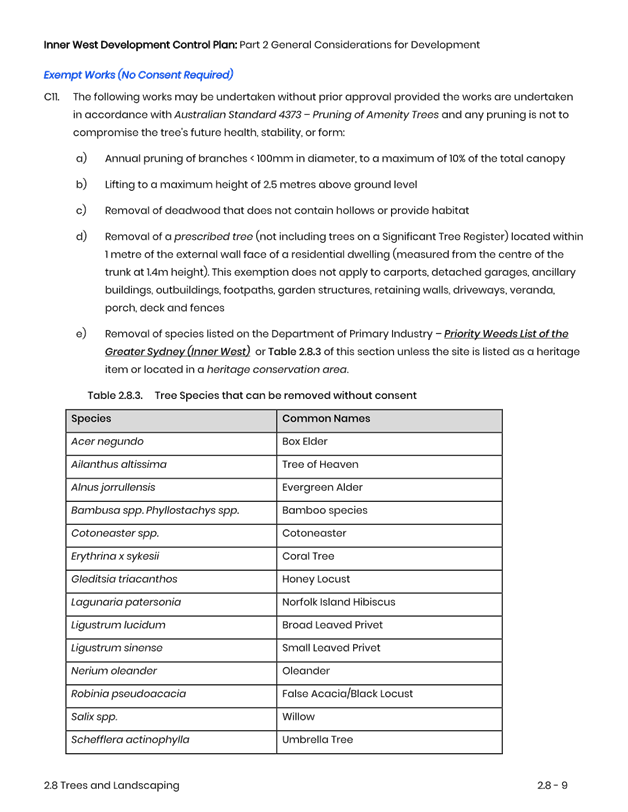
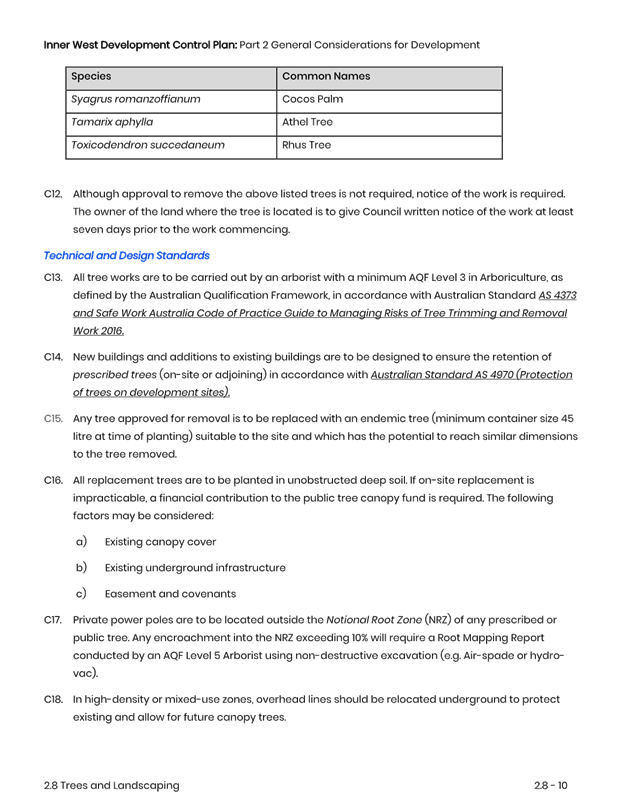
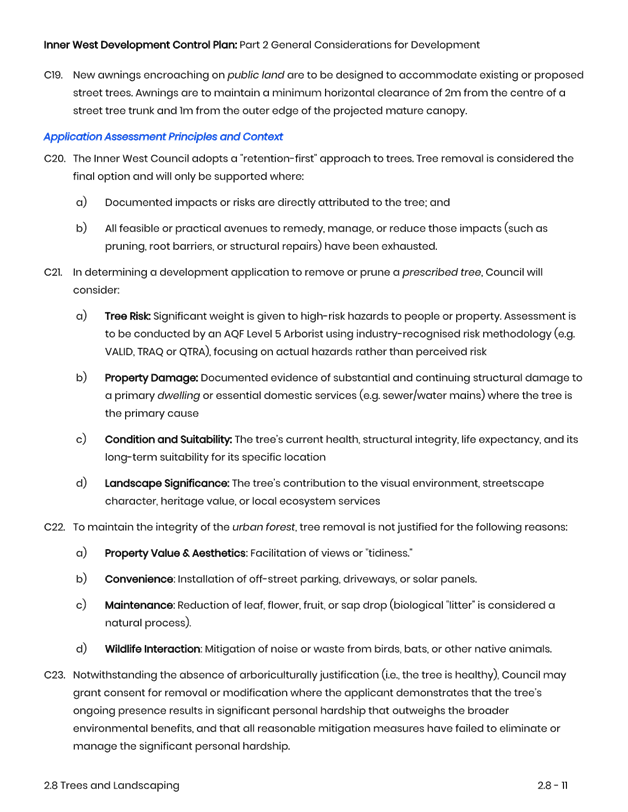
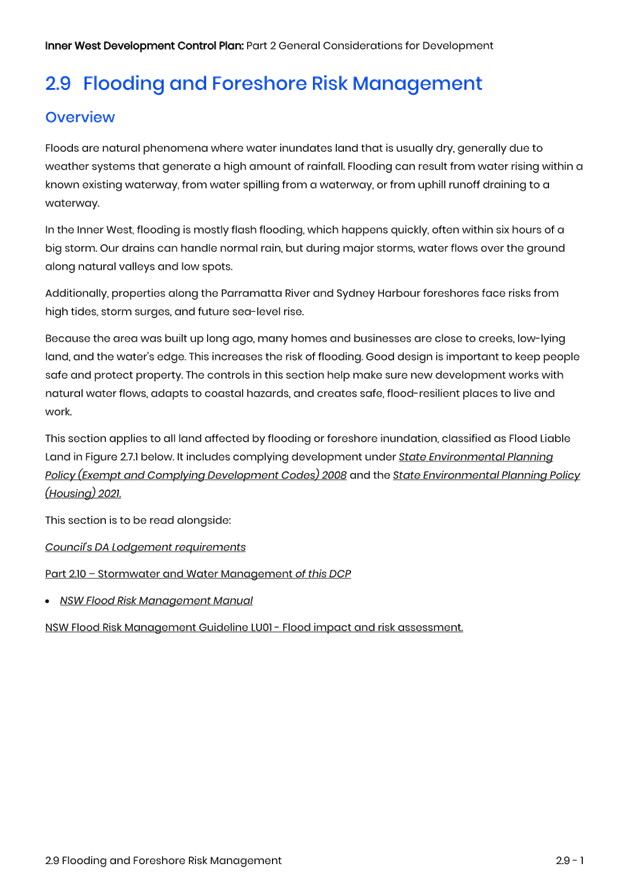
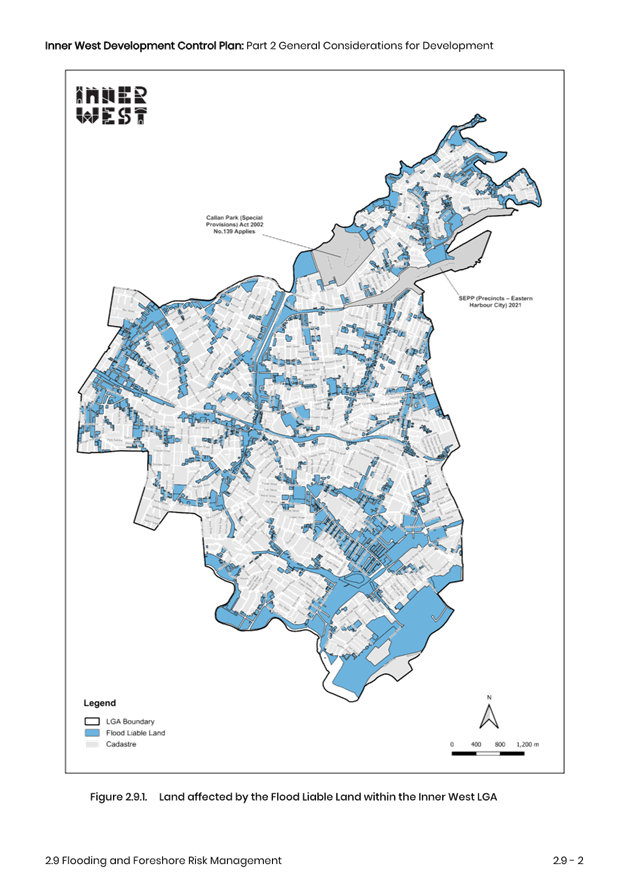
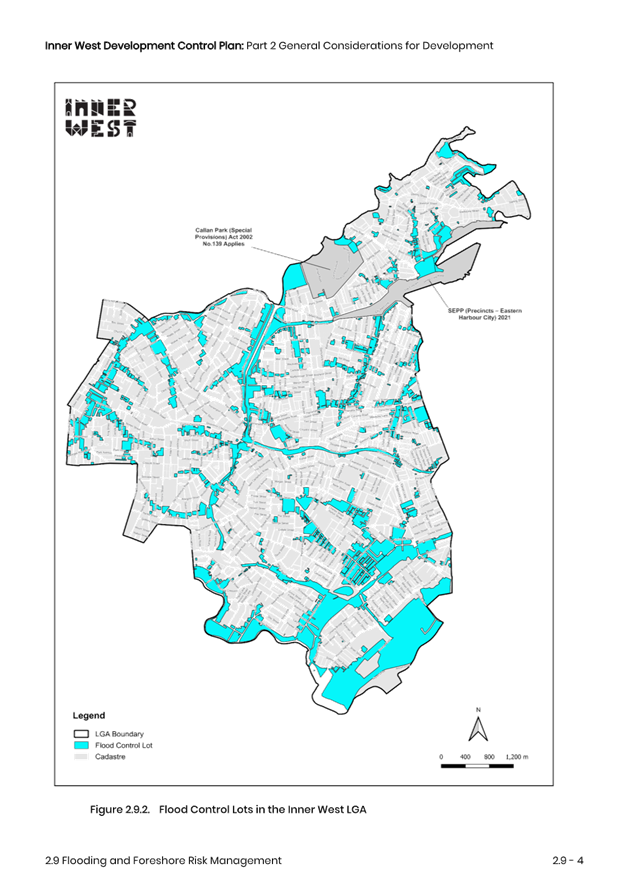
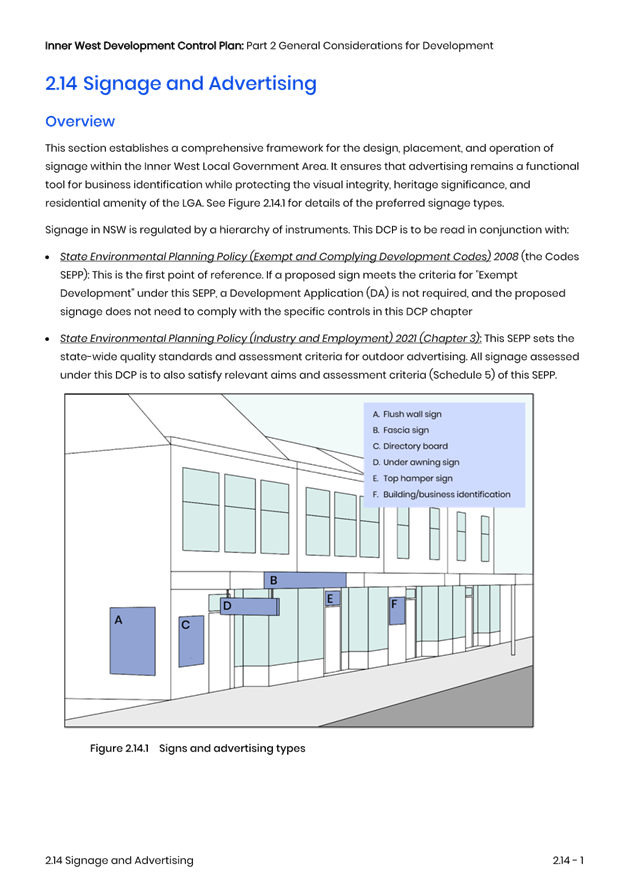
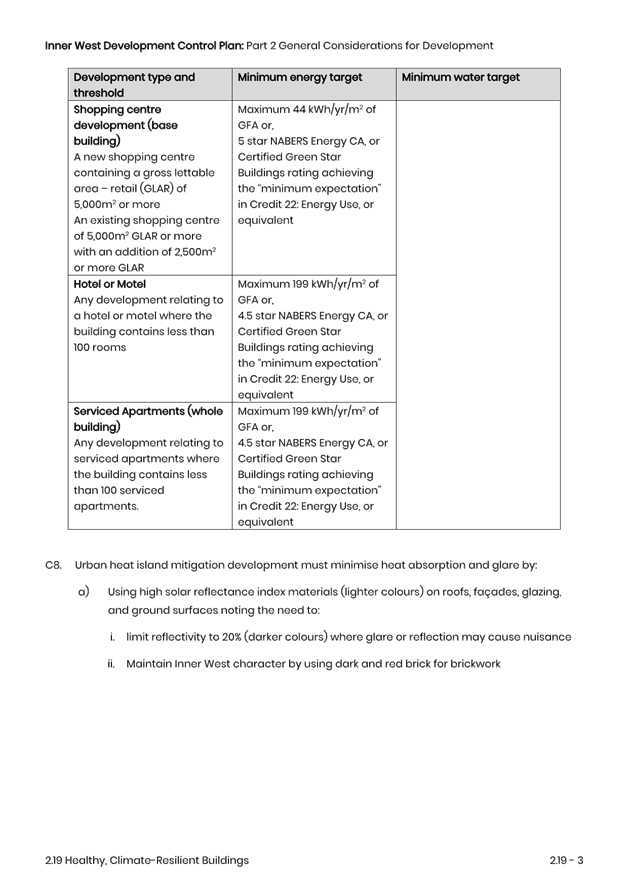
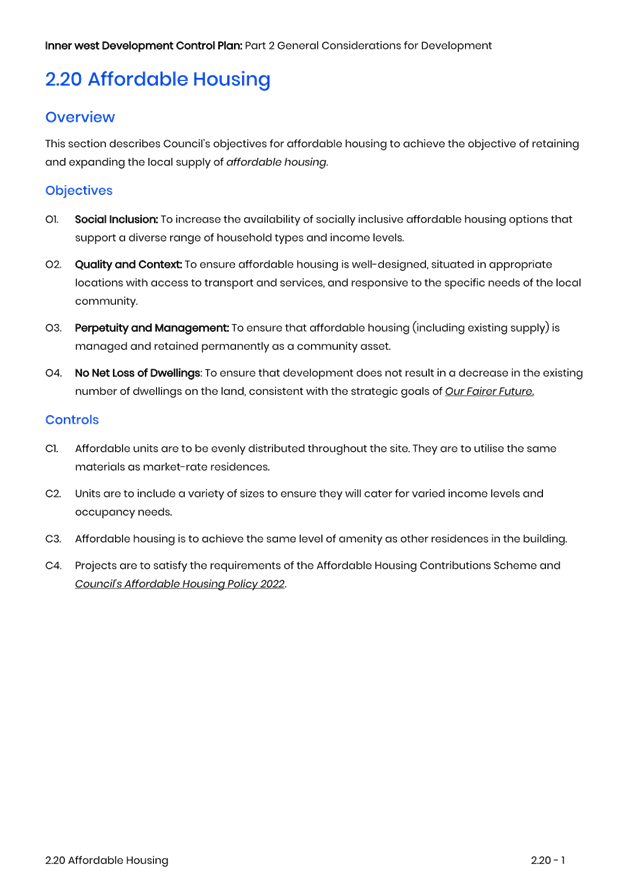
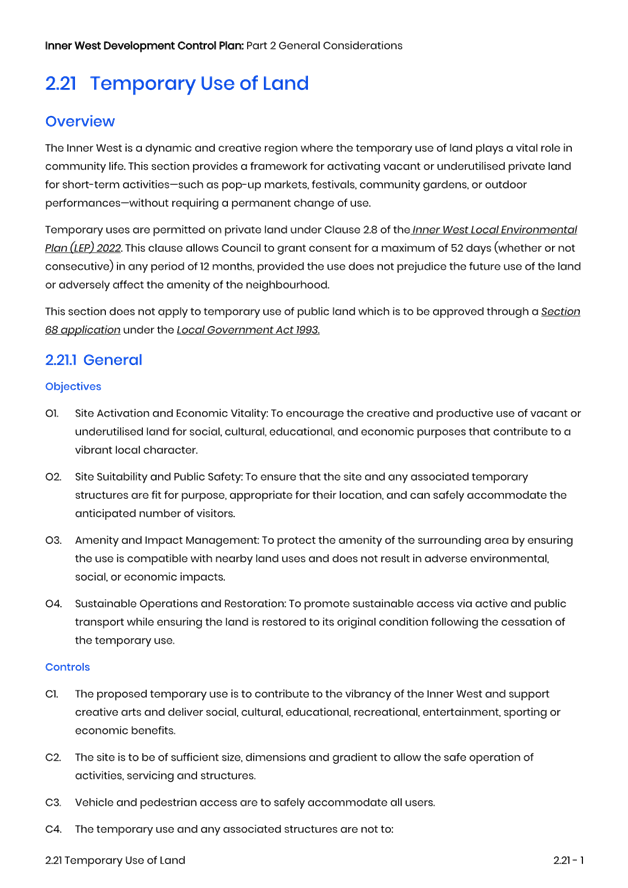
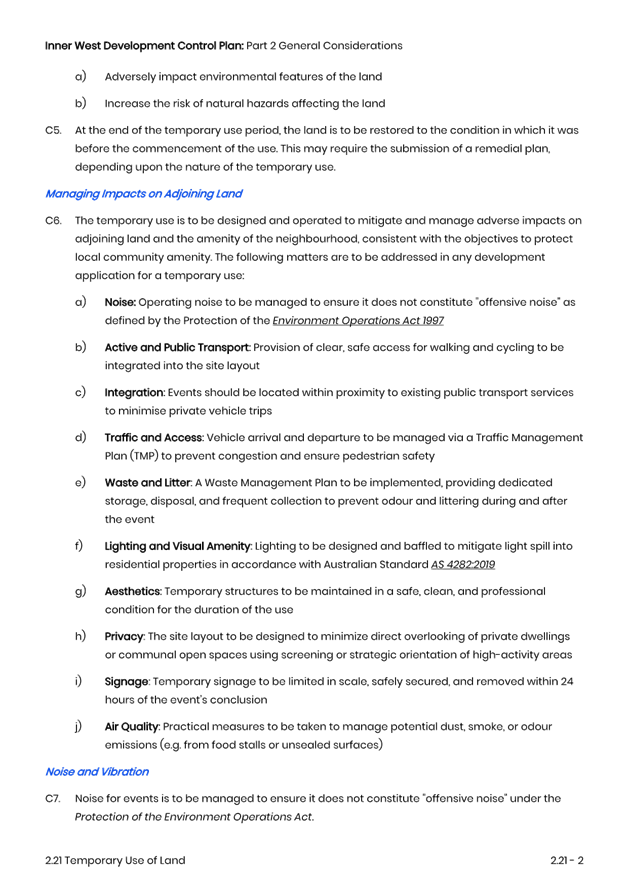
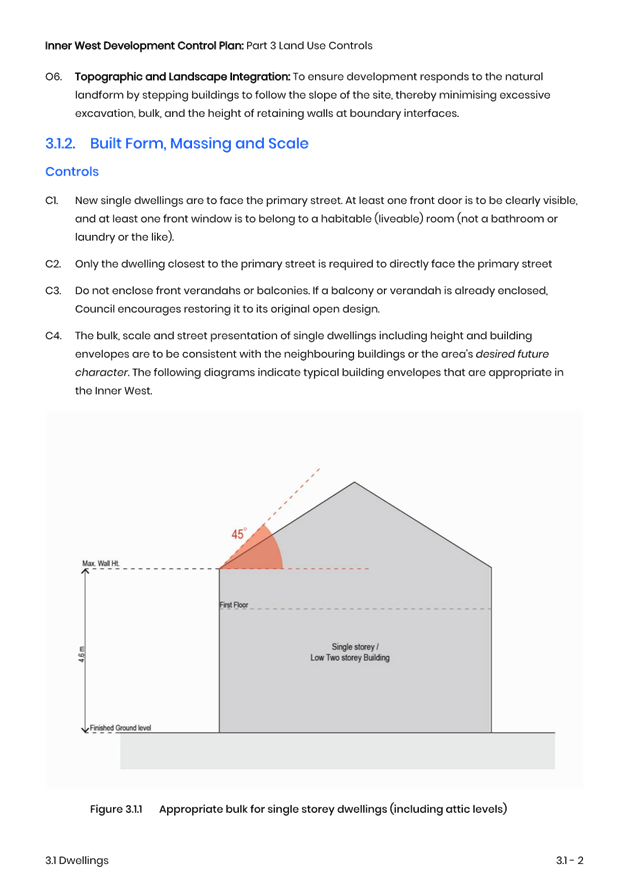
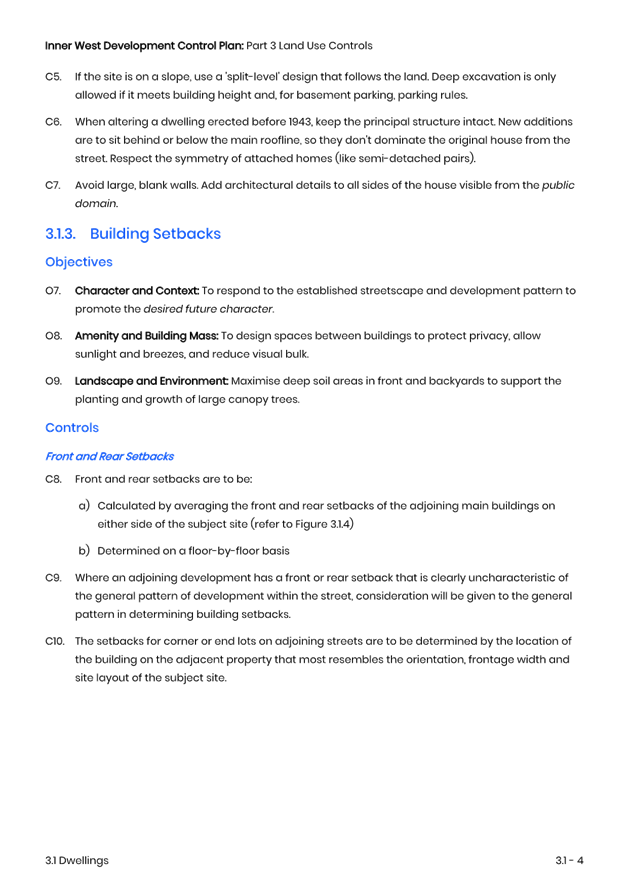
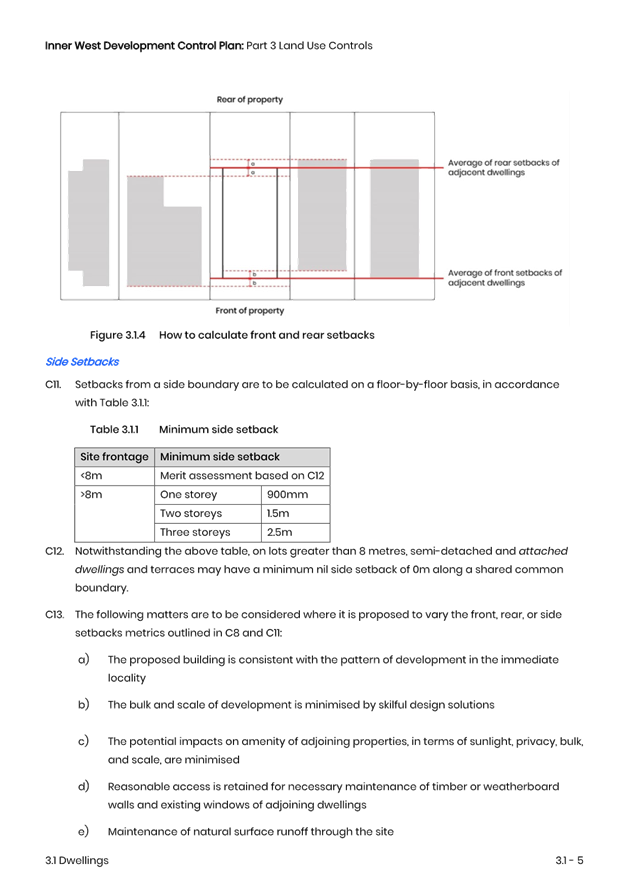
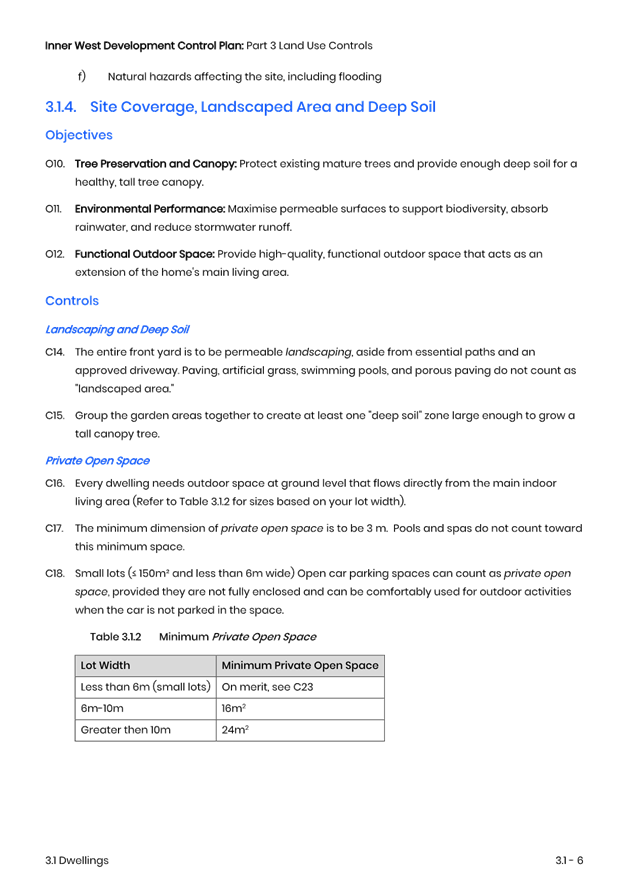
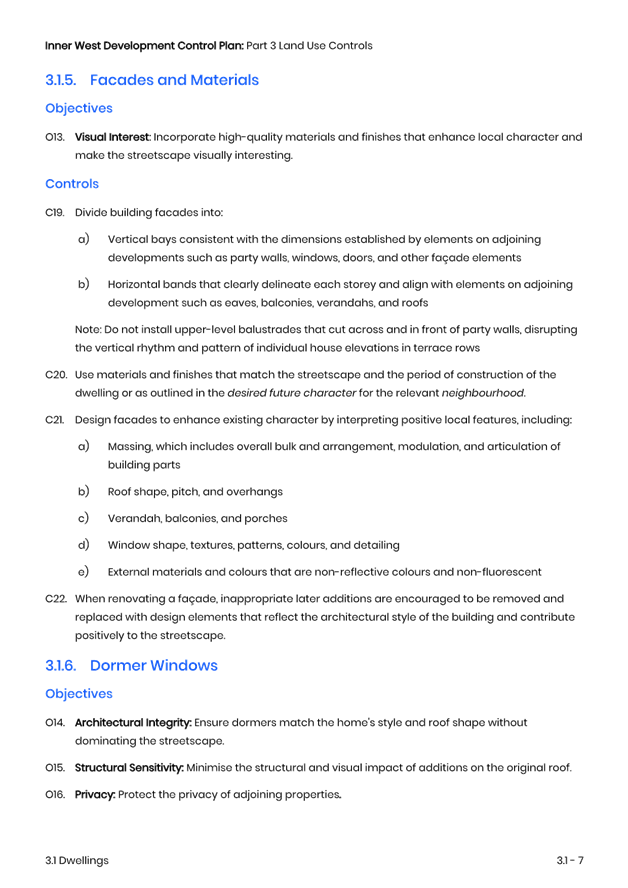
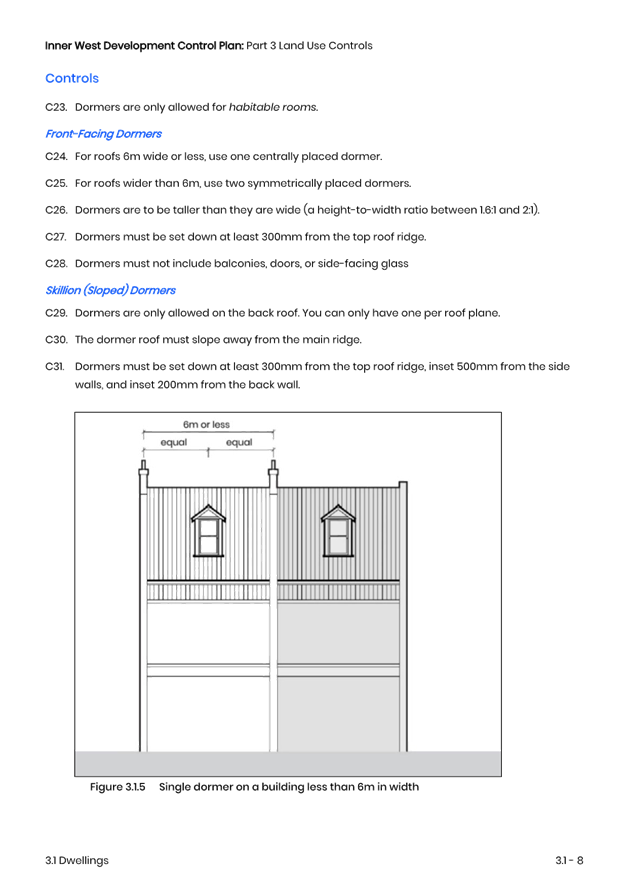
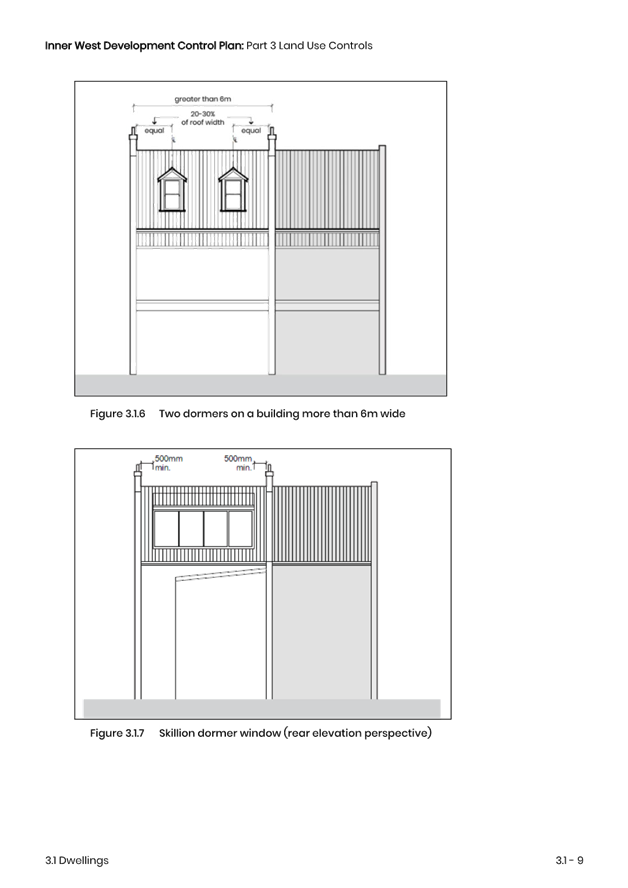
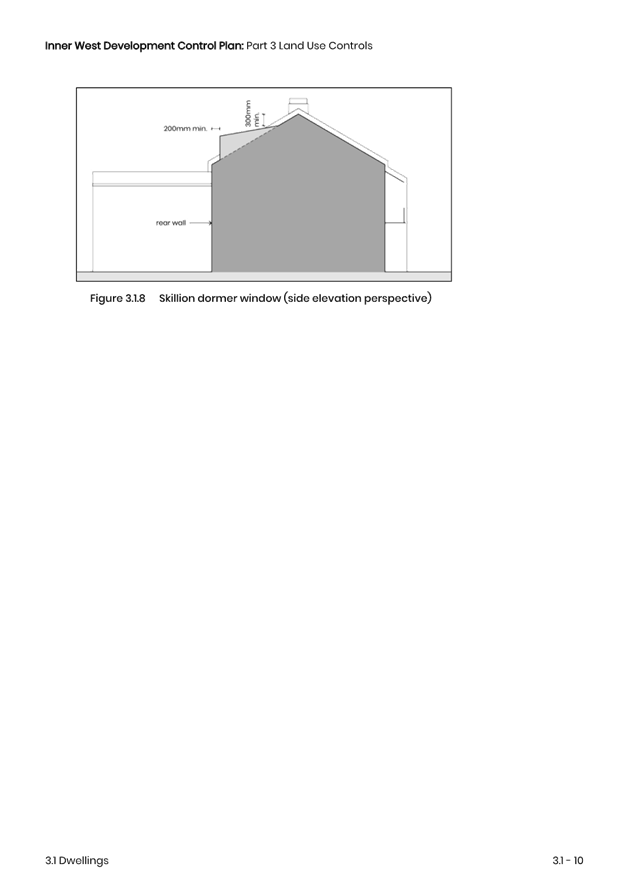
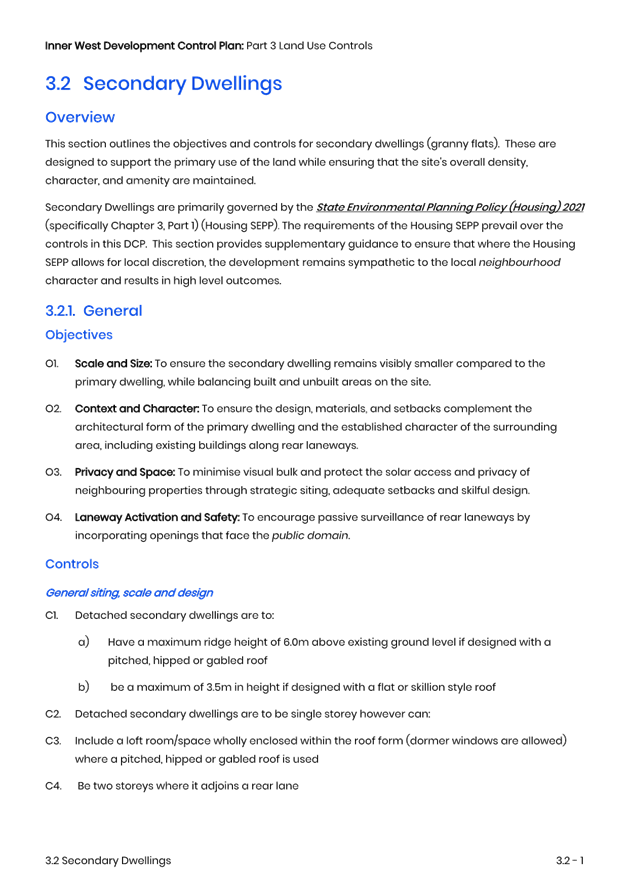
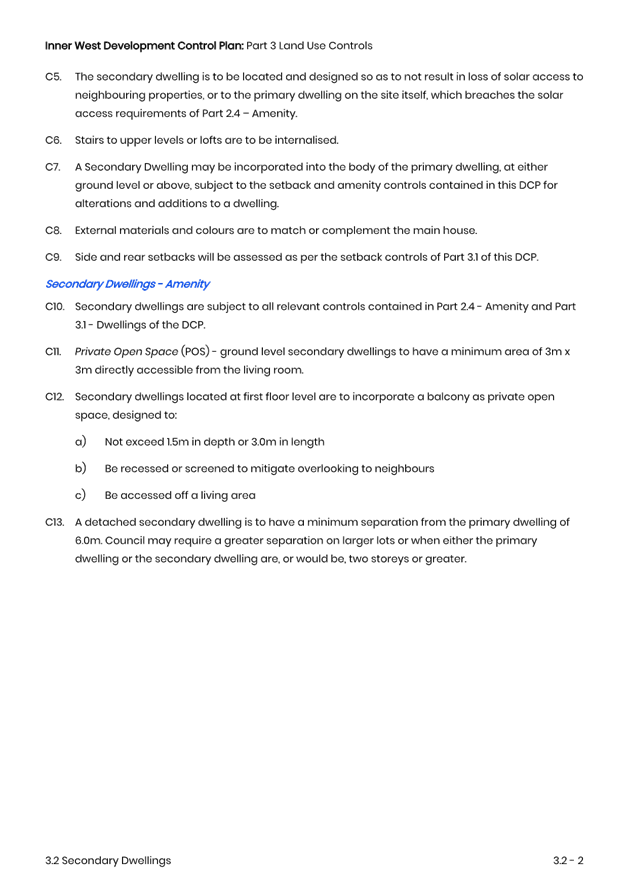
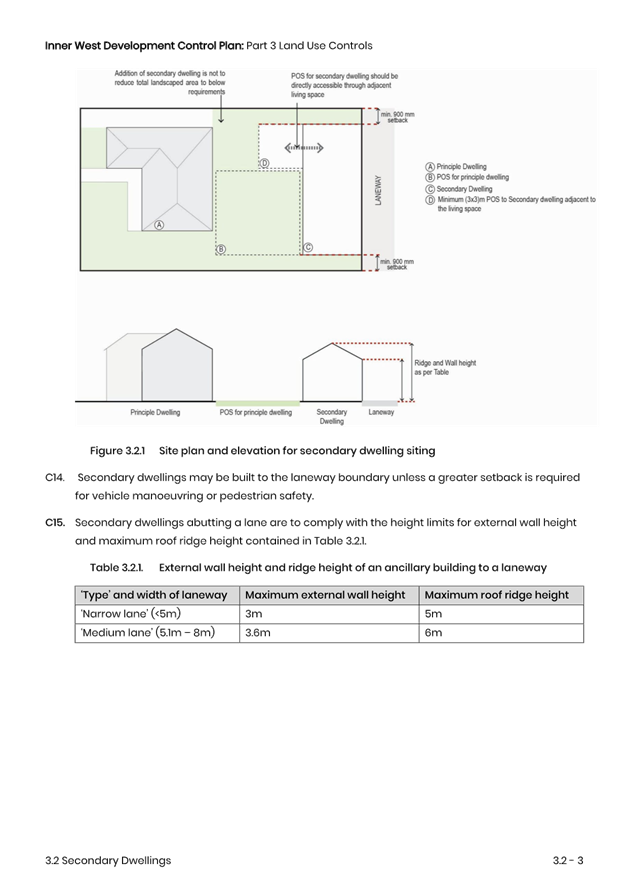
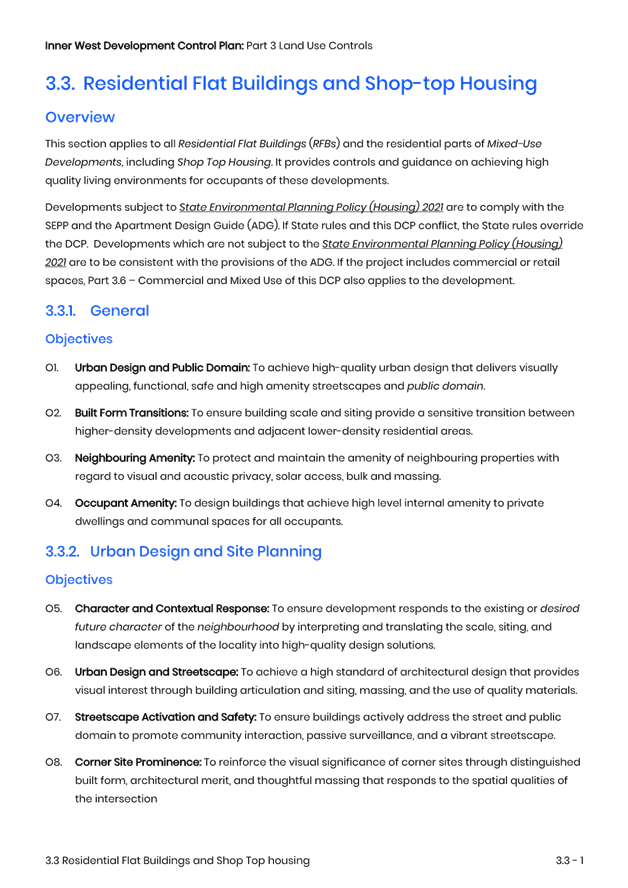
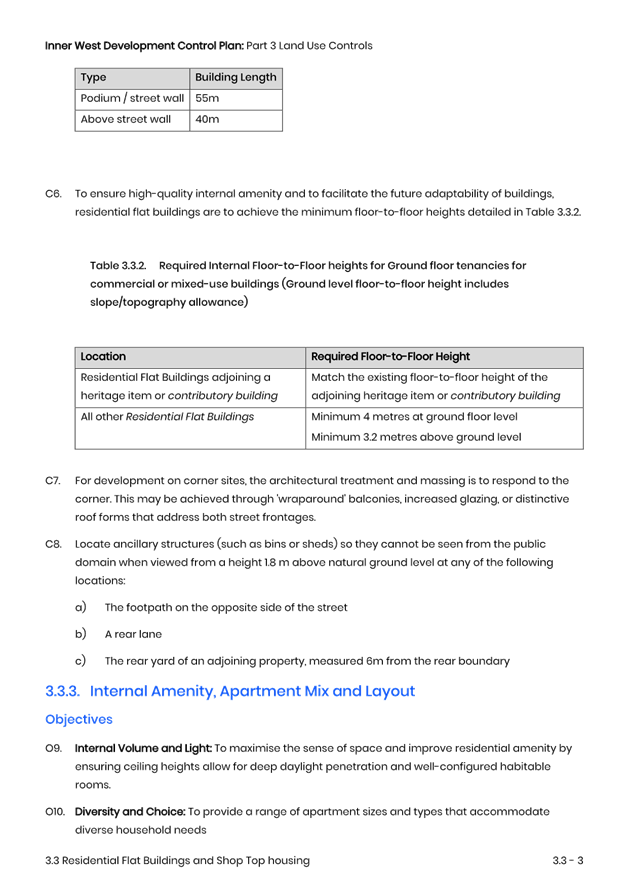
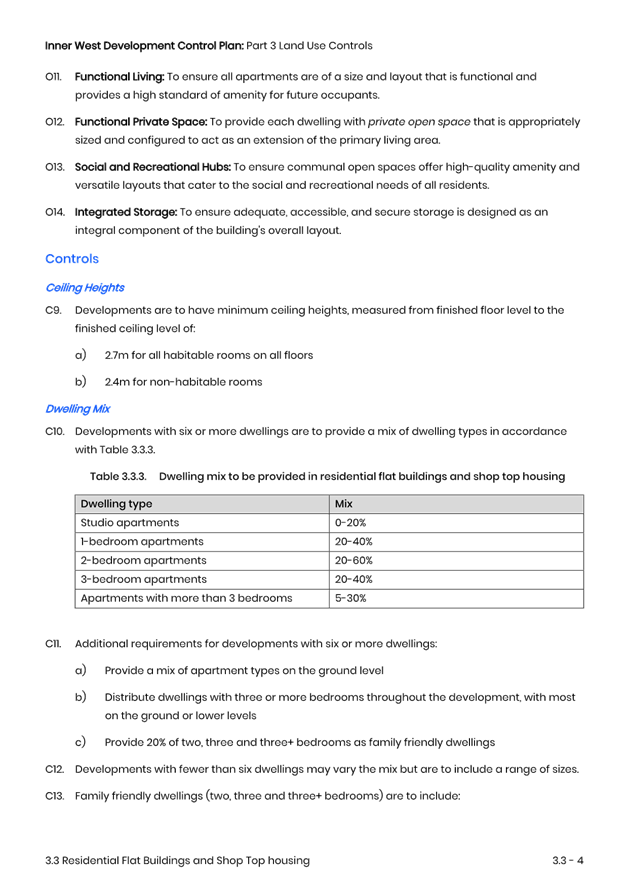
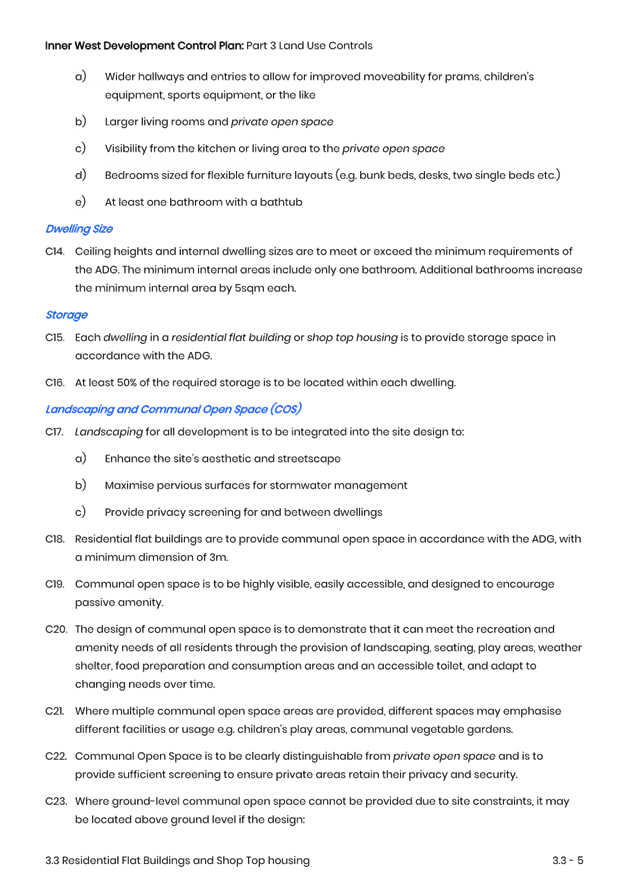
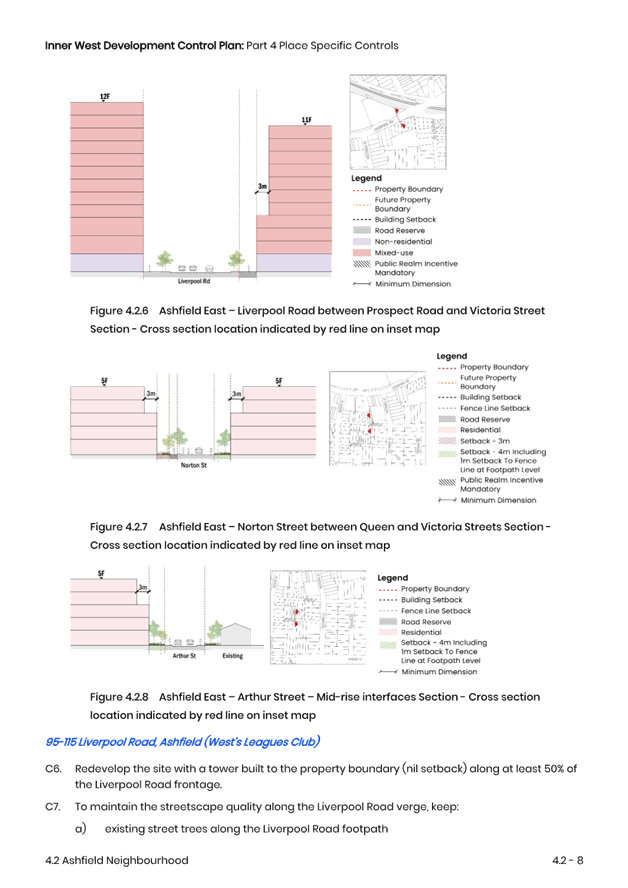
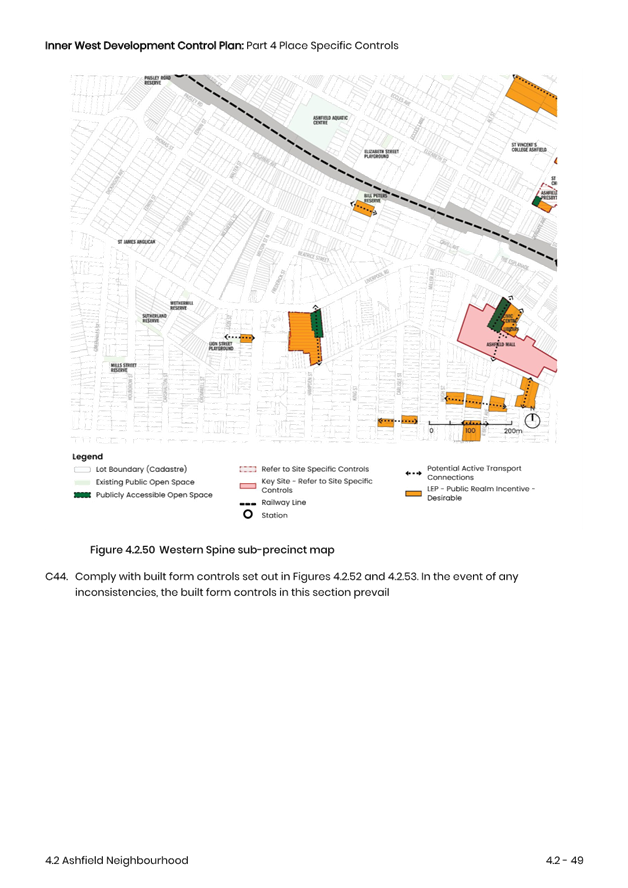
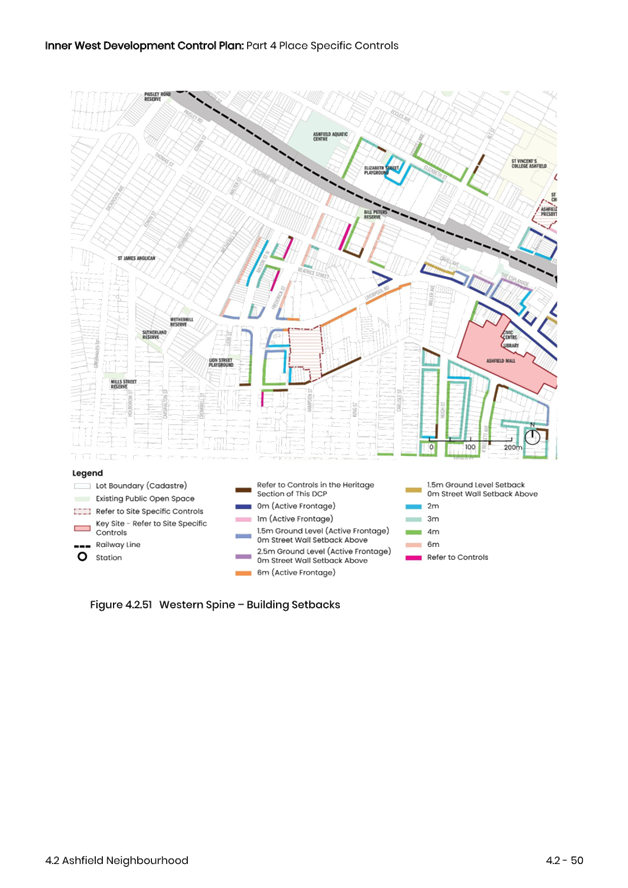
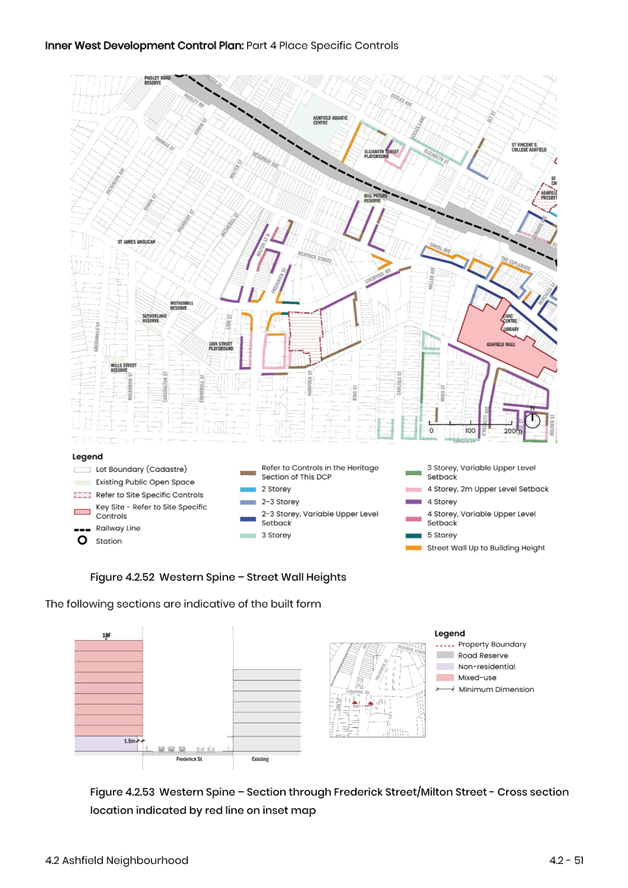
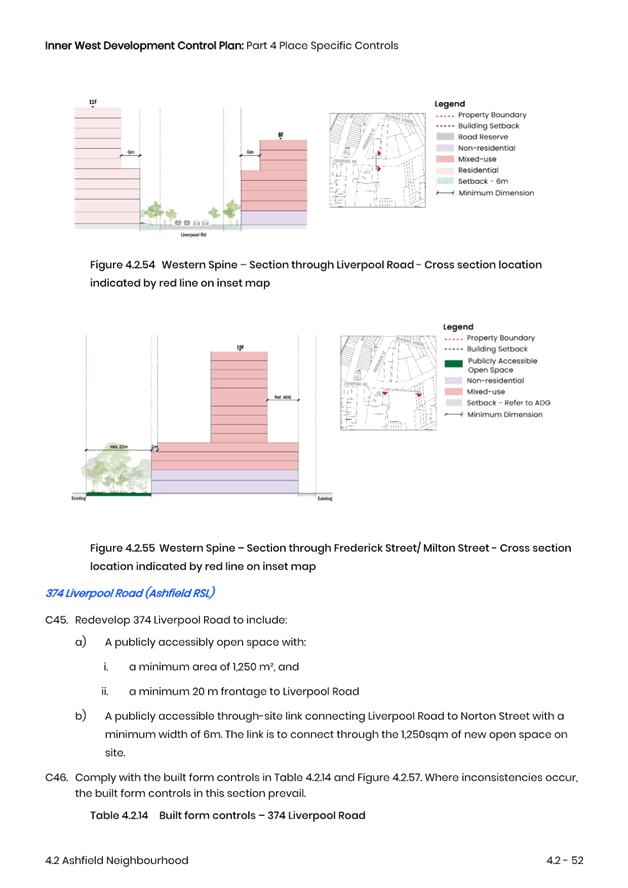
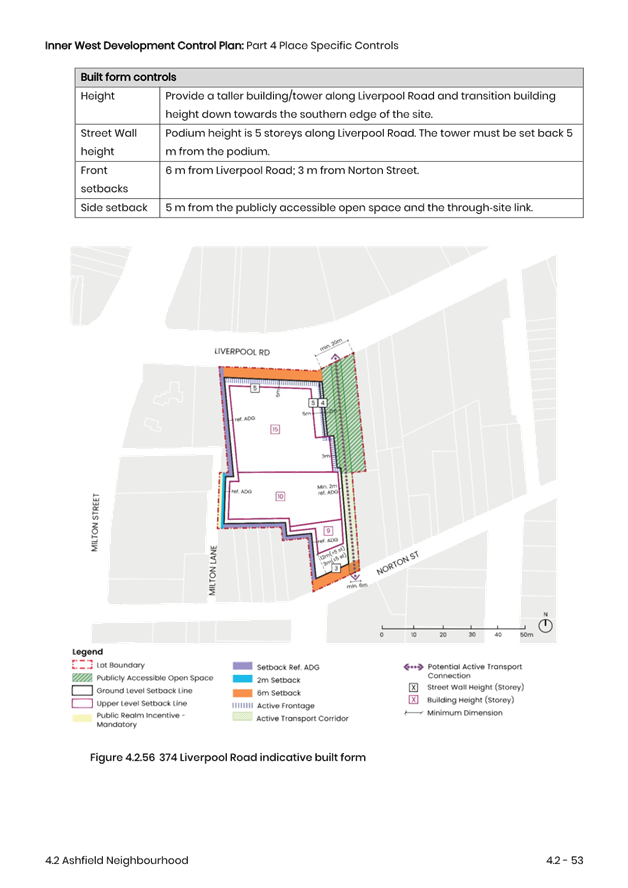
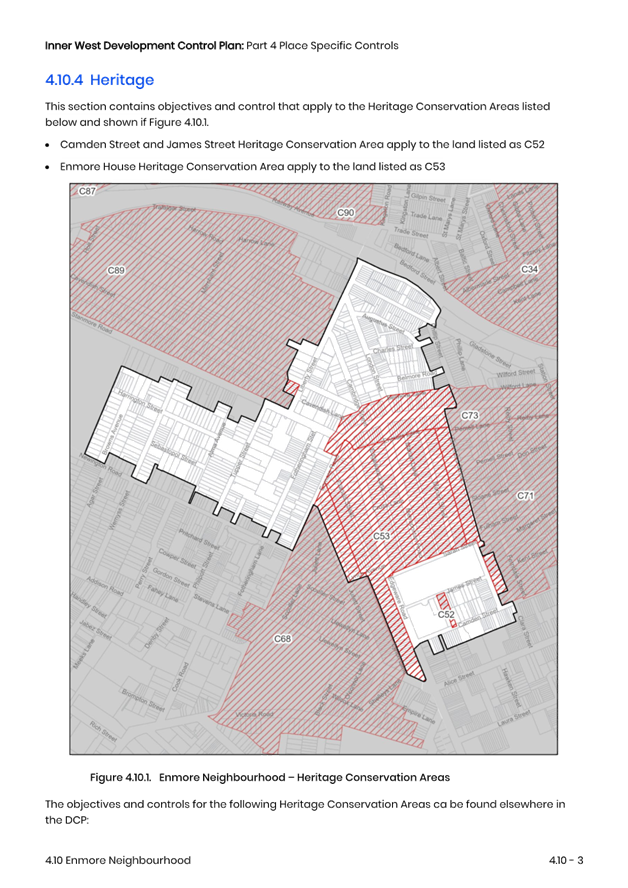
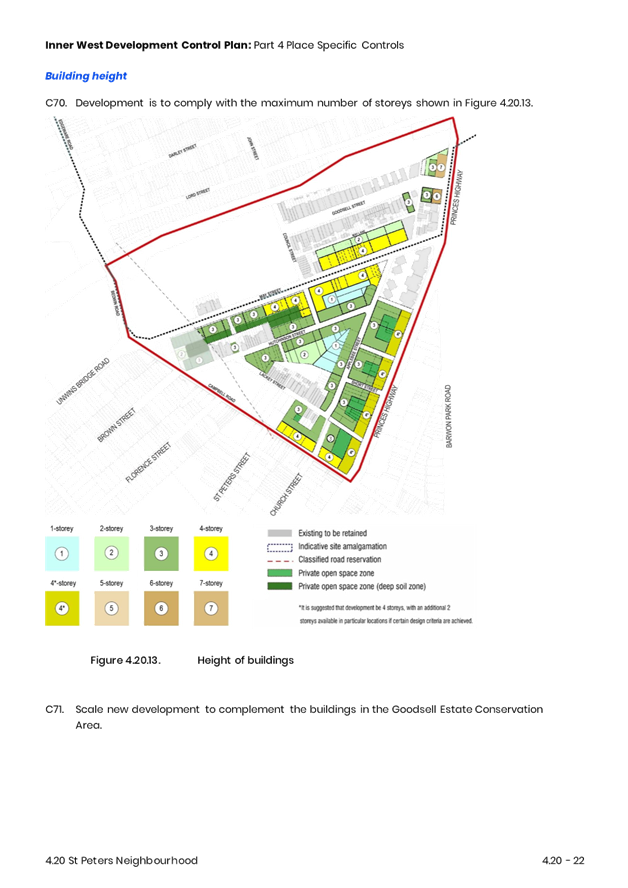
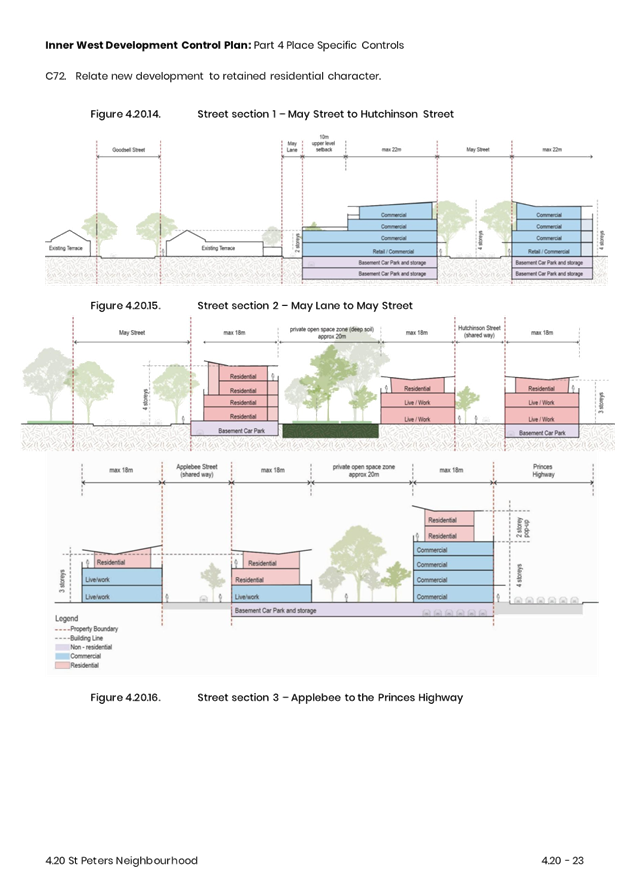
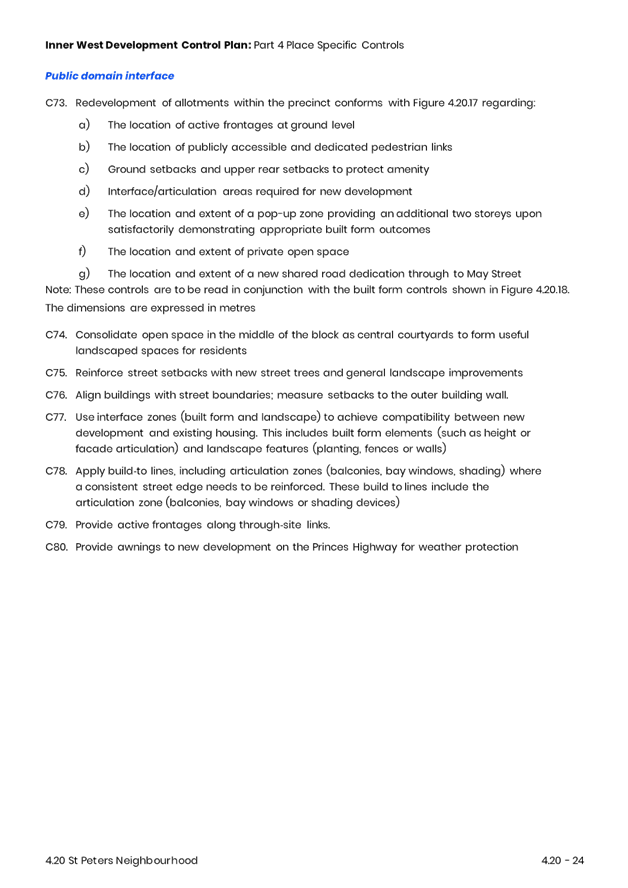
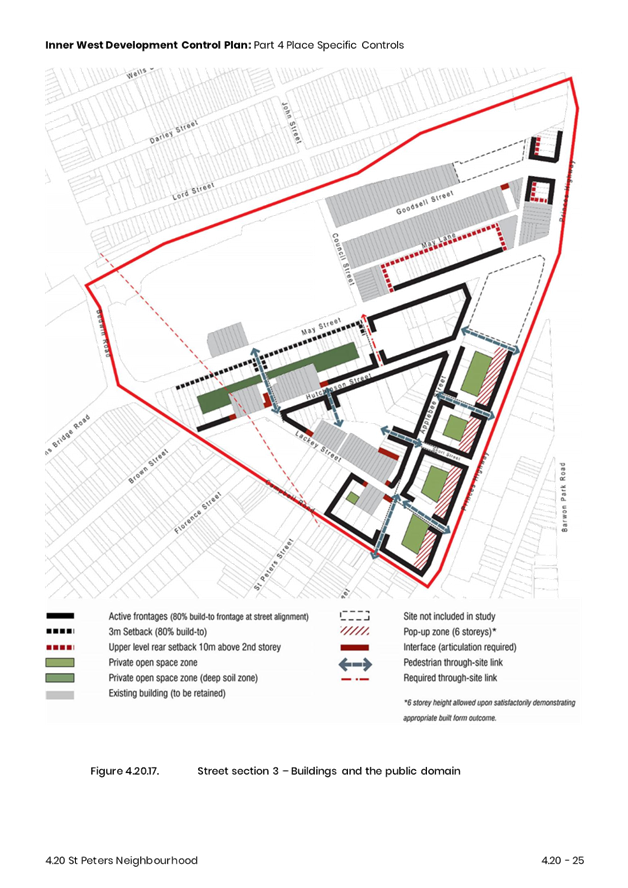
Council officers have prepared a draft Inner West Development Control Plan (IWDCP) (Attachment 1) to replace the three current Development Control Plans that apply in the former Ashfield, Leichhardt and Marrickville Council areas. Together the current documents exceed 3,100 pages which is a rough indicator of the challenge to the user. The new draft IWDCP is just over 600 pages and includes explanatory diagrams and a plain English approach.
The draft IWDCP is principles-based and focuses on design quality and responding to local context. It also includes updated controls to reflect current Council policy and best practice, including Our Fairer Future Plan, affordable and accessible housing, maximum parking rates, all electric buildings and Connecting with Country.
This report summarises the content of the draft IWDCP, explains the development of an electronic DCP (eDCP), and sets out the proposed consultation approach. Council is asked to endorse the draft IWDCP for public exhibition.
BACKGROUND
A development control plan (DCP) sets out detailed planning controls that support the Local Environmental Plan (LEP). The Inner West LEP commenced in 2022, but multiple DCPs still apply across the local government area, reflecting the former council boundaries.
Preparation of a single consolidated Inner West DCP has been underway with varying levels of resourcing for several years. Council resolutions made over time have also guided the development of this draft.
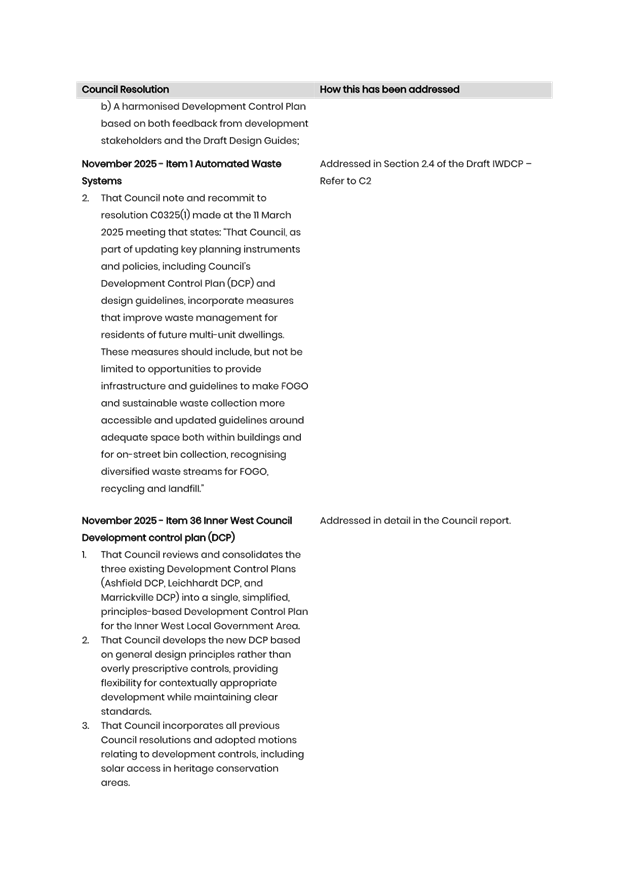
At its meeting held on 18 November 2025, Council resolved the following:
1. That Council notes the existing Development Control Plans (DCPs) are criticised for being overly complicated, archaic, and difficult to interpret.
2. That Council reviews and consolidates the three existing Development Control Plans (Ashfield DCP, Leichhardt DCP, and Marrickville DCP) into a single, simplified, principles-based Development Control Plan for the Inner West Local Government Area.
3. That Council develops the new DCP as a principles and objectives based instrument grounded in design quality, sustainability and climate resilience, and contextual responsiveness principles to prioritise design outcomes, provide flexibility for contextually appropriate development and enable professional judgment to guide site-specific design responses.
4. That Council incorporates the Design Guide and all previous Council resolutions and adopted motions relating to development controls, including solar panels in heritage conservation areas and considers the transition from high, medium and low density areas.
5. That Council examine the integration of the State Government’s new pattern book designs within the new DCP to standardise design elements and provide clear visual guidance for applicants and the community.
6. That Council allocate the DCP review and consolidation as the first and priority project for the newly appointed City Architect to lead the DCP project and directly engage with local architects and planners, to ensure it reflects best practice.
7. That Council notes that the objectives of this DCP are to support high-quality, sustainable development outcomes and:
a. Reduce the number of matters proceeding to the Land and Environment Court;
b. Provide greater certainty for residents and applicants;
c. Streamline development assessment processes; and
d. Ensure consistency across the LGA.
8. That Council brings back a draft DCP to the April 2026 Council meeting for review prior to community consultation.
At the Council meeting held on 17 February 2026, Council resolved, in part, the following:
6. That the Inner West Development Control Plan be reported to the April 2026 council meeting.
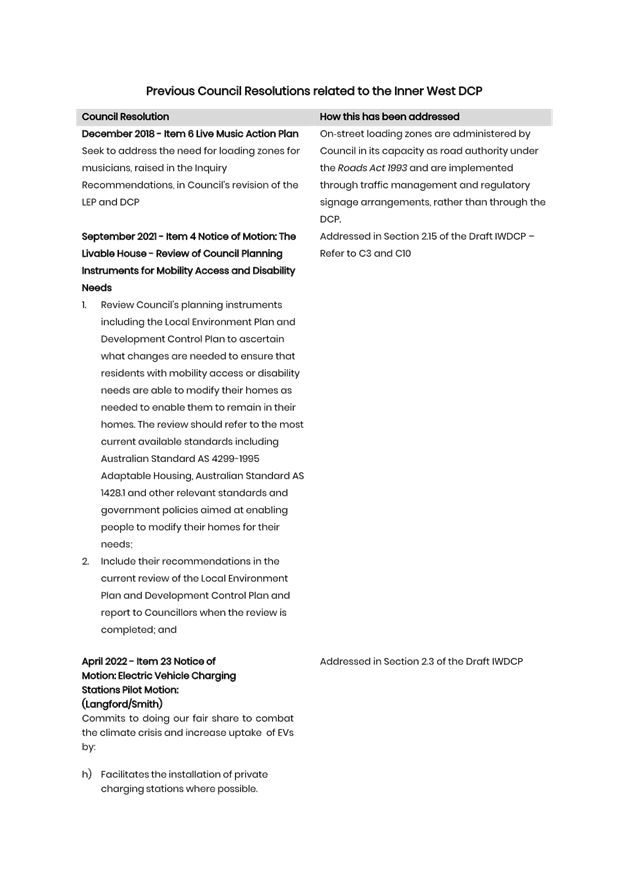
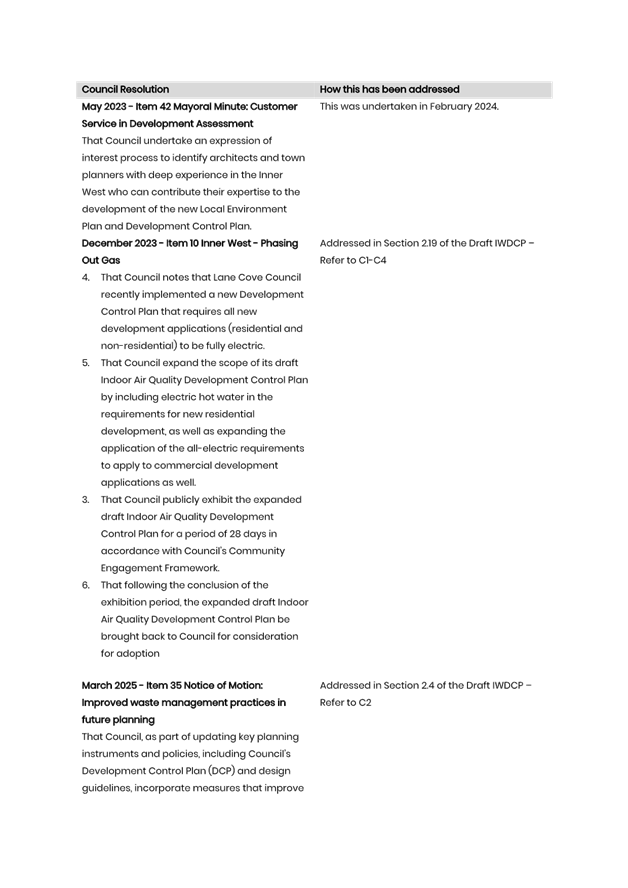
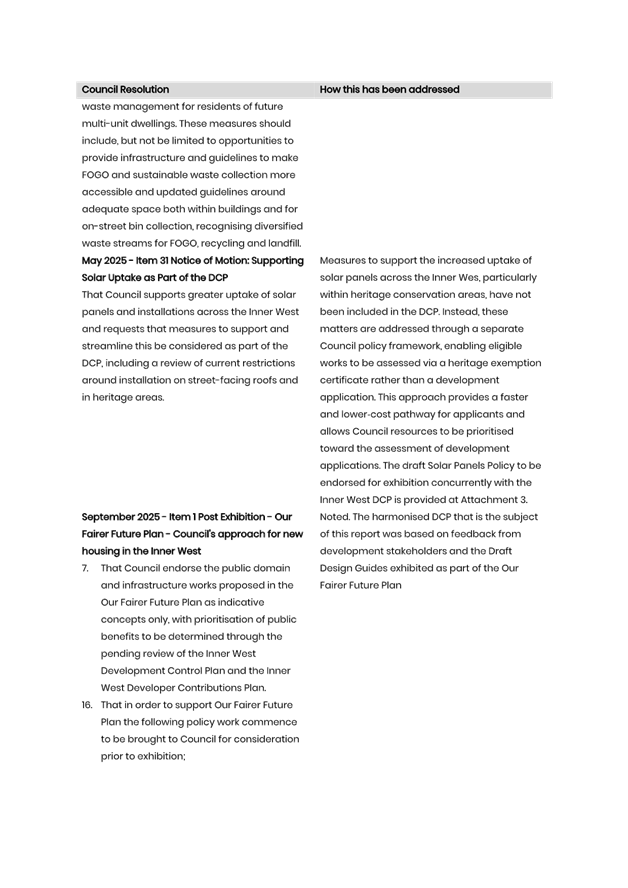
Attachment 2 lists the remaining Council resolutions relevant to drafting the Inner West Development Control Plan.
DISCUSSION
Council currently administers three area‑based Development Control Plans (DCPs) within the Inner West, applying to the former council areas of Ashfield, Leichhardt, and Marrickville. A single comprehensive Inner West Development Control Plan (DCP) has been prepared to replace these DCPs. This report seeks Council endorsement to place the draft on public exhibition.
The draft Inner West DCP responds to outstanding Council resolutions, and updates development controls to reflect current Council policies and contemporary best practice. It includes:
• Our Fairer Future
• Affordable, adaptable and accessible housing
• Maximum parking rates
• All‑electric buildings
• Designing with Country
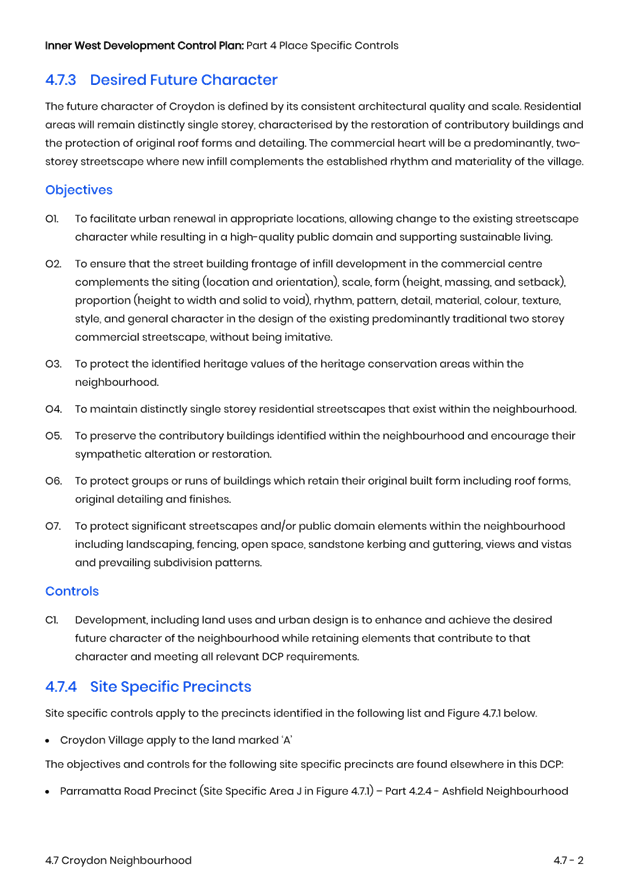
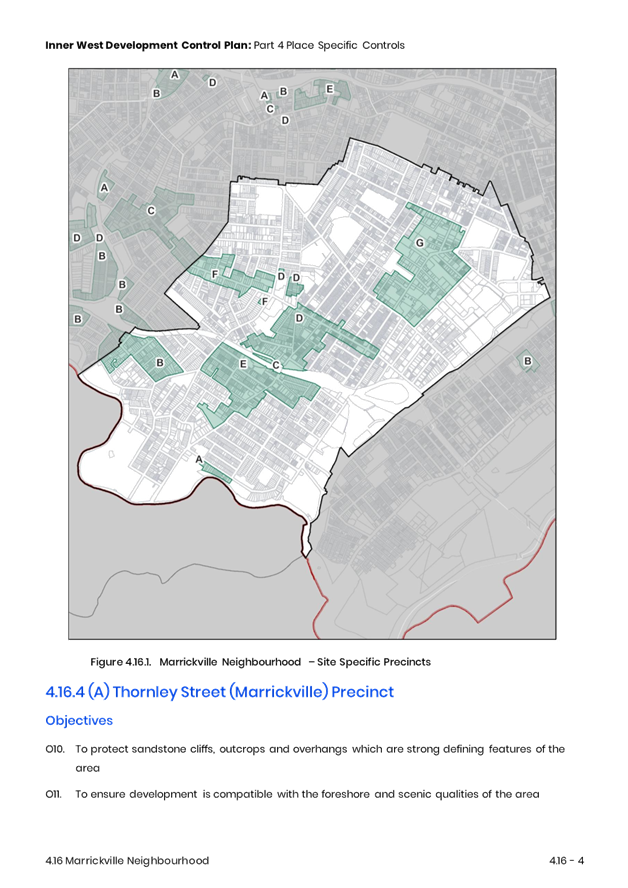
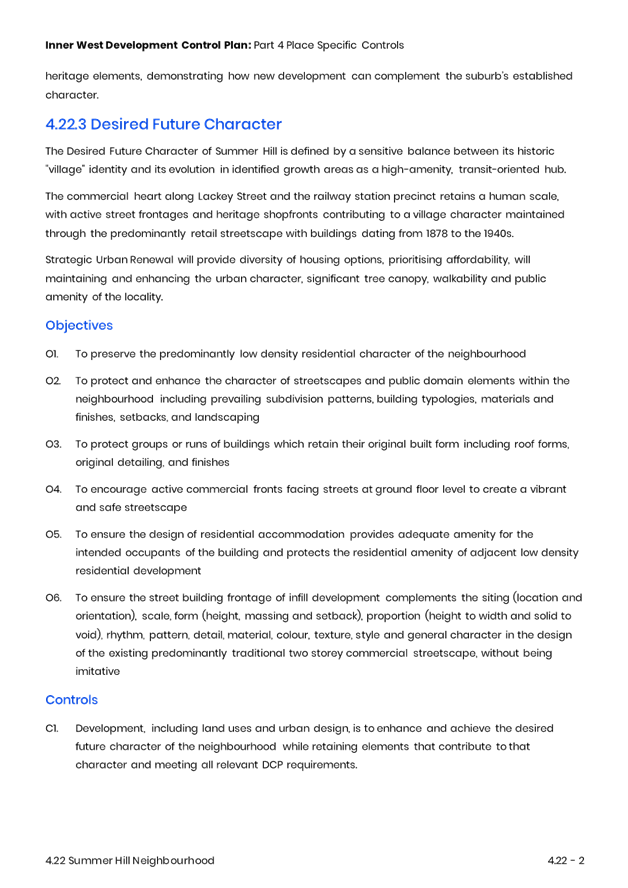
• Desired Future Character statements for the entire LGA
The proposed IWDCP contains five parts:
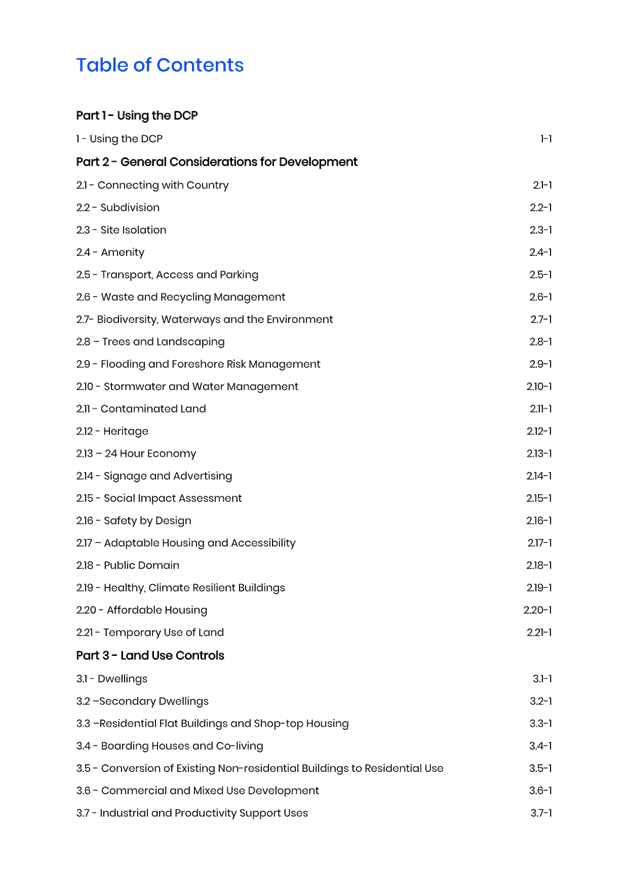
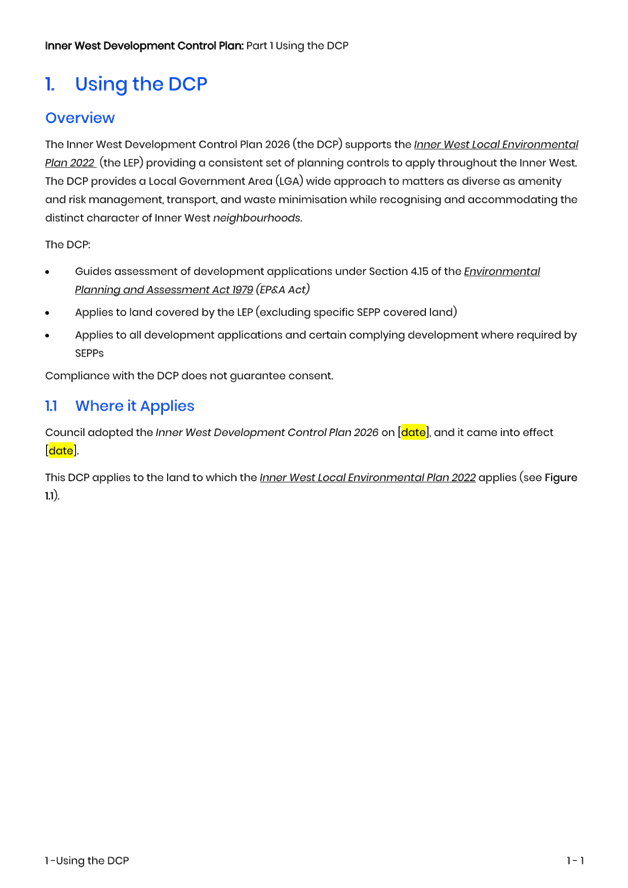
Part 1 – Using the DCP
Explains the DCP’s purpose, where it applies, the legislative context, and how to use it.
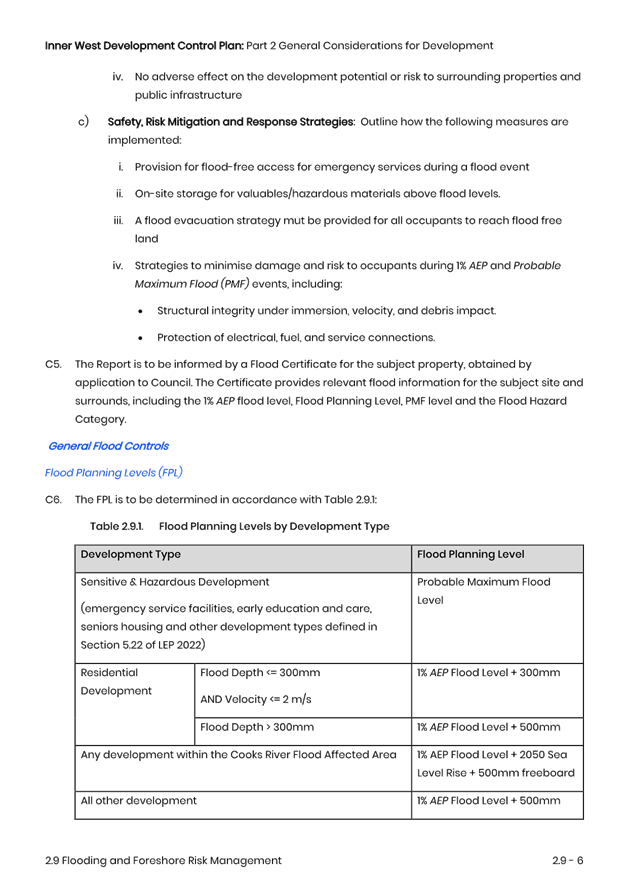
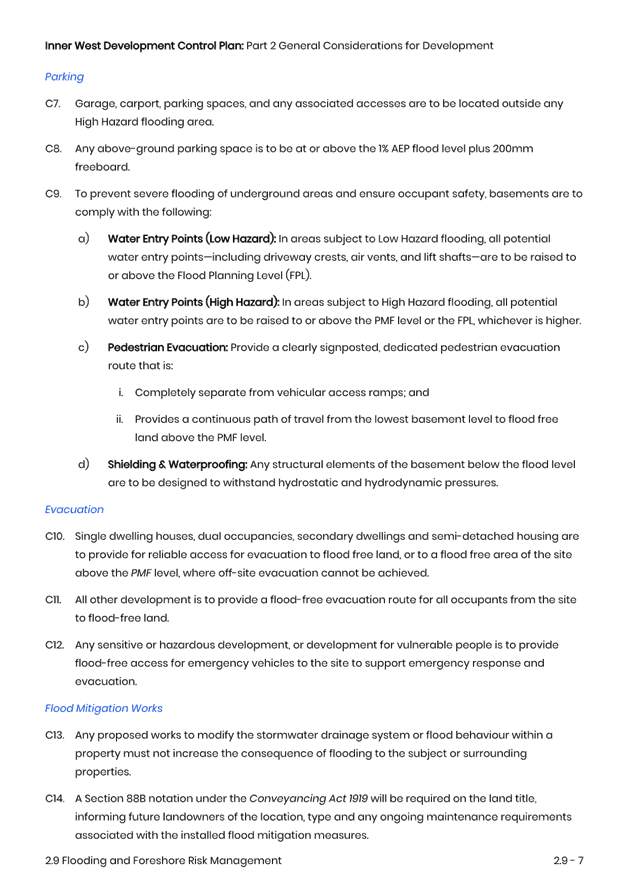
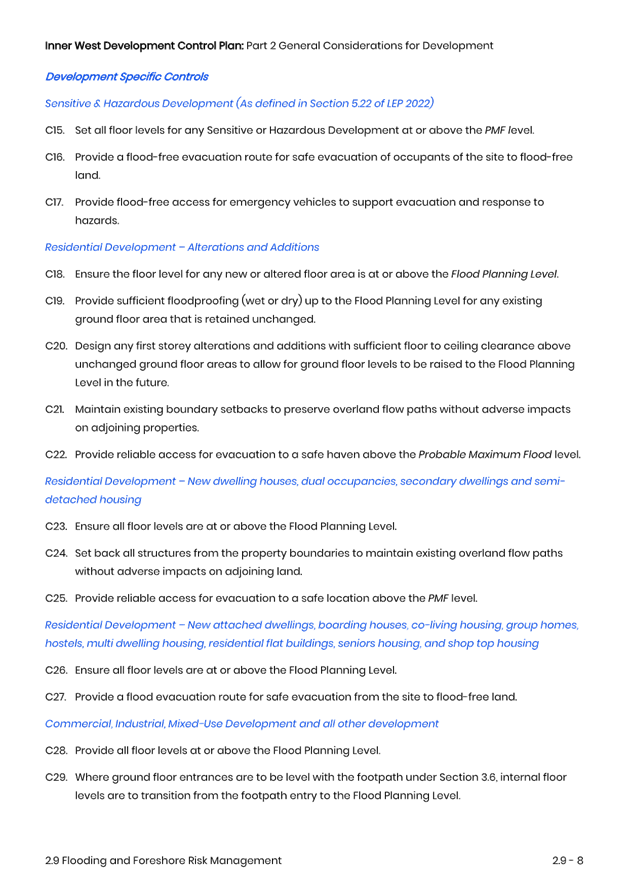
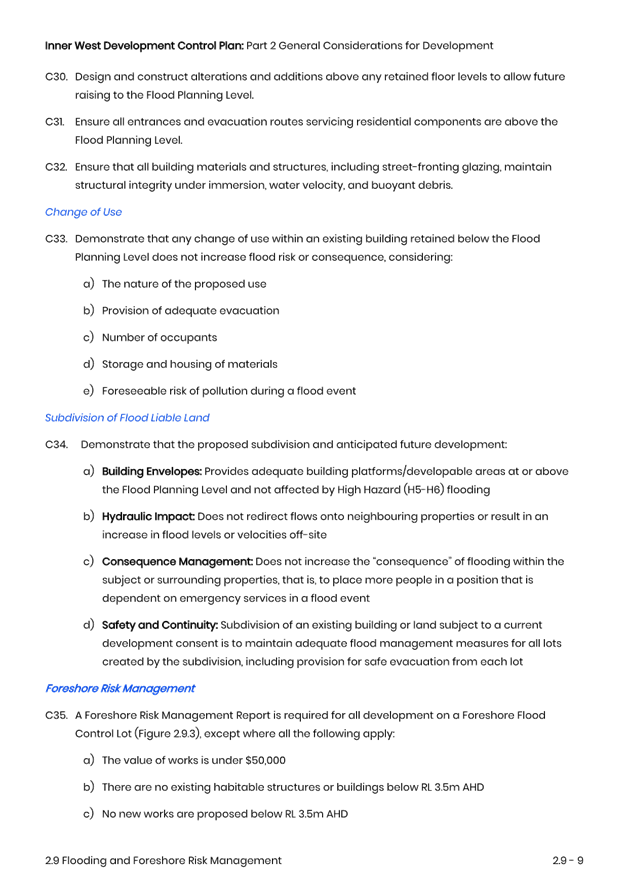
Part 2 – General Considerations for Development
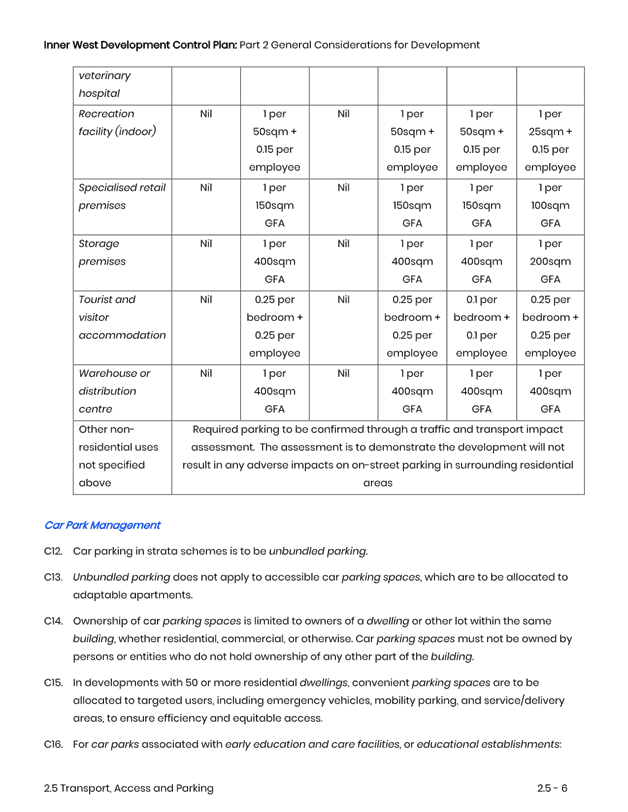
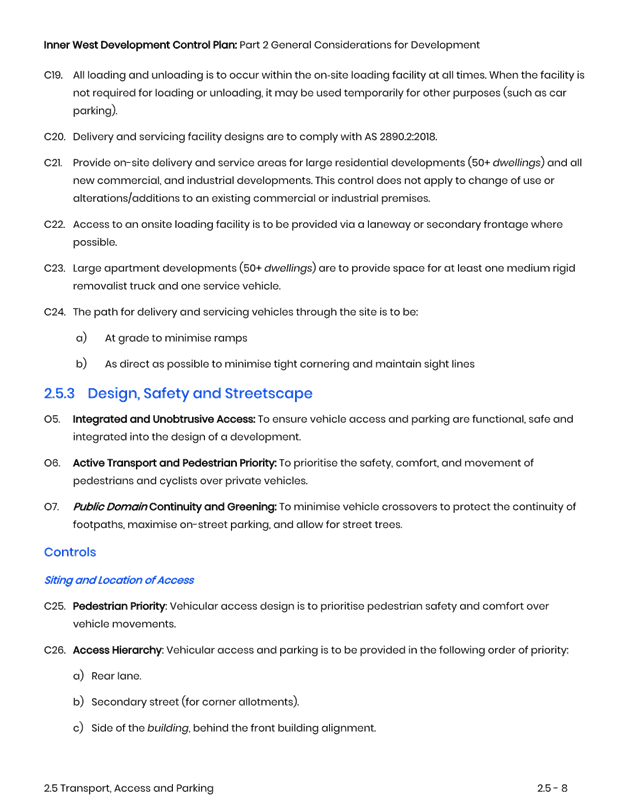
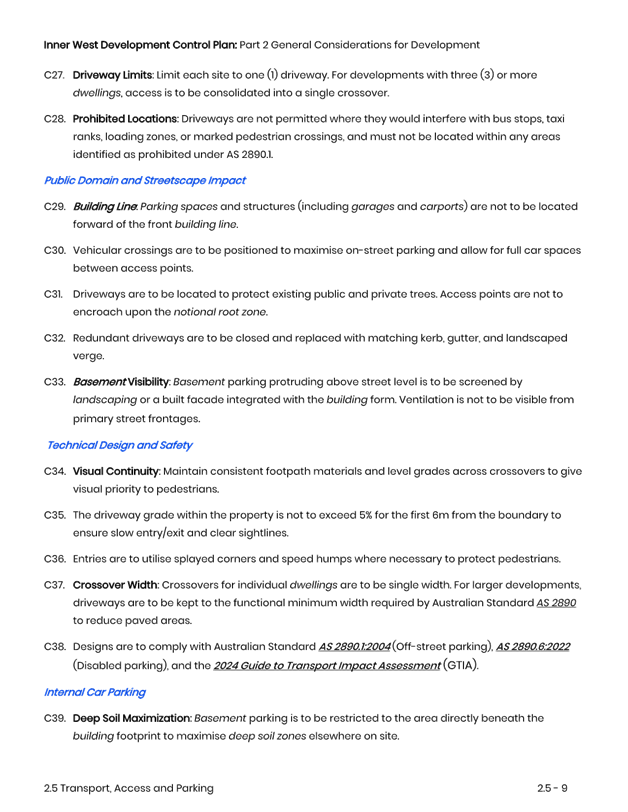
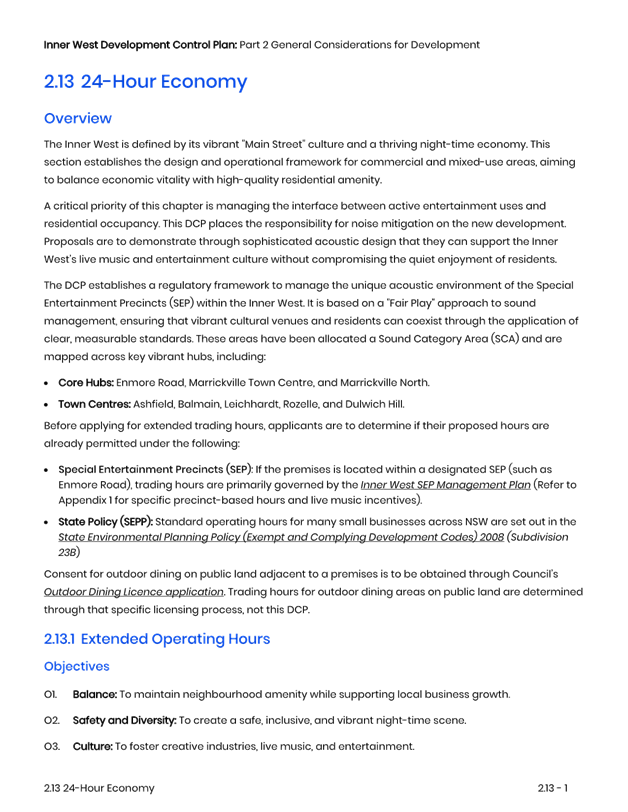
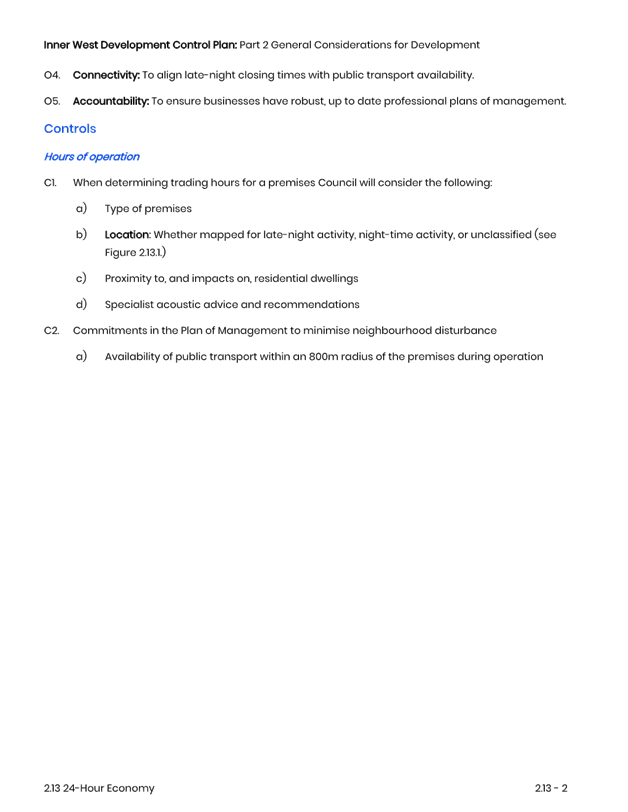
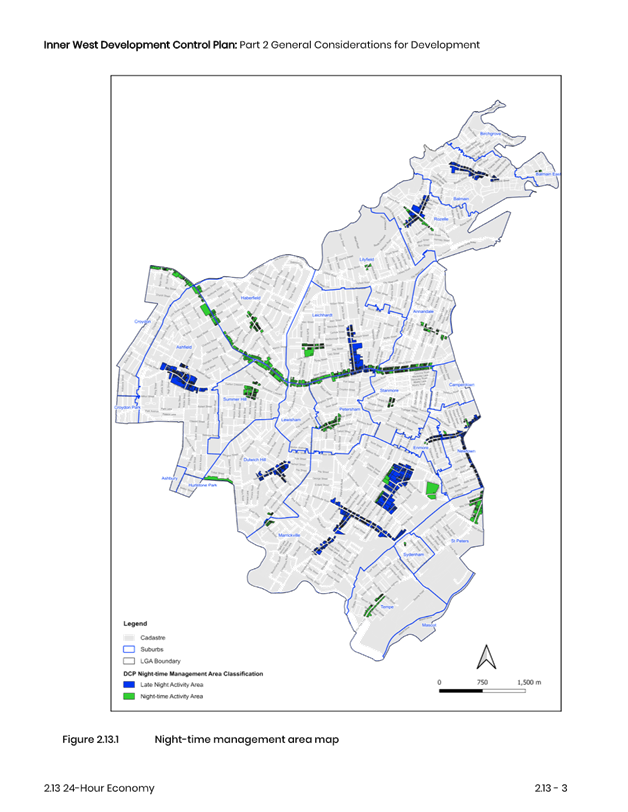
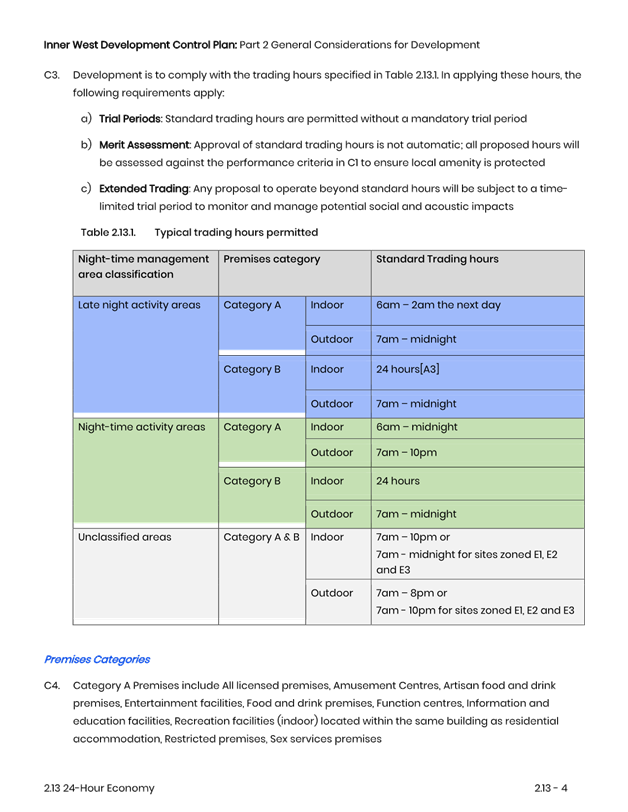
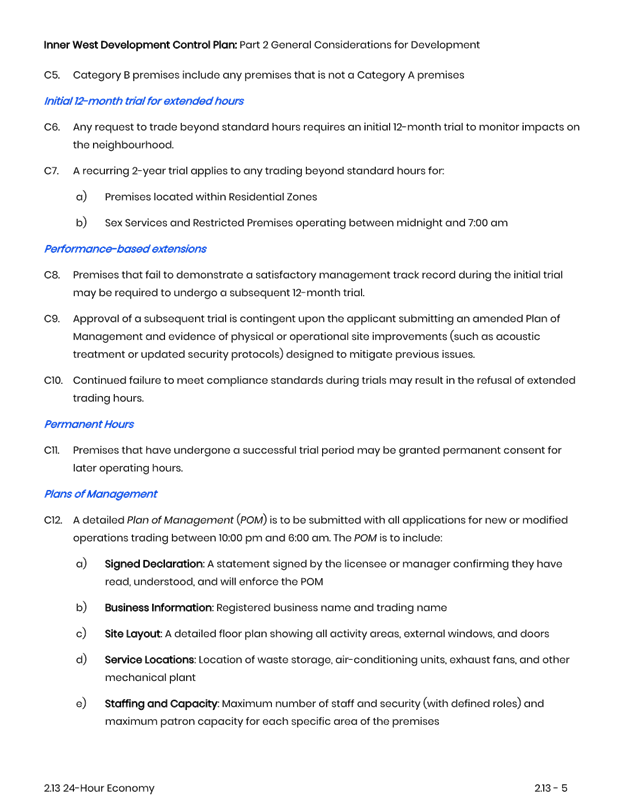
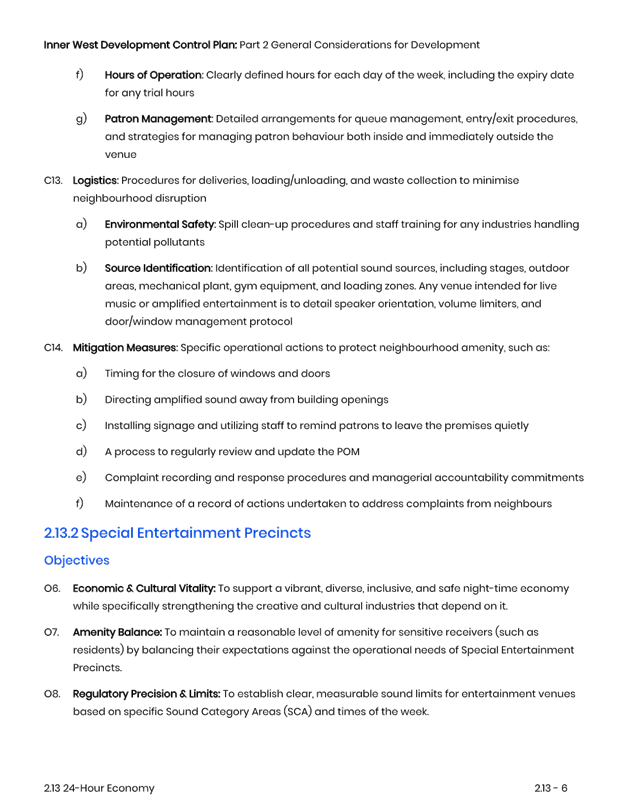
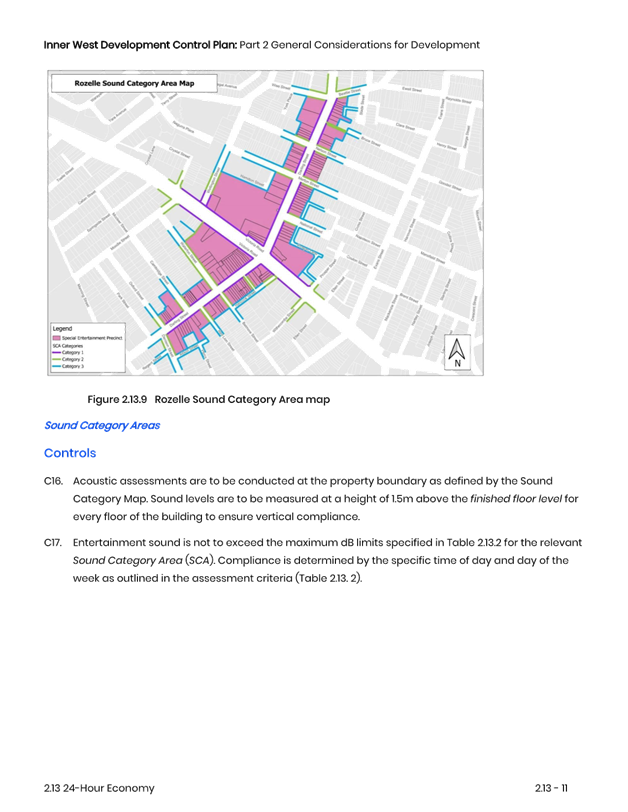
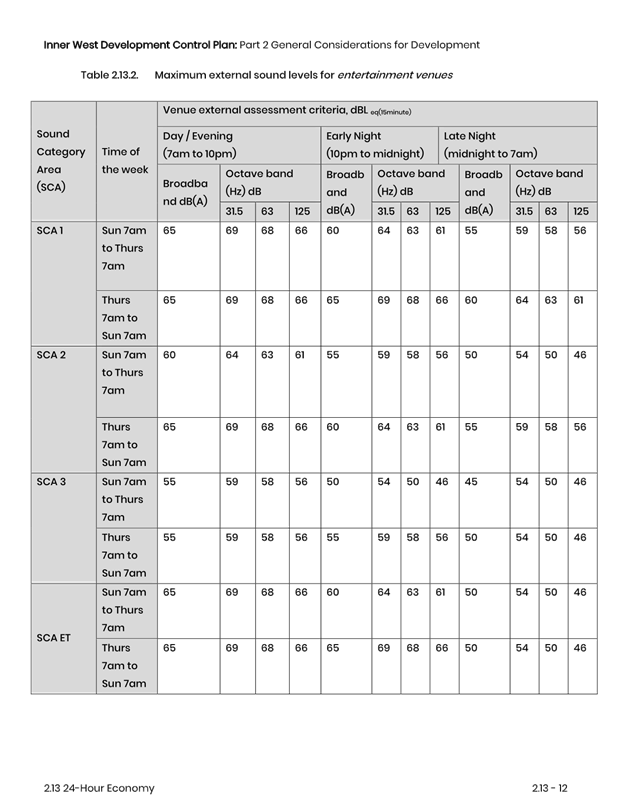
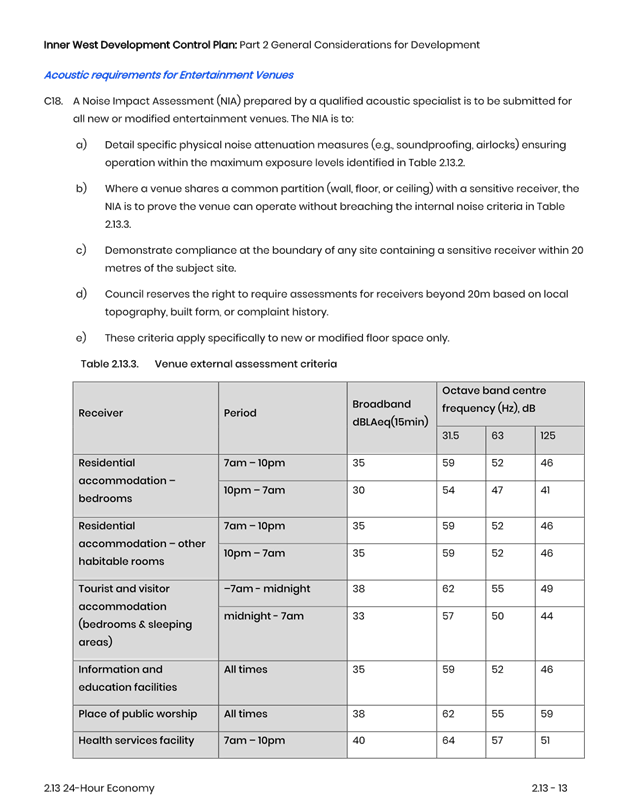
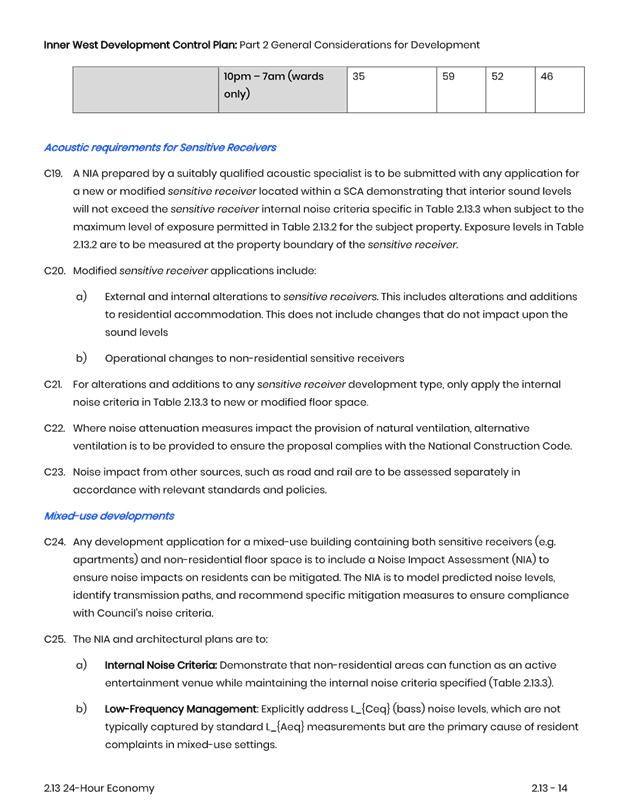
Sets controls that apply to most development, such as urban design and built form, amenity and parking. It also provides guidance on broader matters, including signage, housing diversity and the night‑time economy.
Part 3 – Land Use Controls
Sets controls for specific types of development, including residential (from single dwellings to residential flat buildings and boarding houses), commercial and mixed‑use, and industrial development.
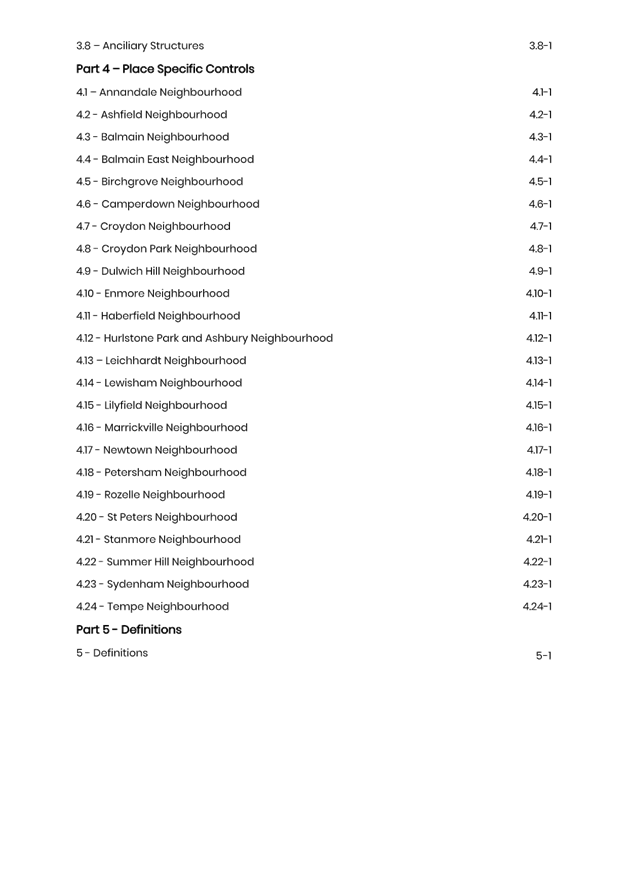
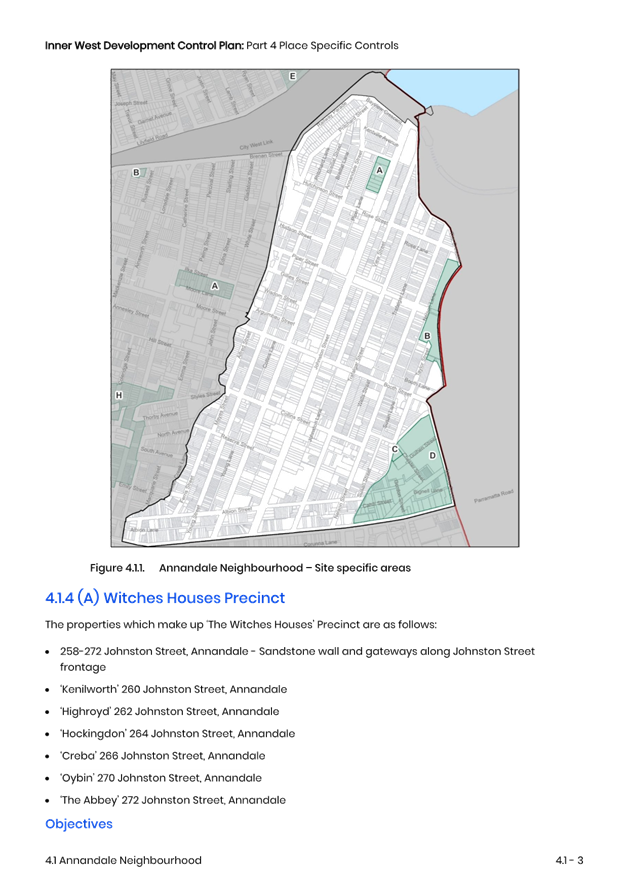
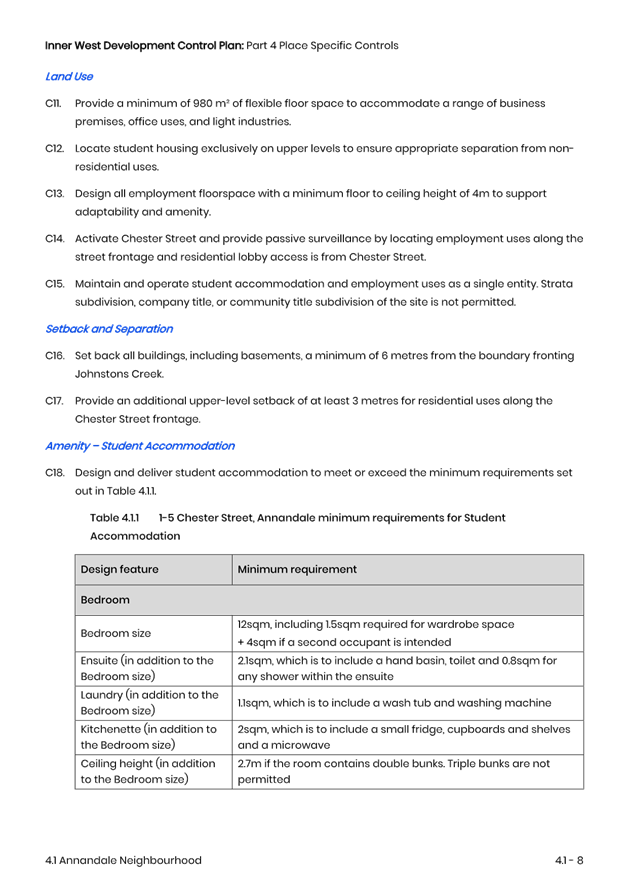
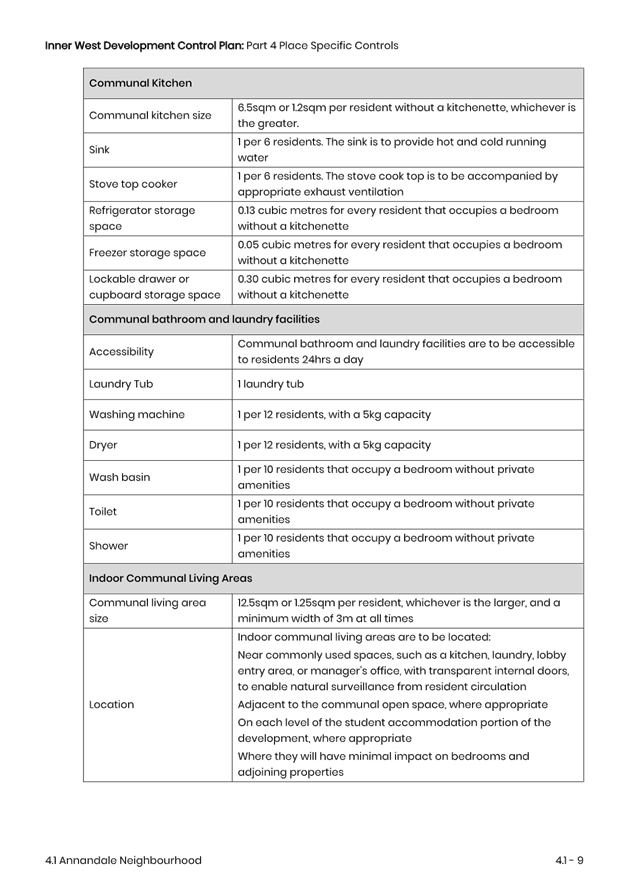
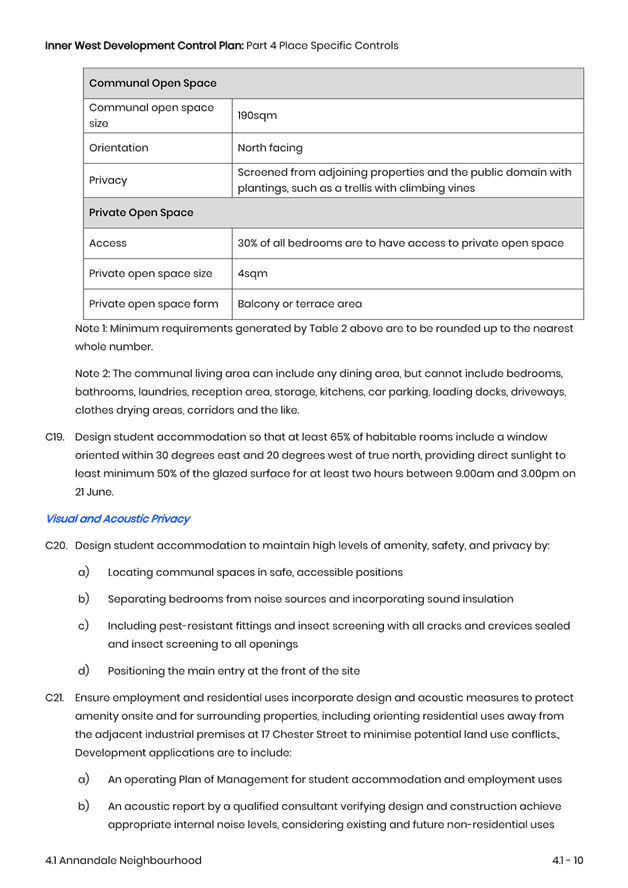
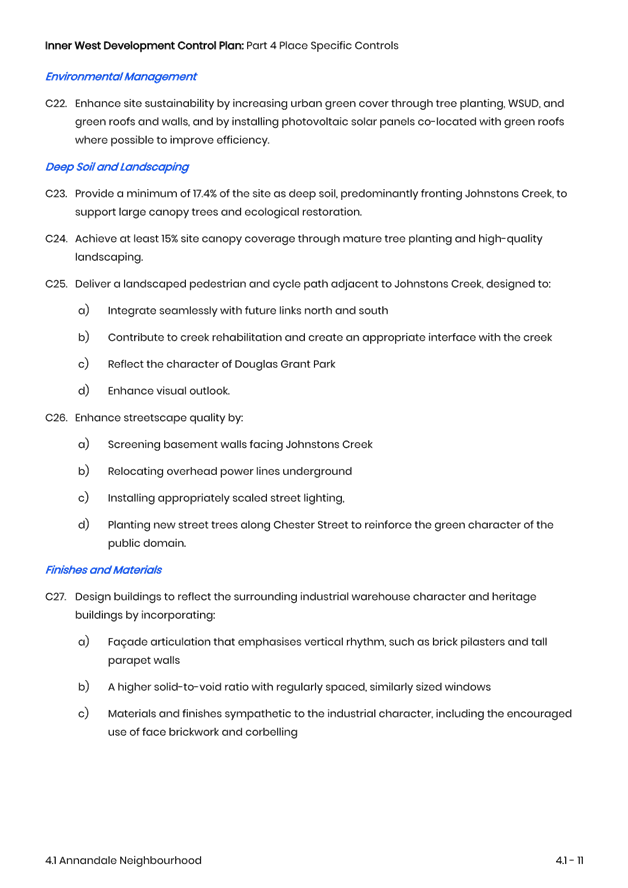
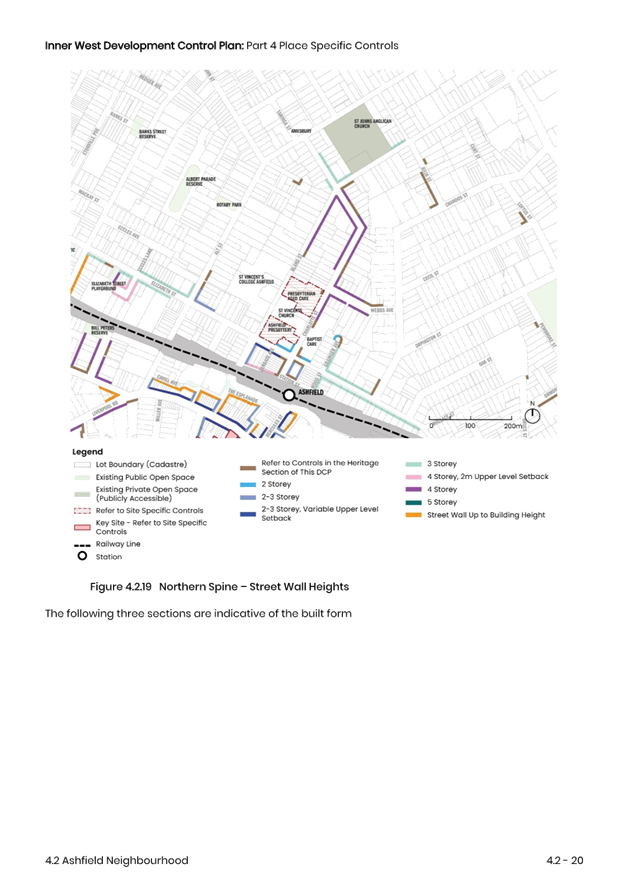
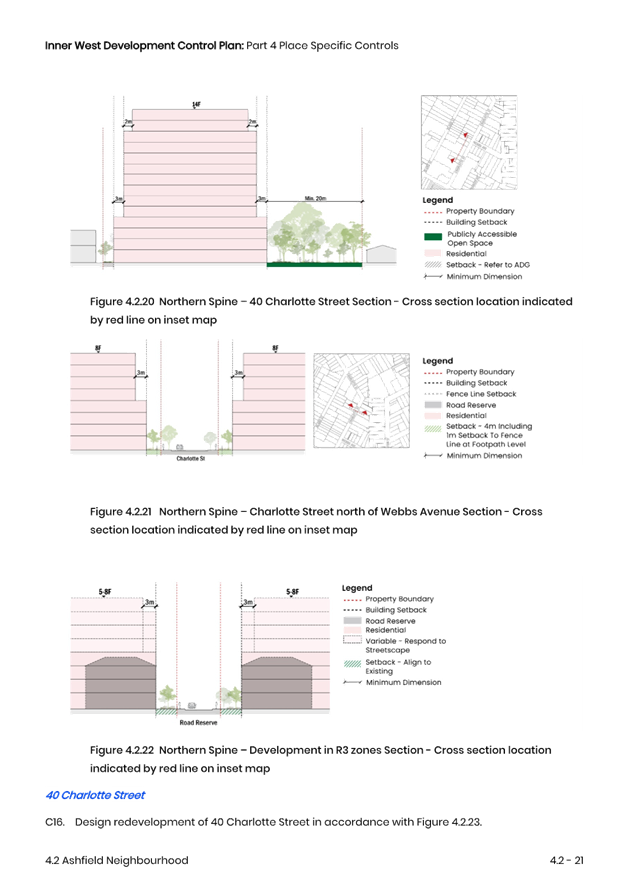
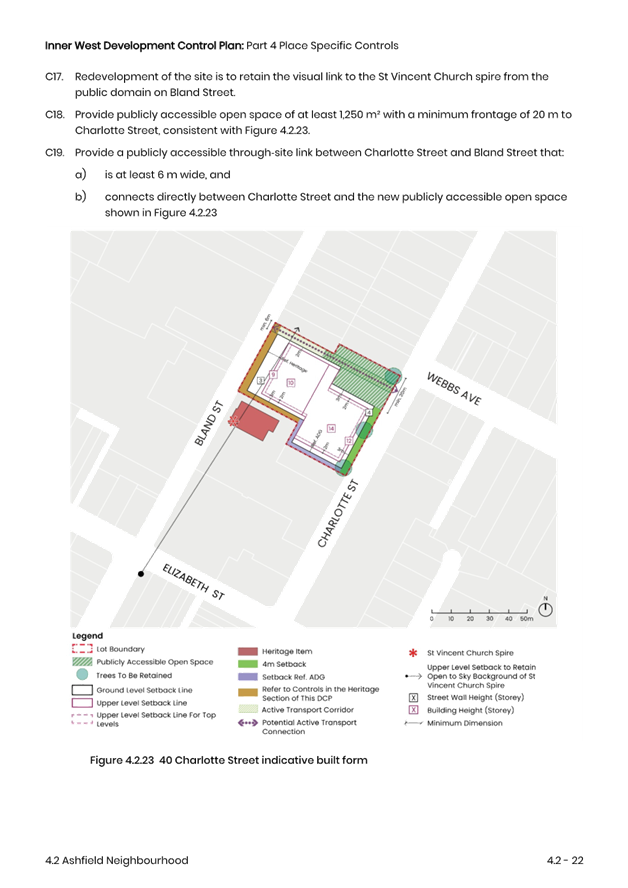
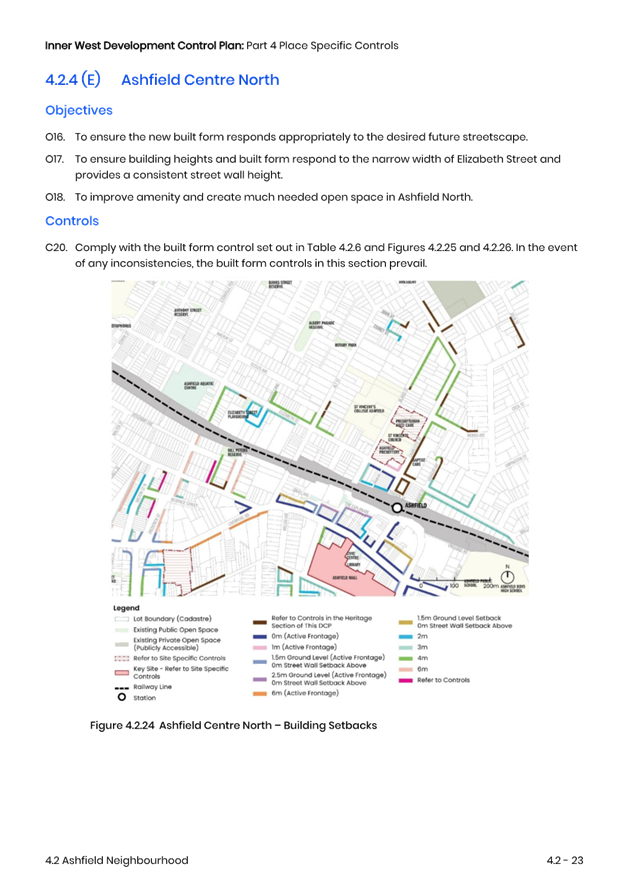
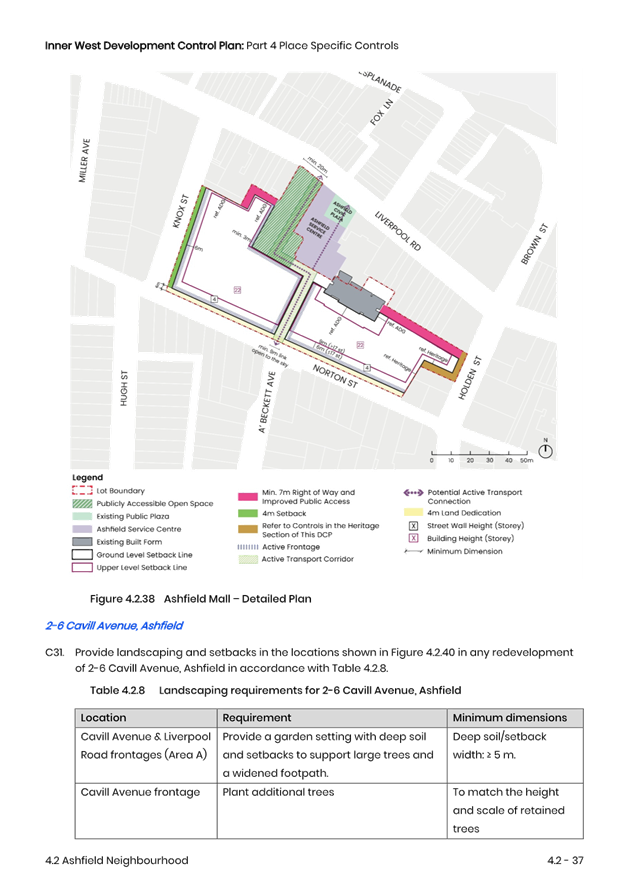
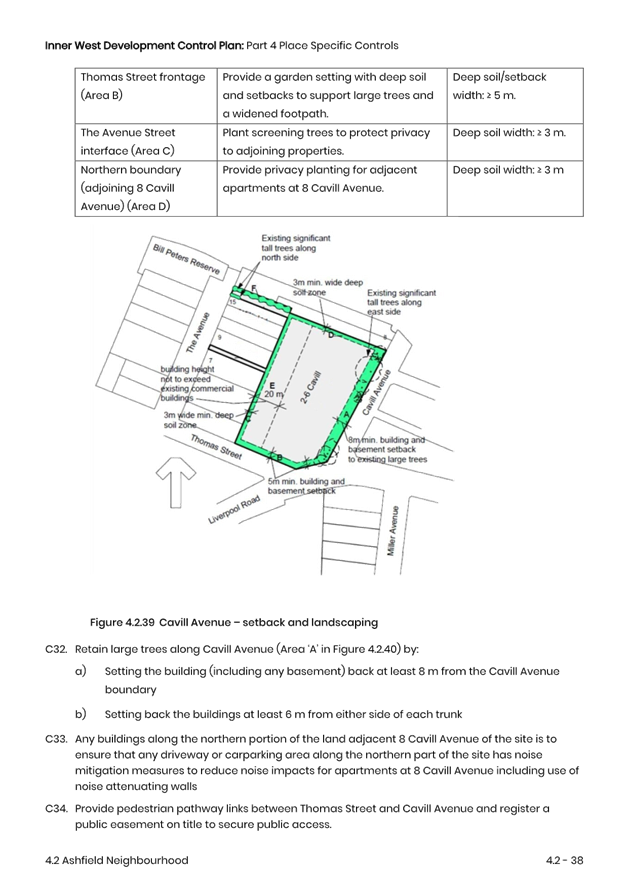
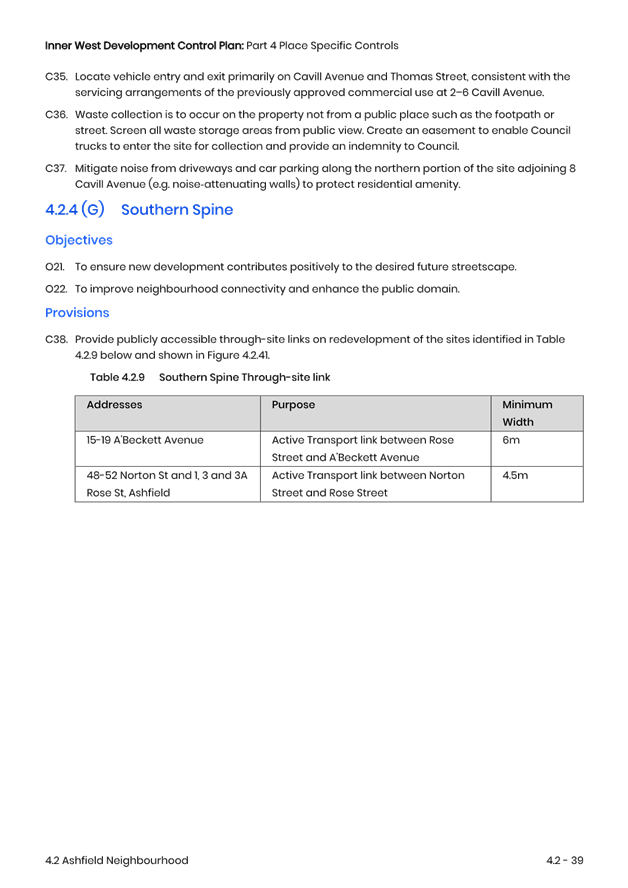
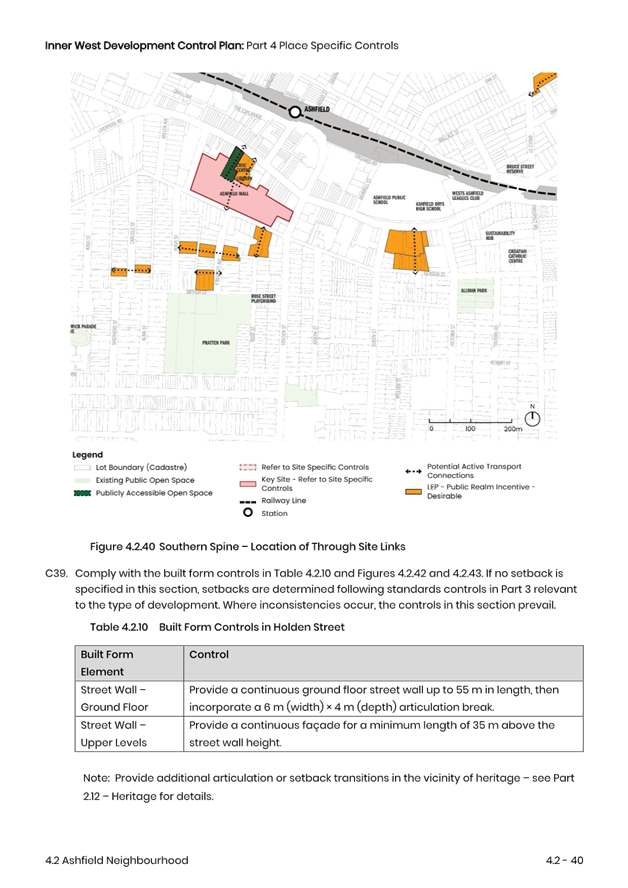
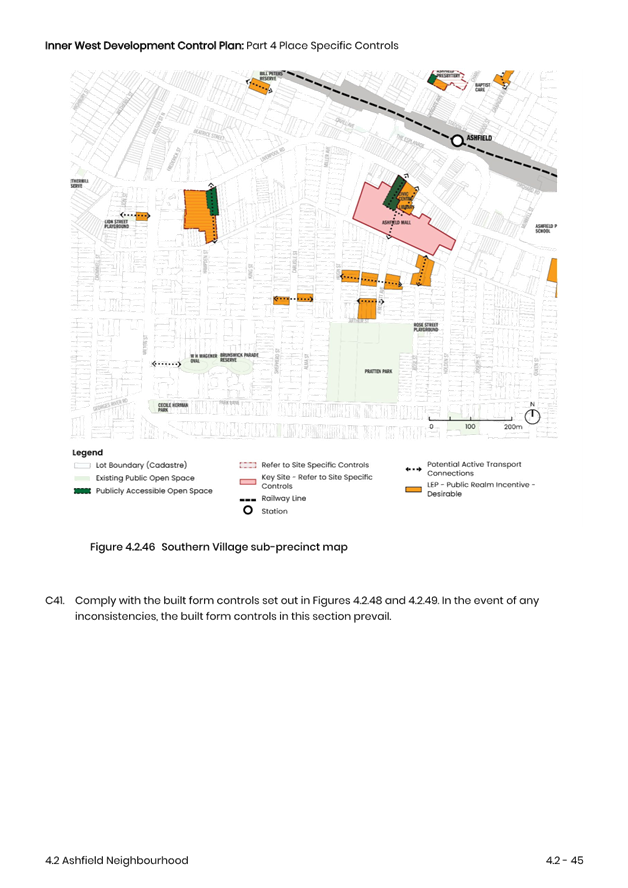
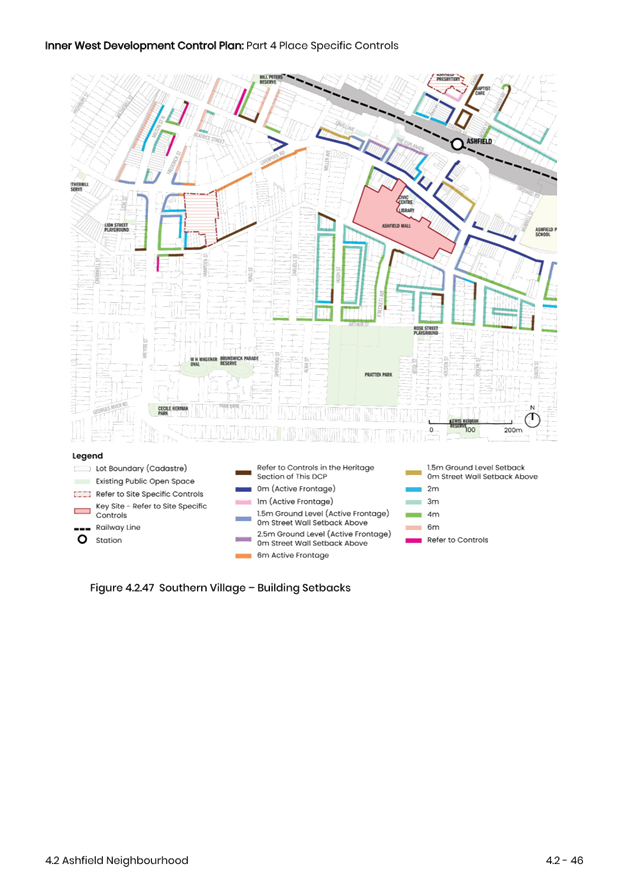
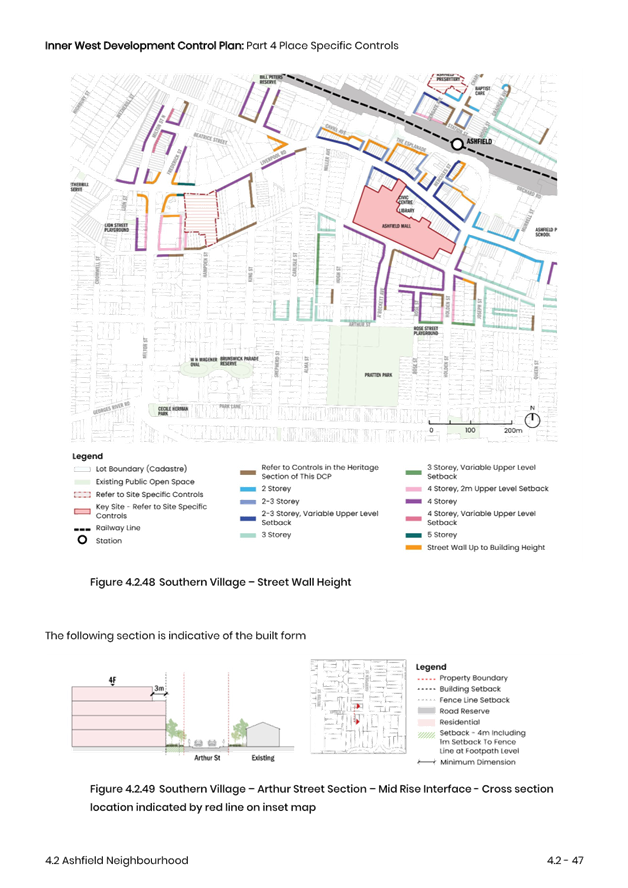
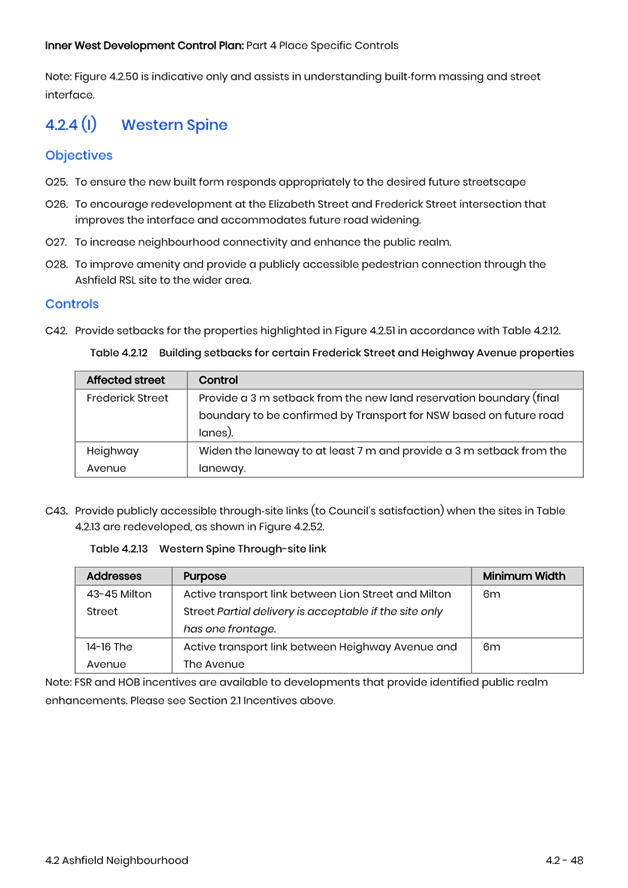
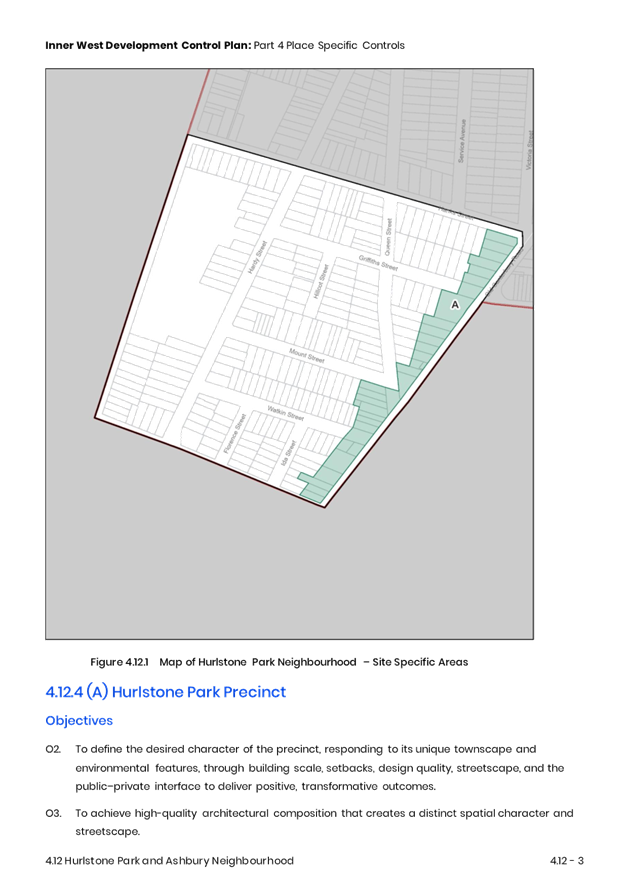
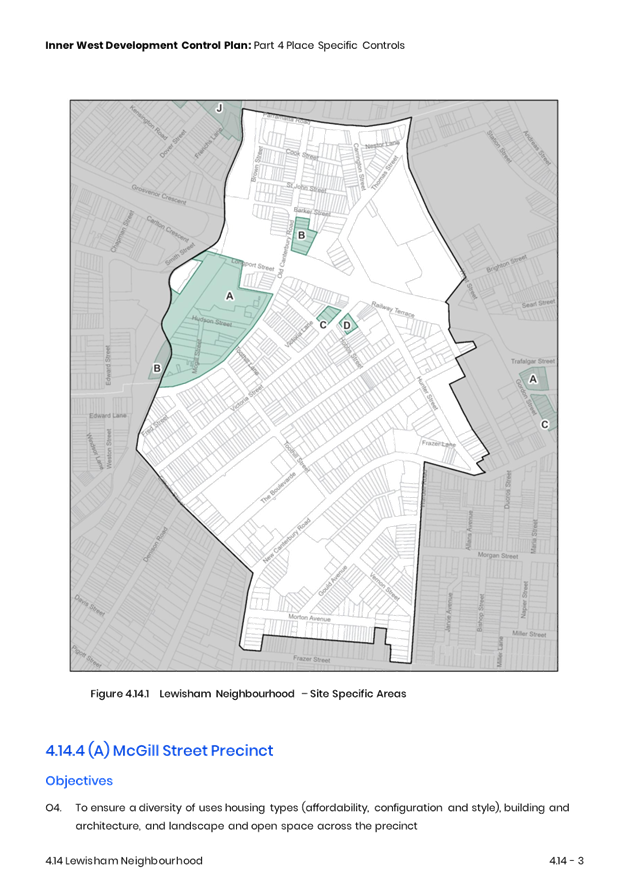
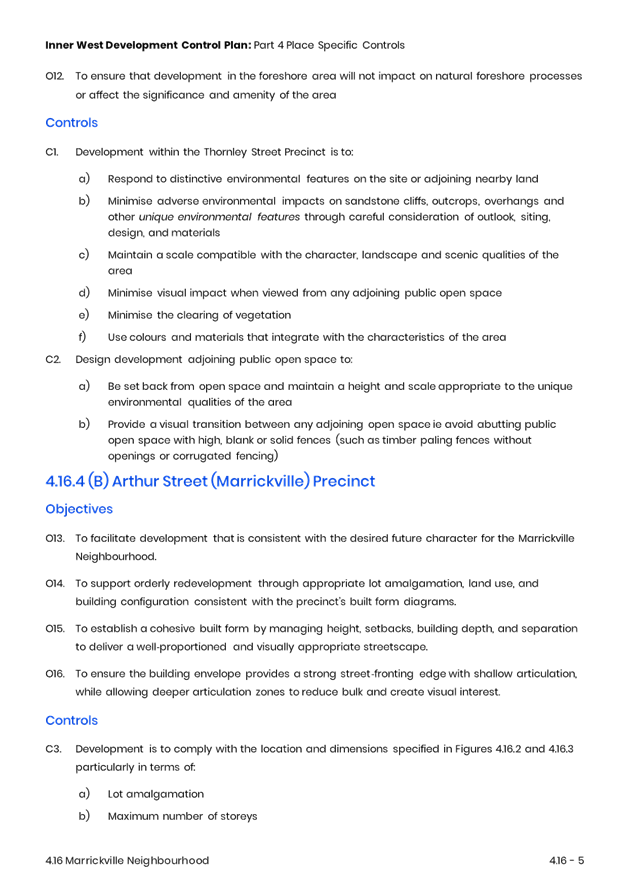
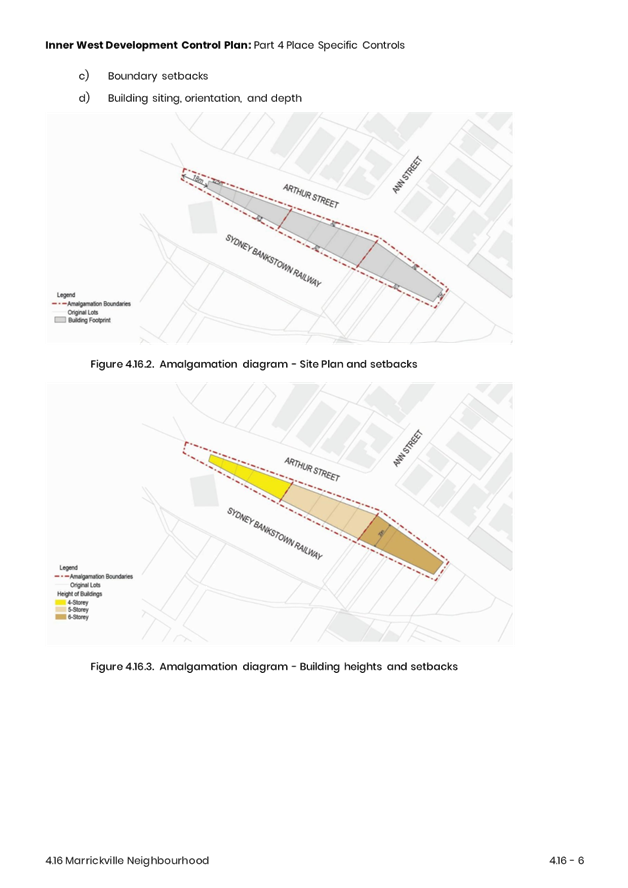
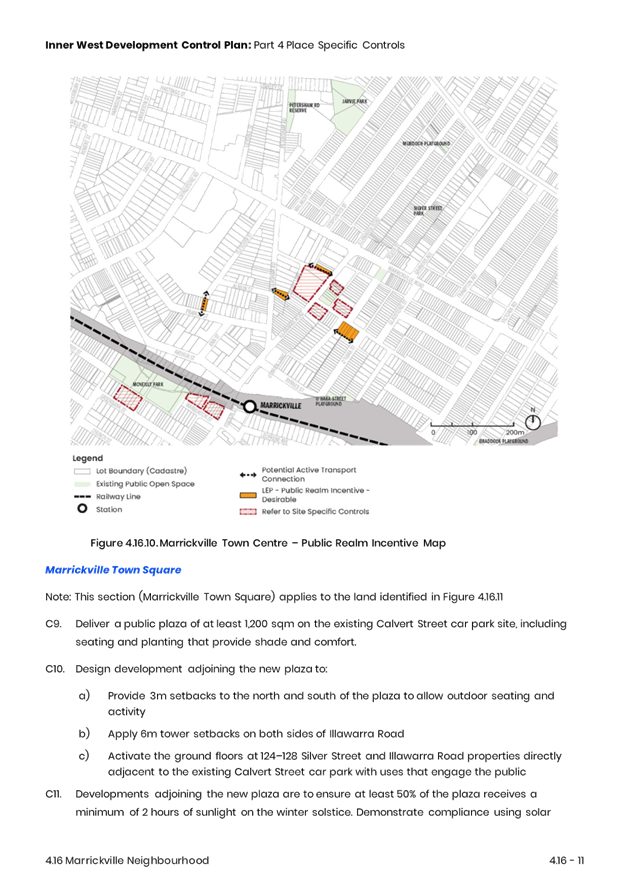
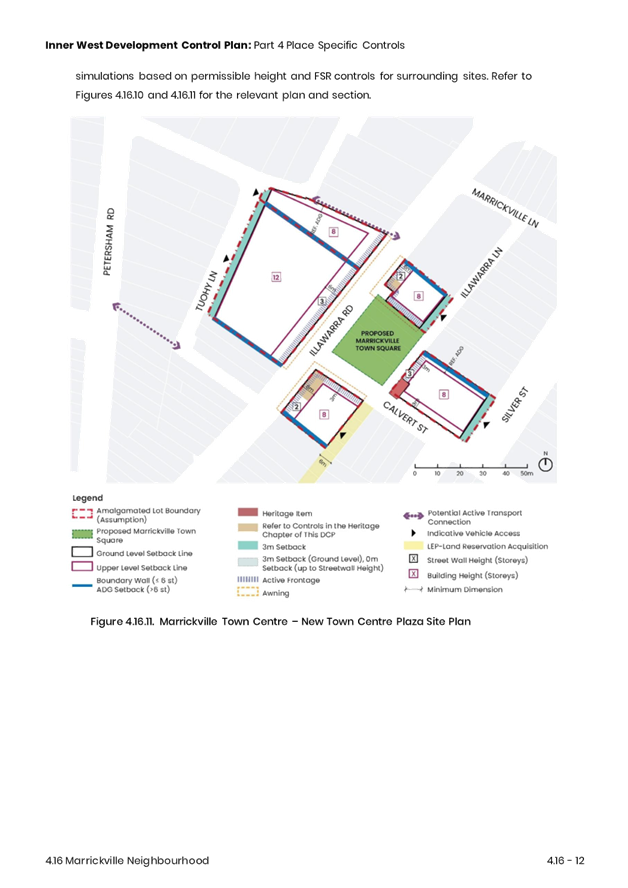
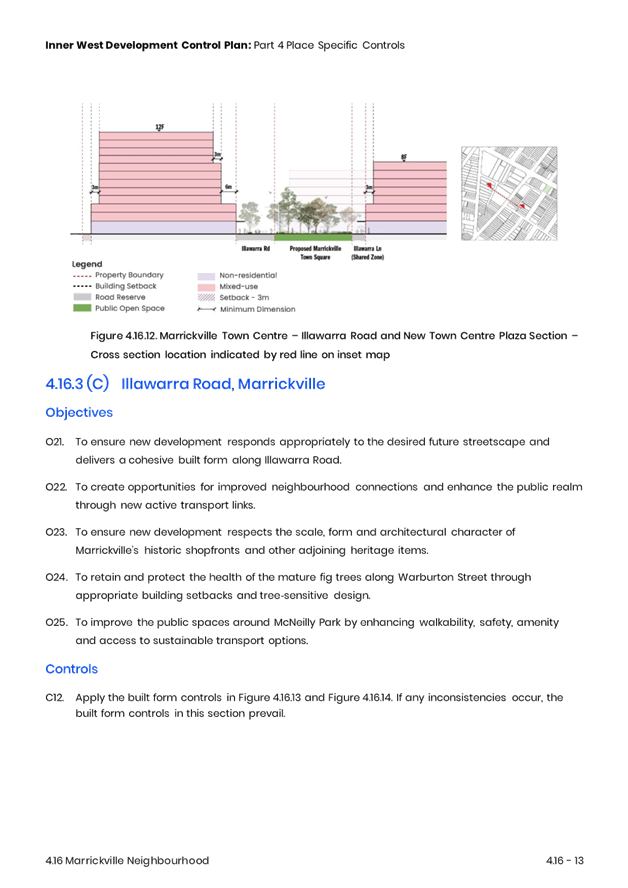
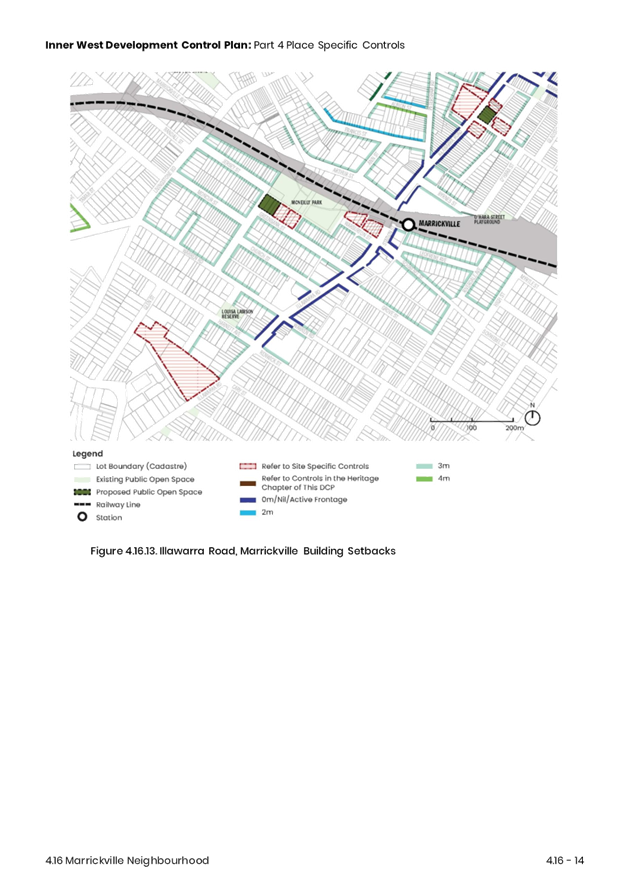
Part 4 – Place Specific Controls
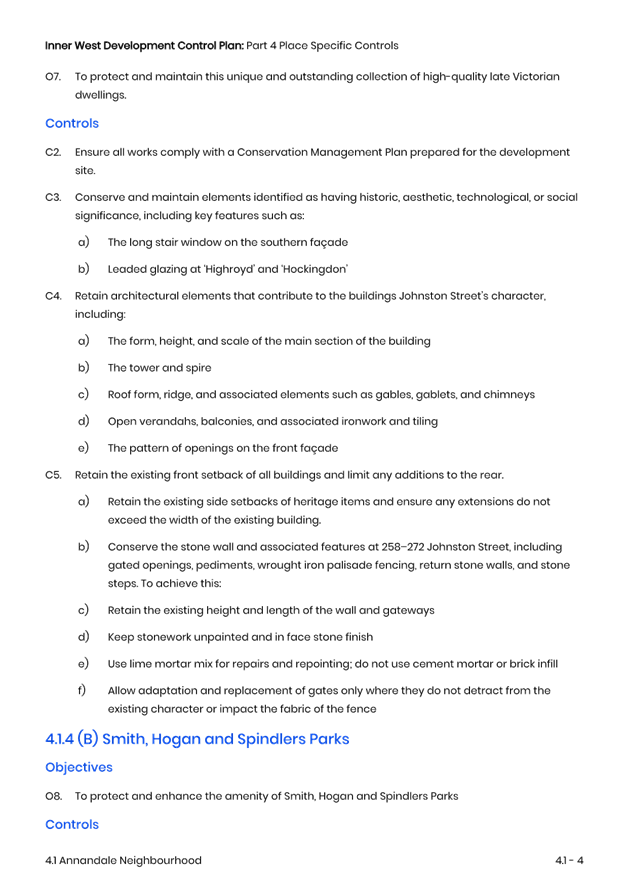
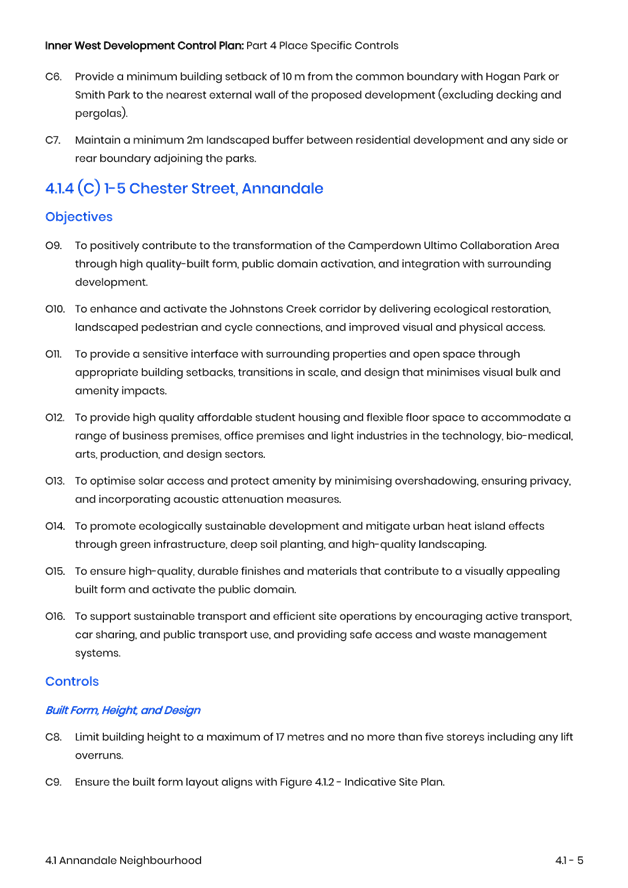
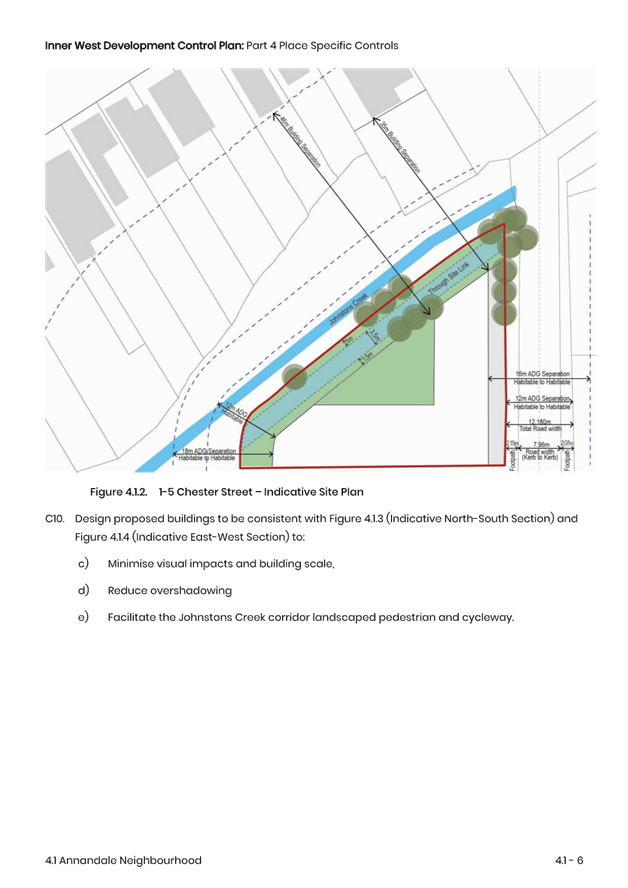
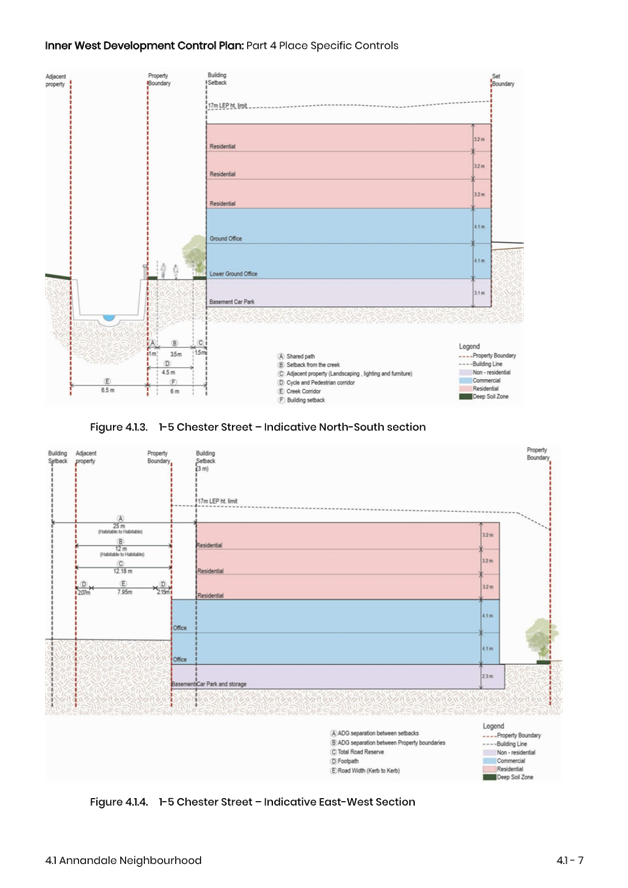
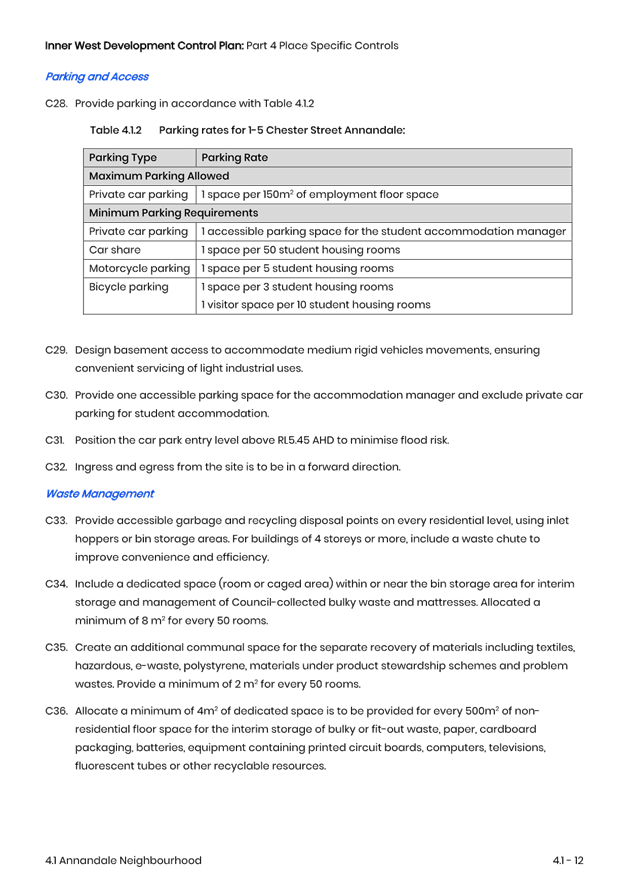
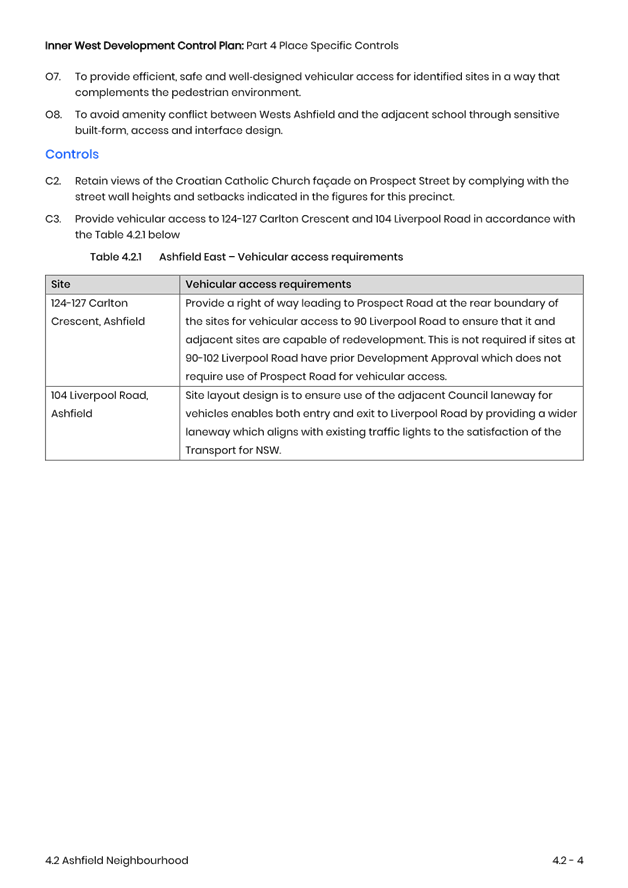
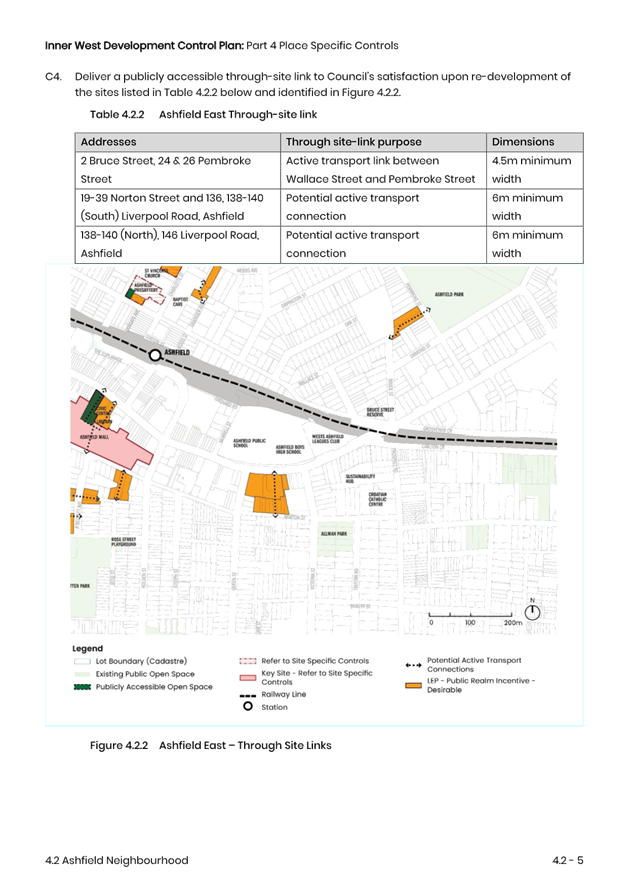
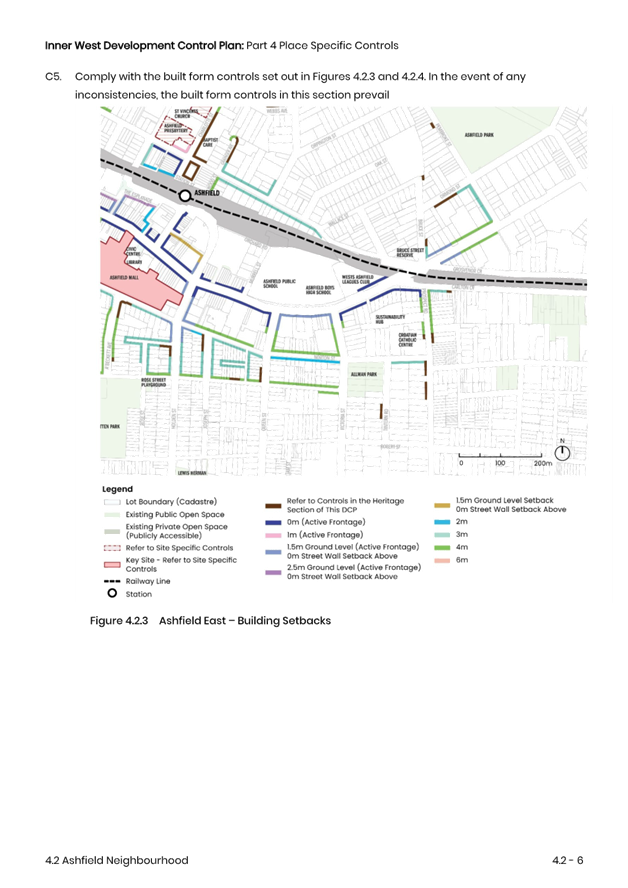
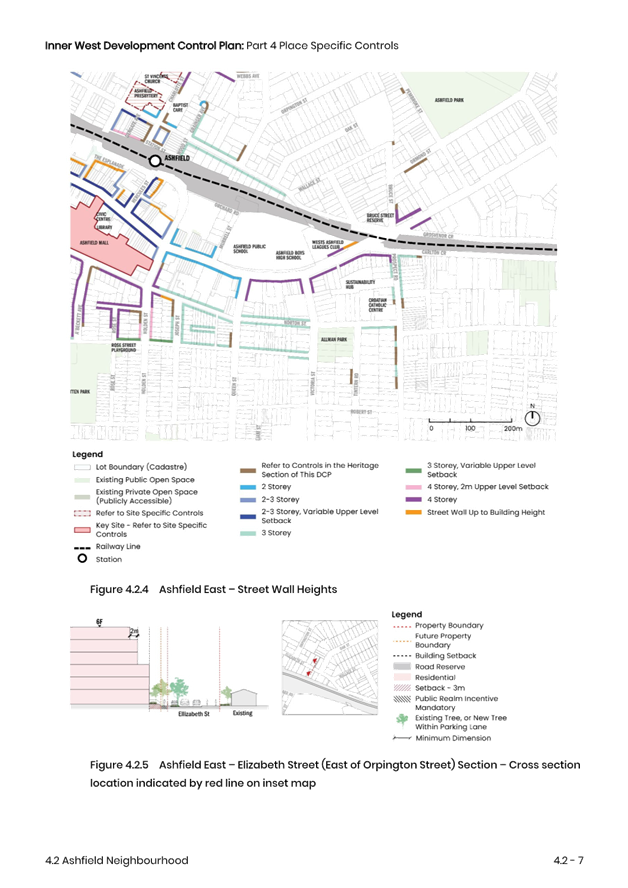
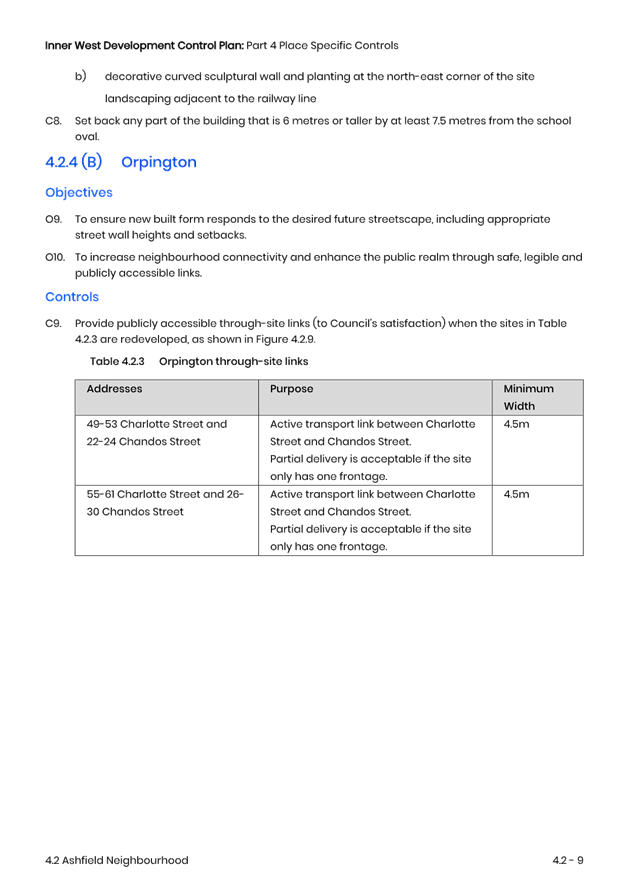
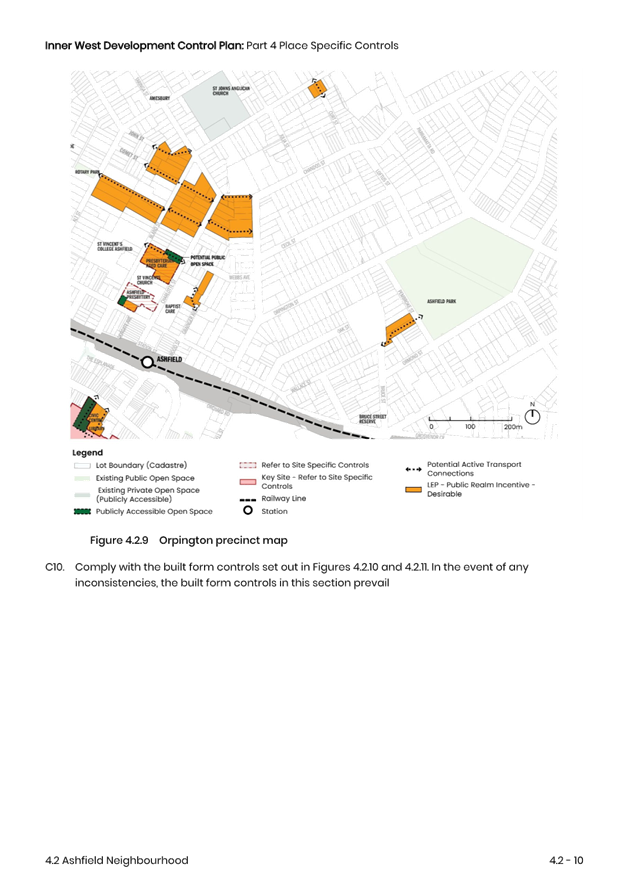
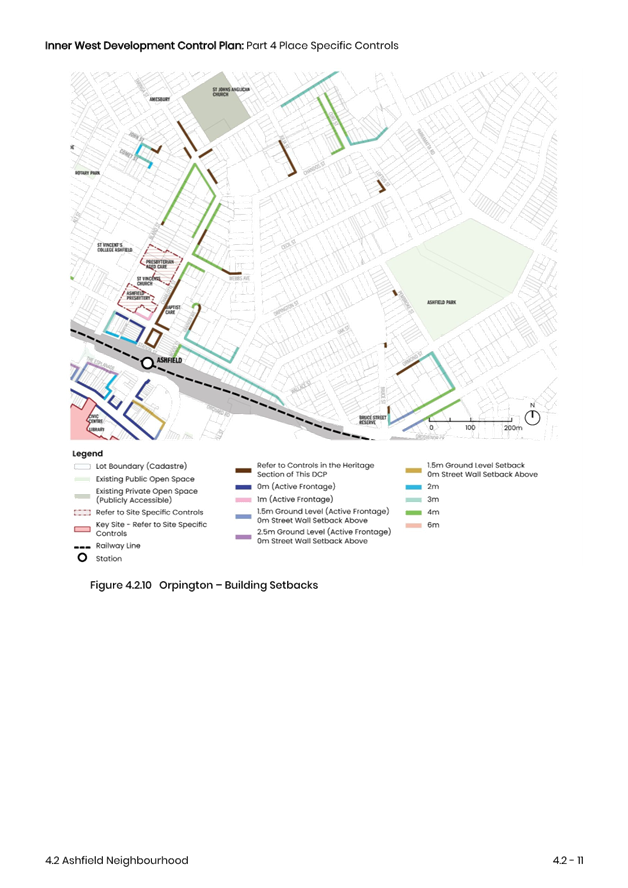
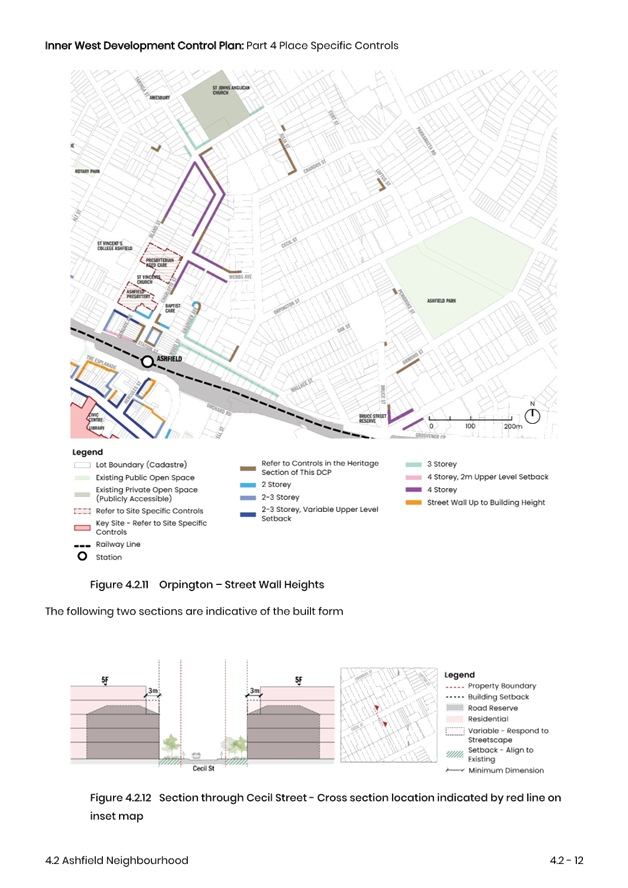
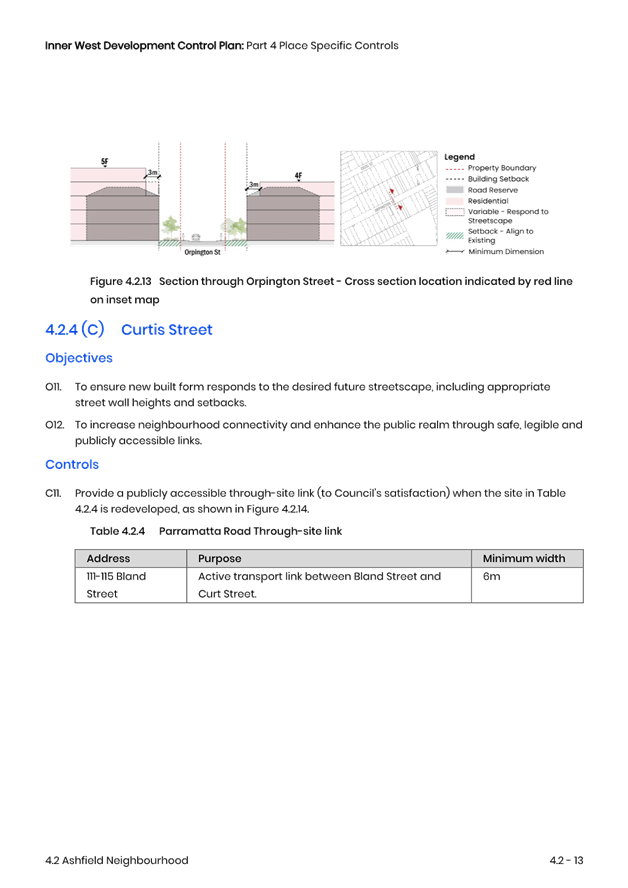
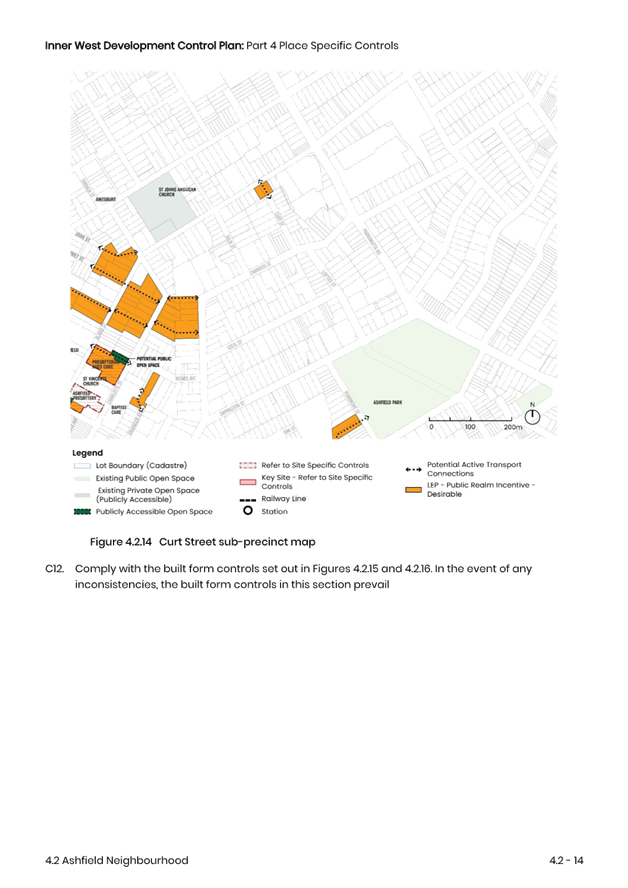
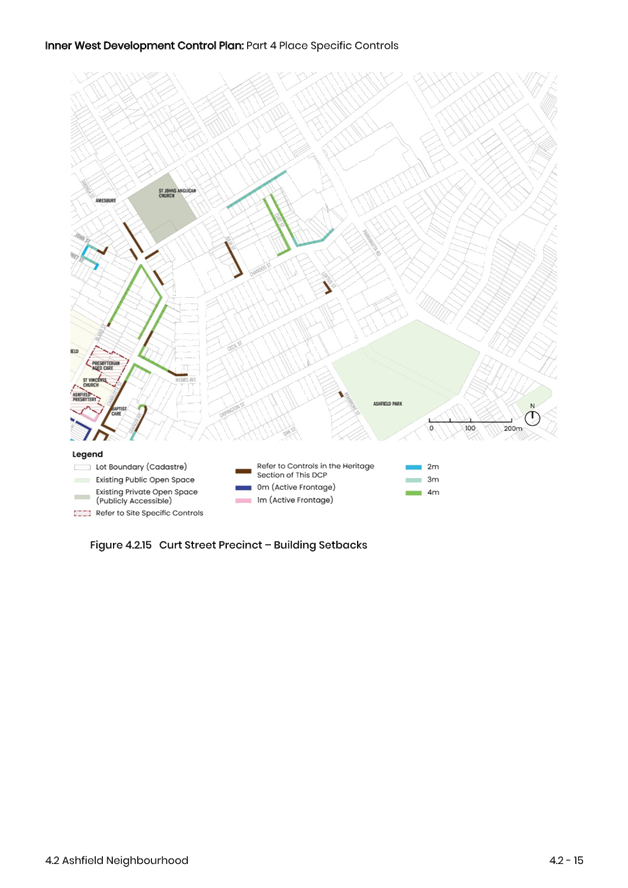
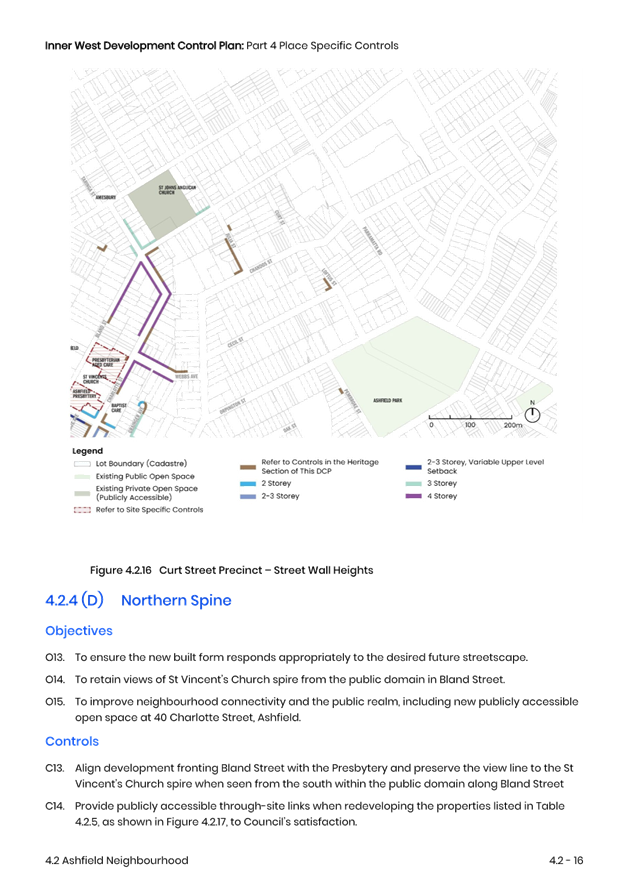
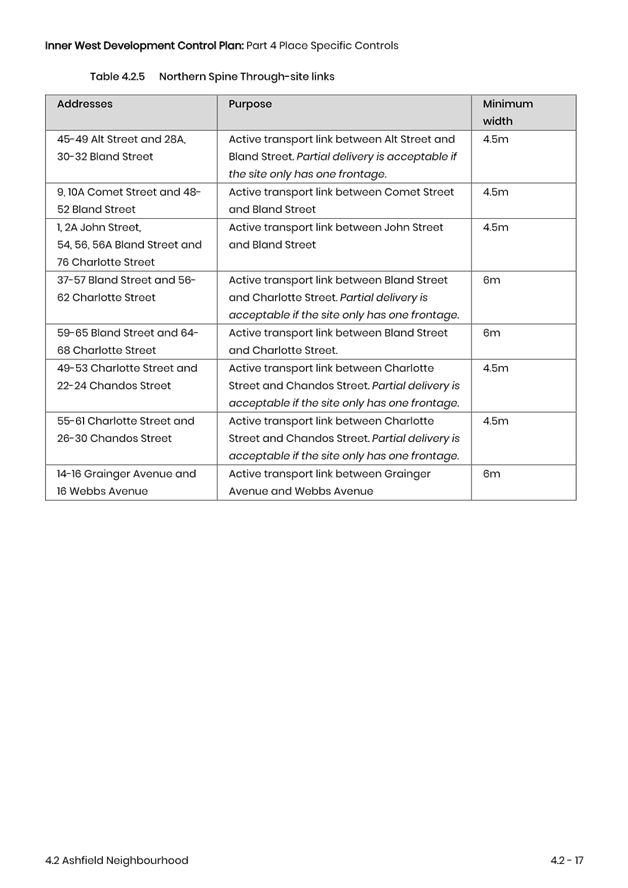
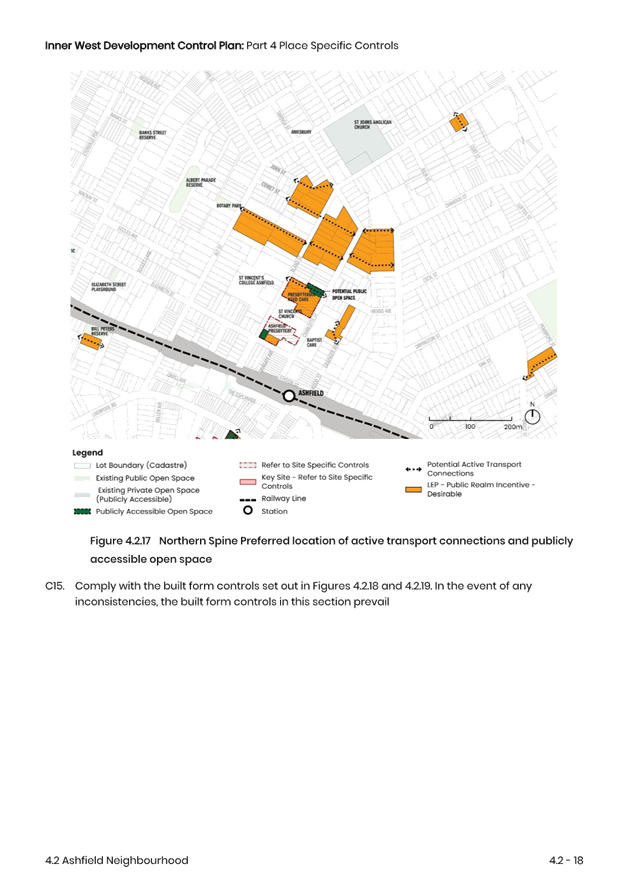
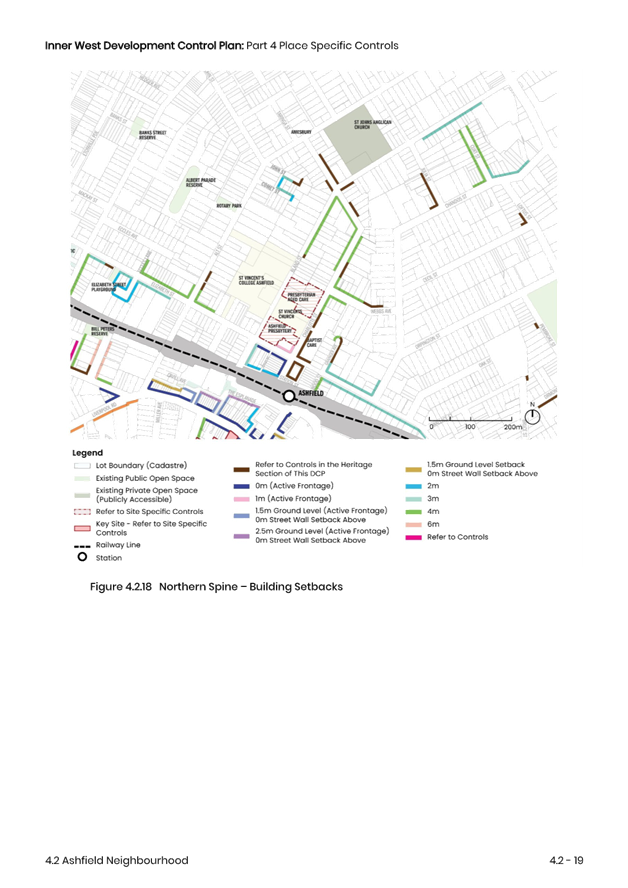
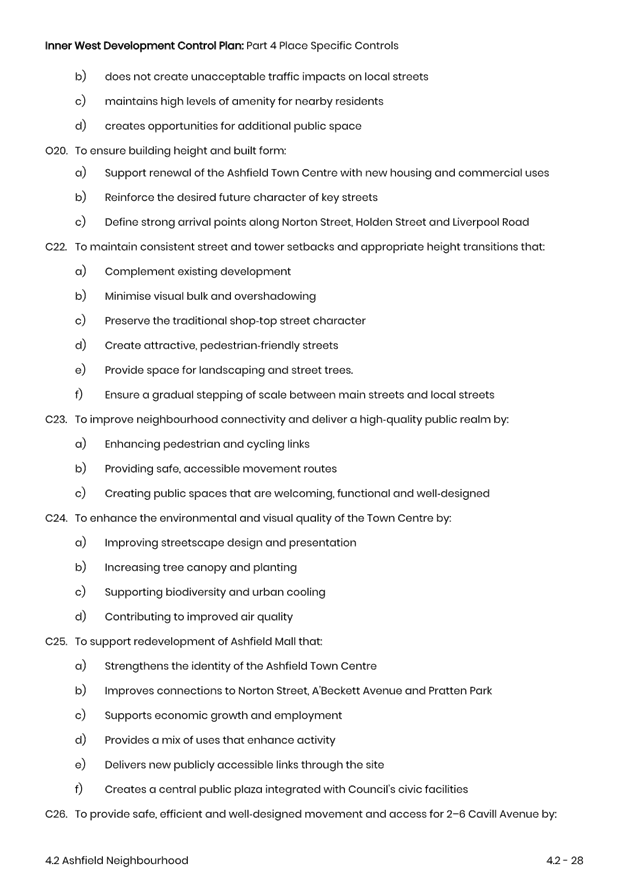
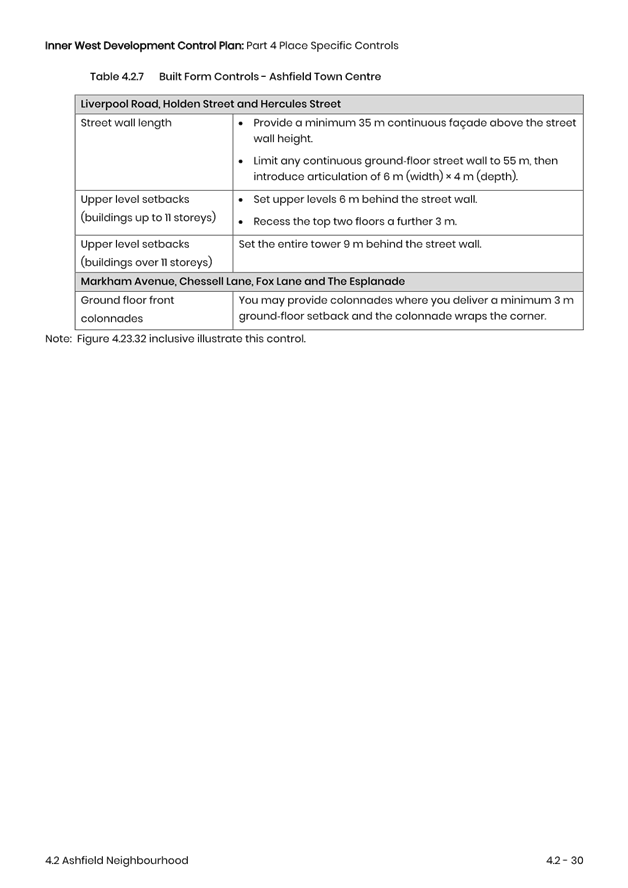
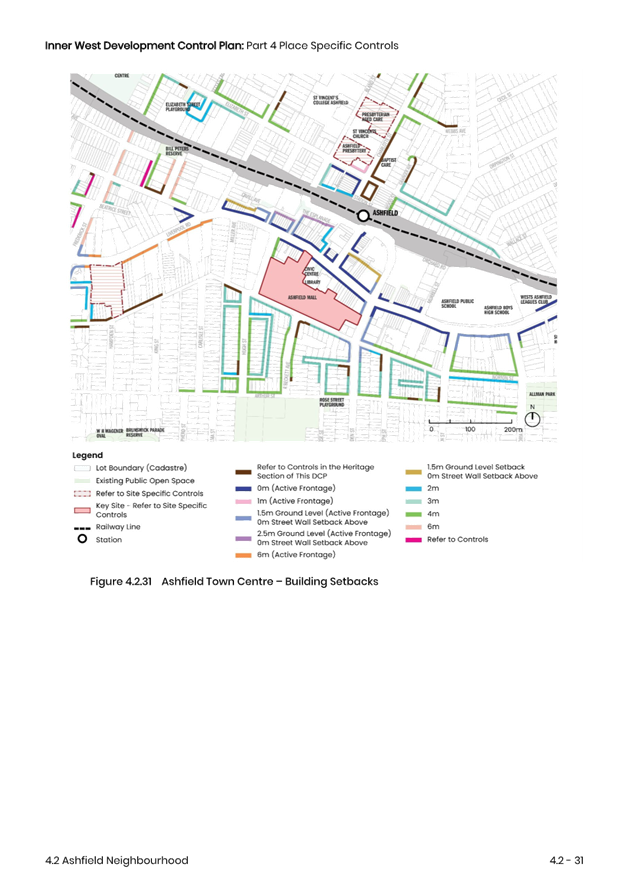
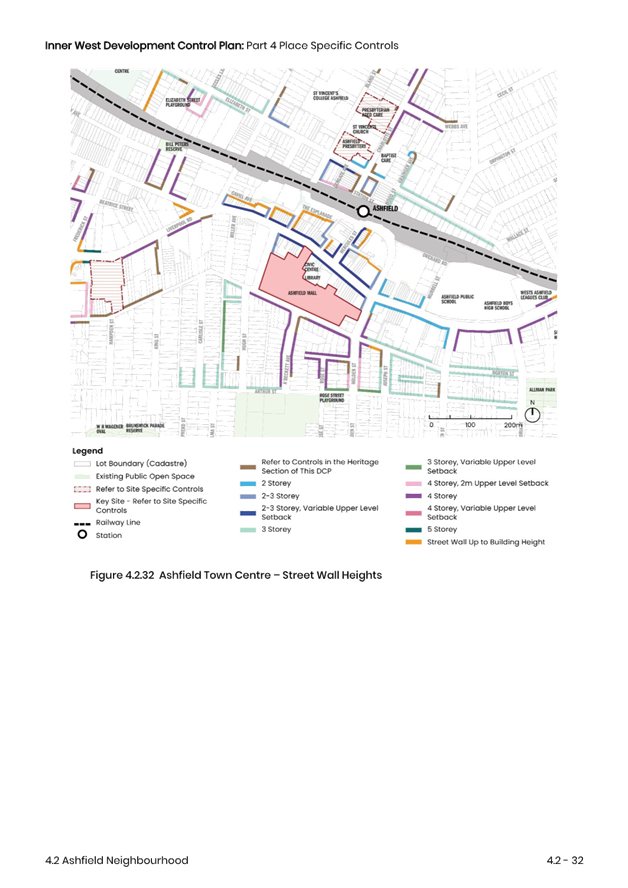
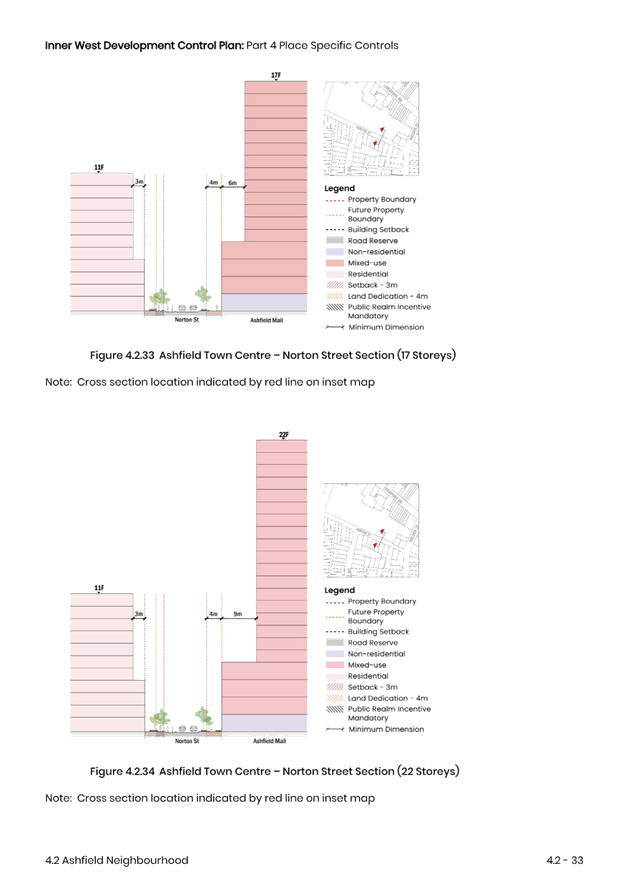
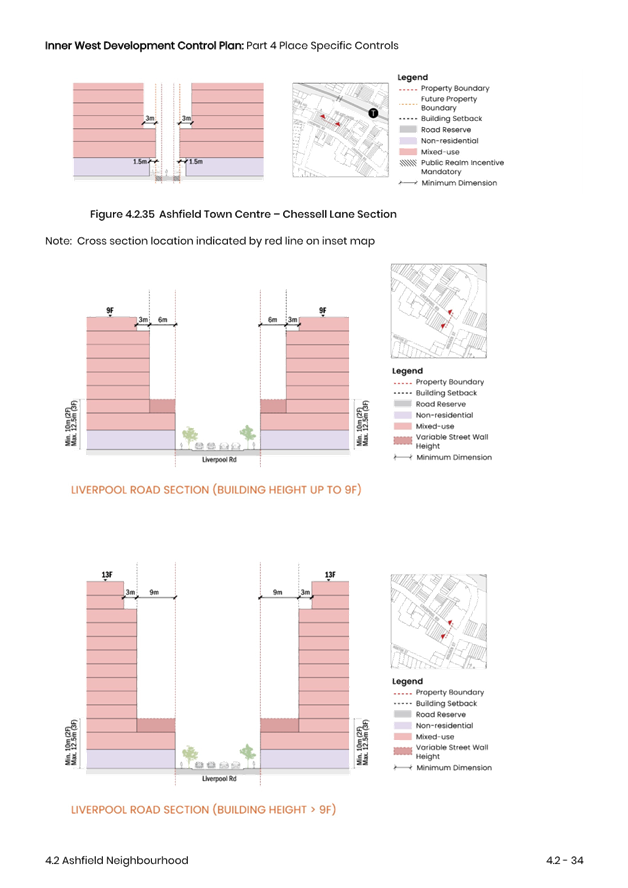
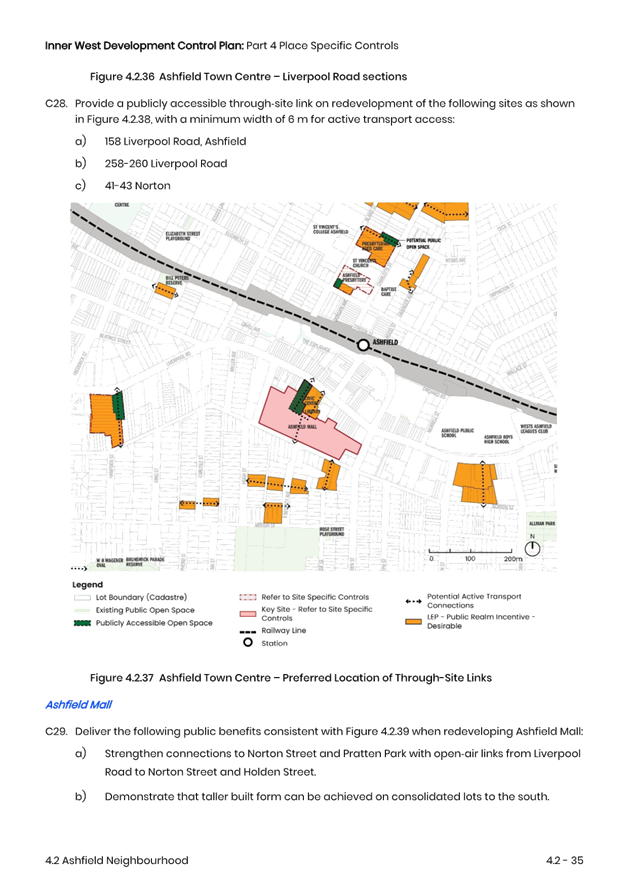
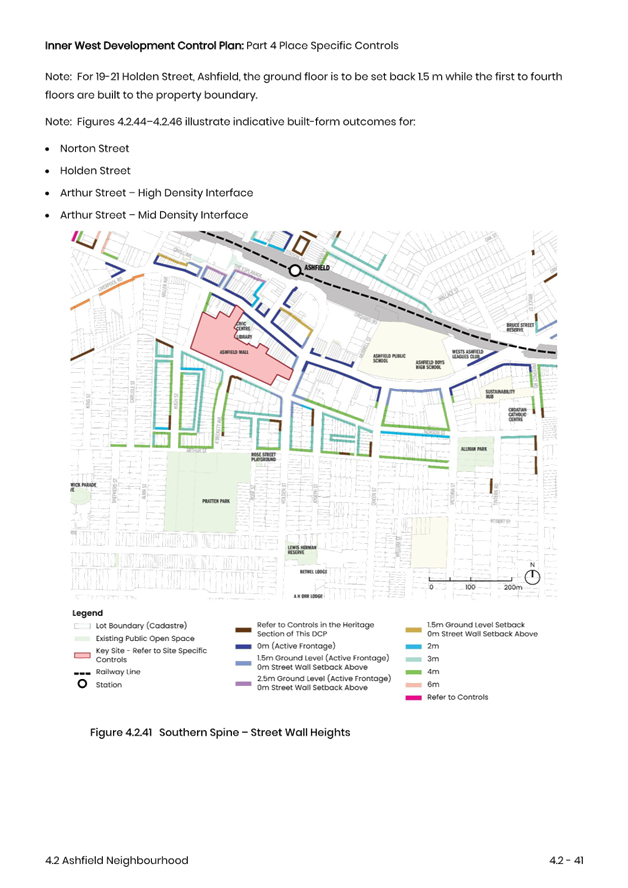
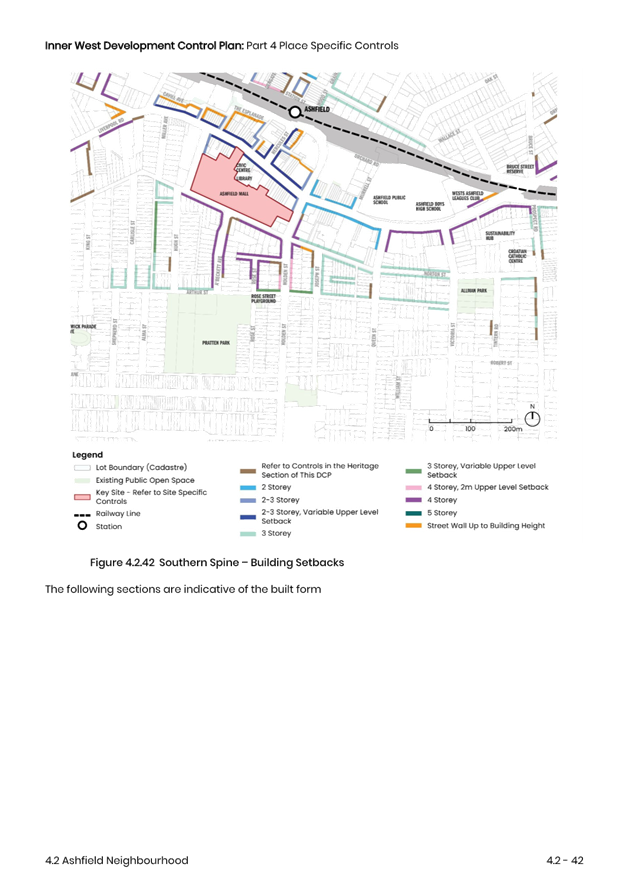
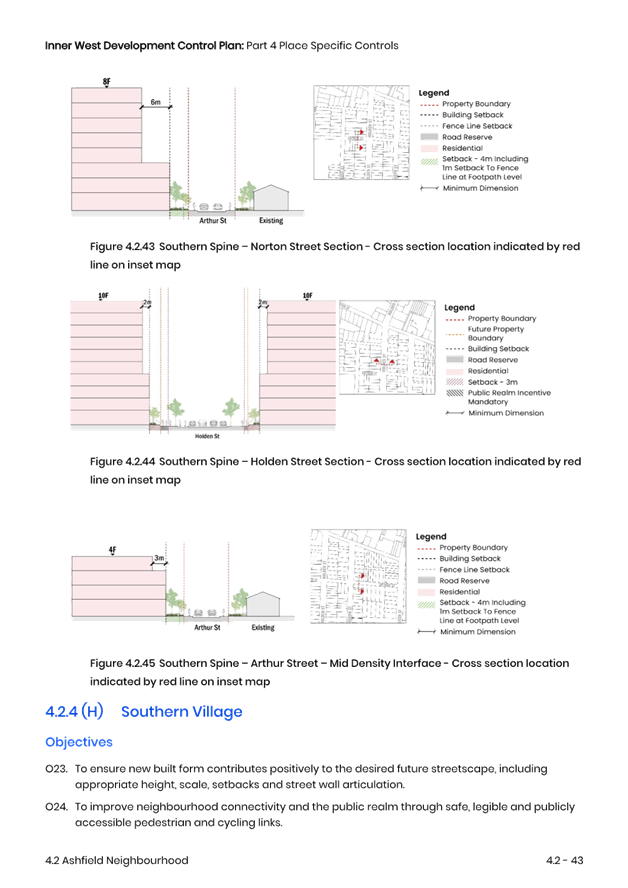
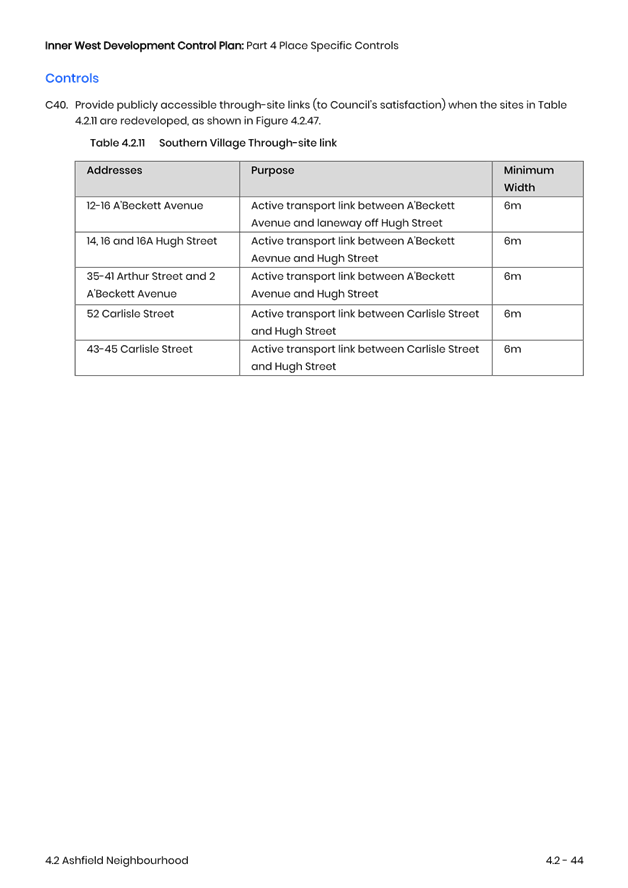
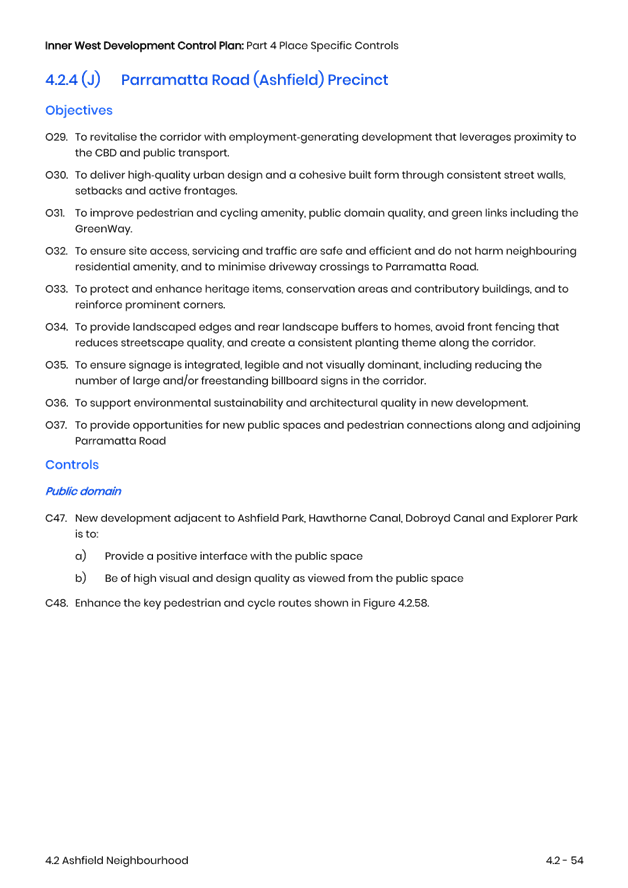
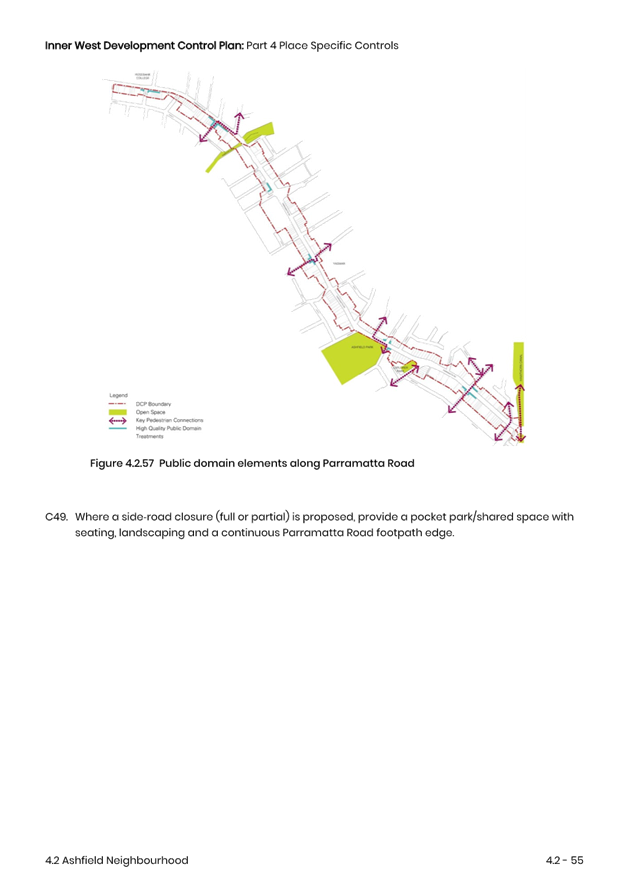
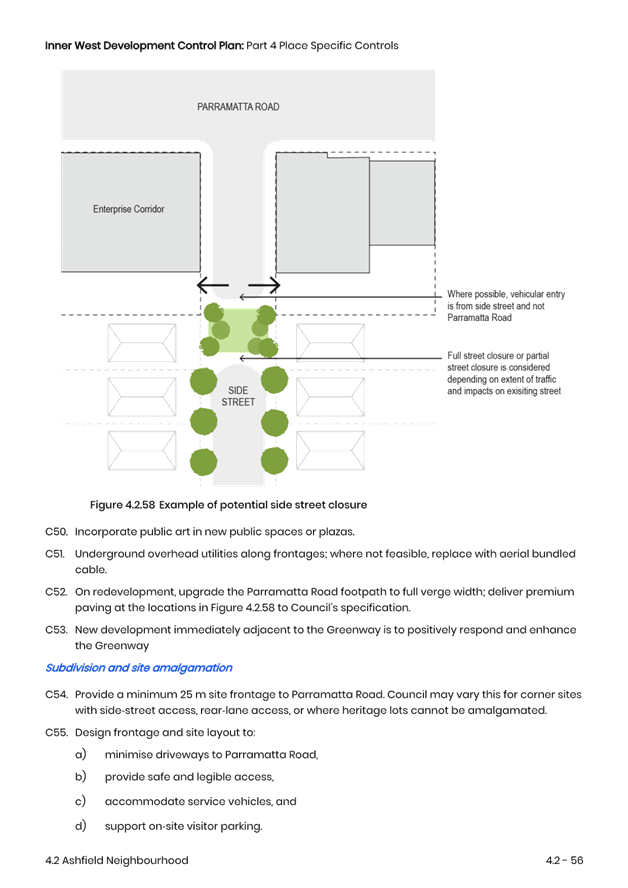
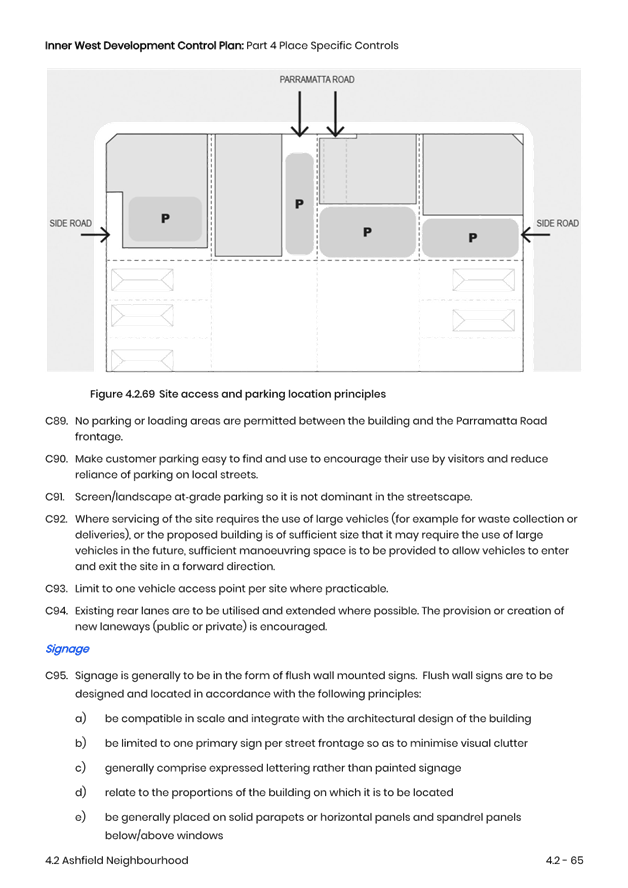
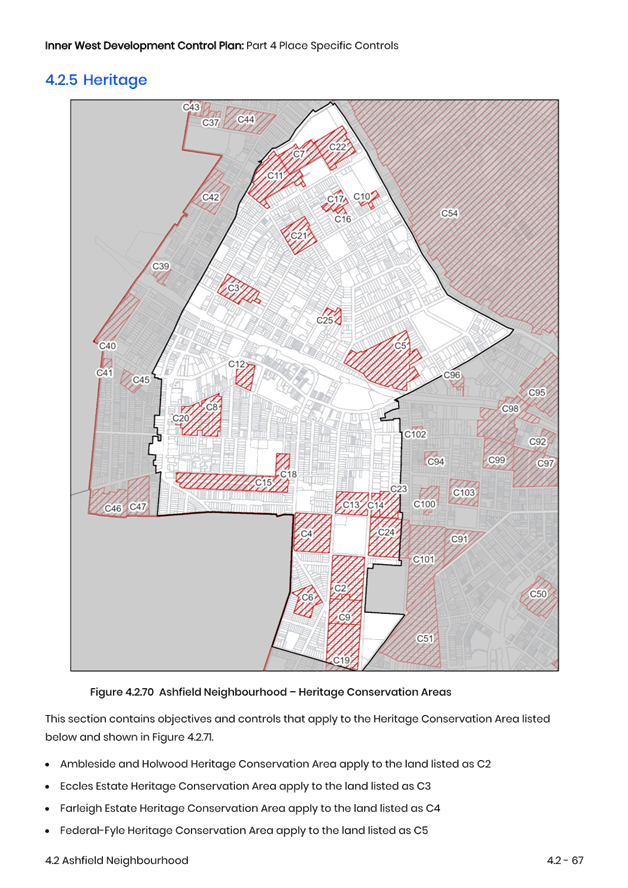
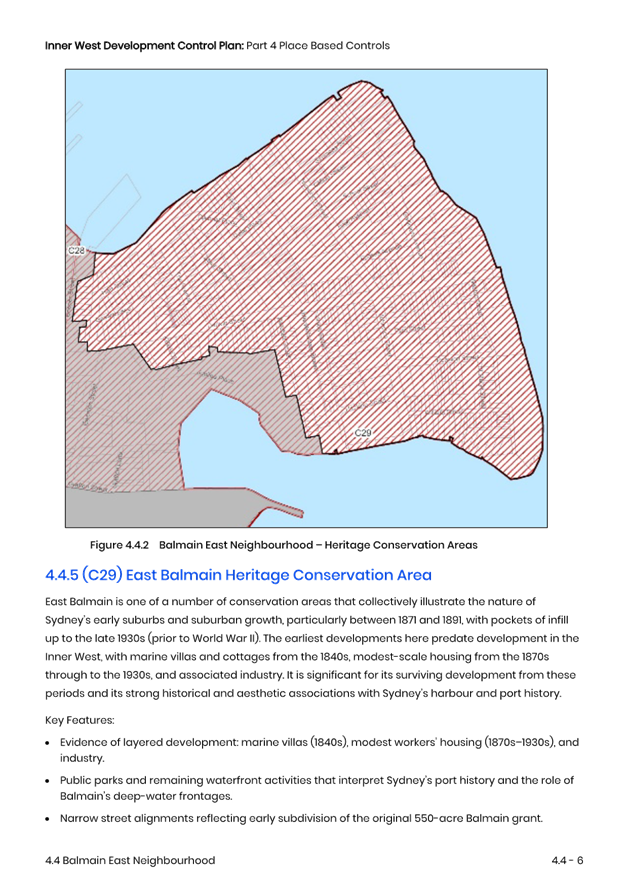
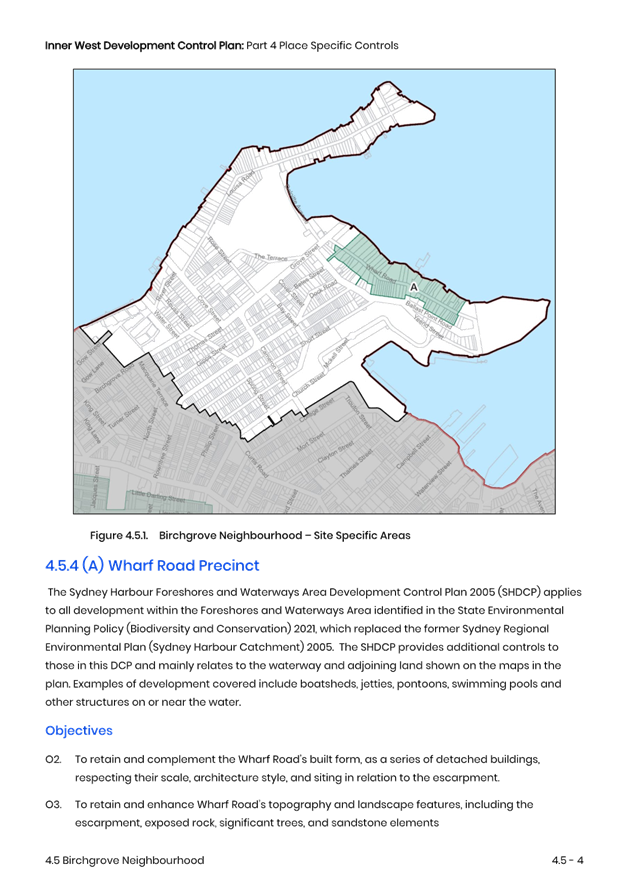
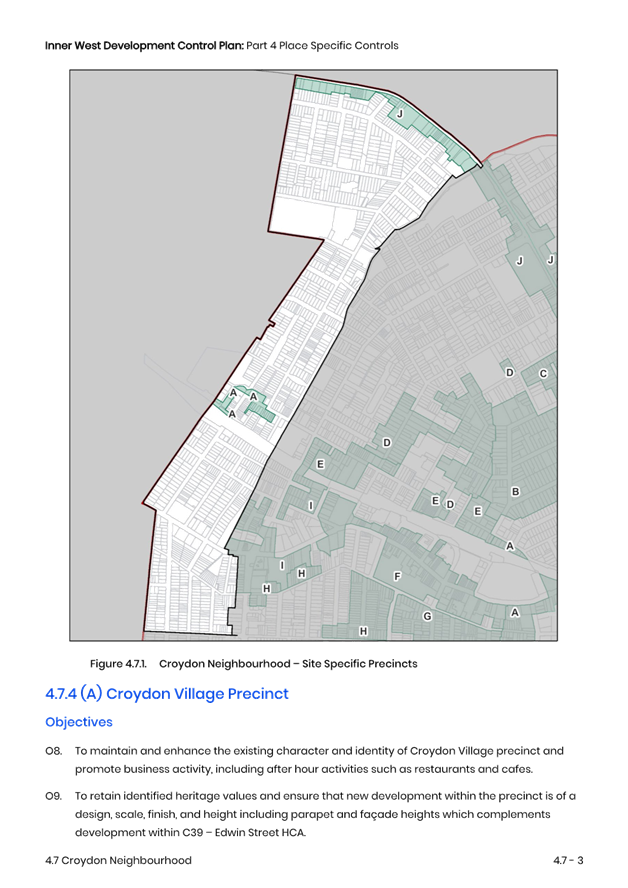
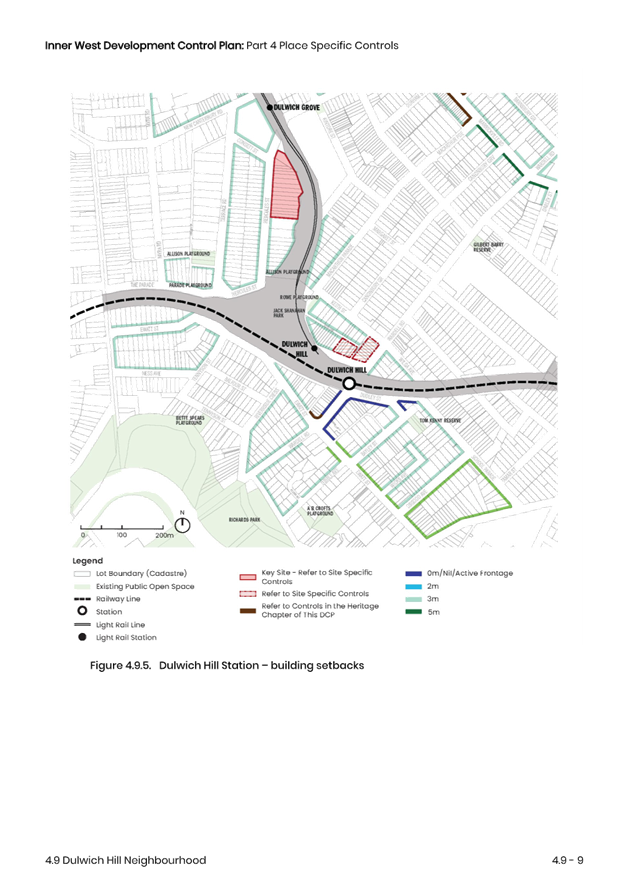
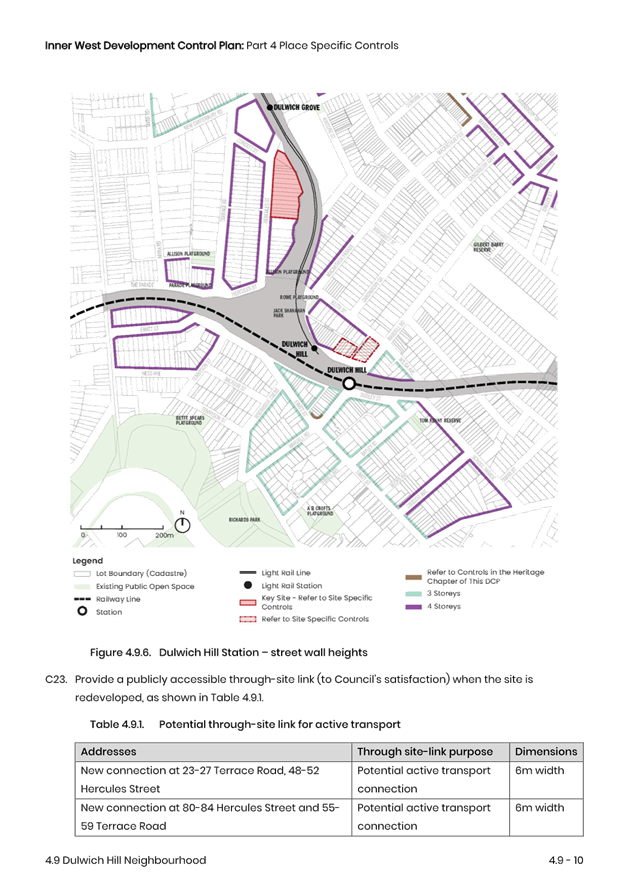
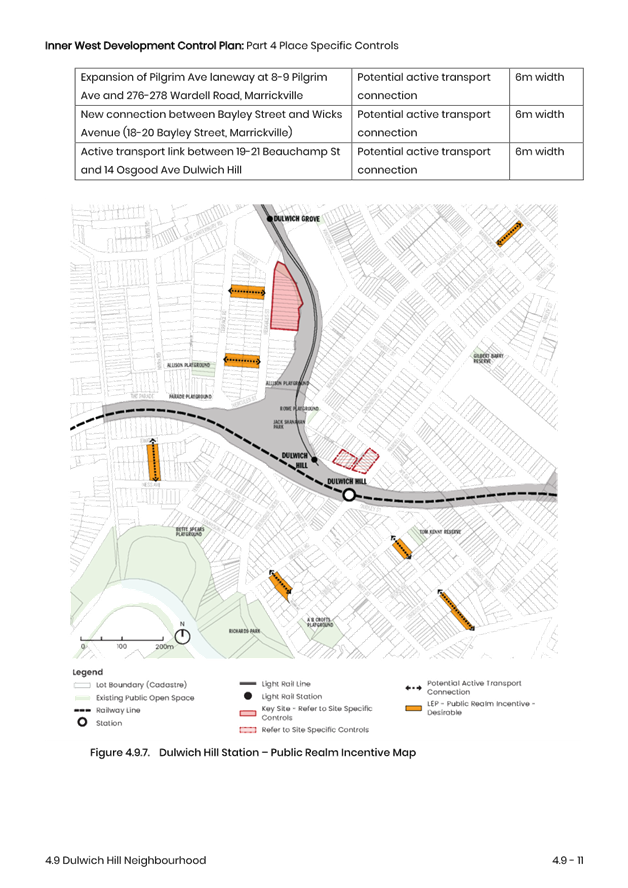
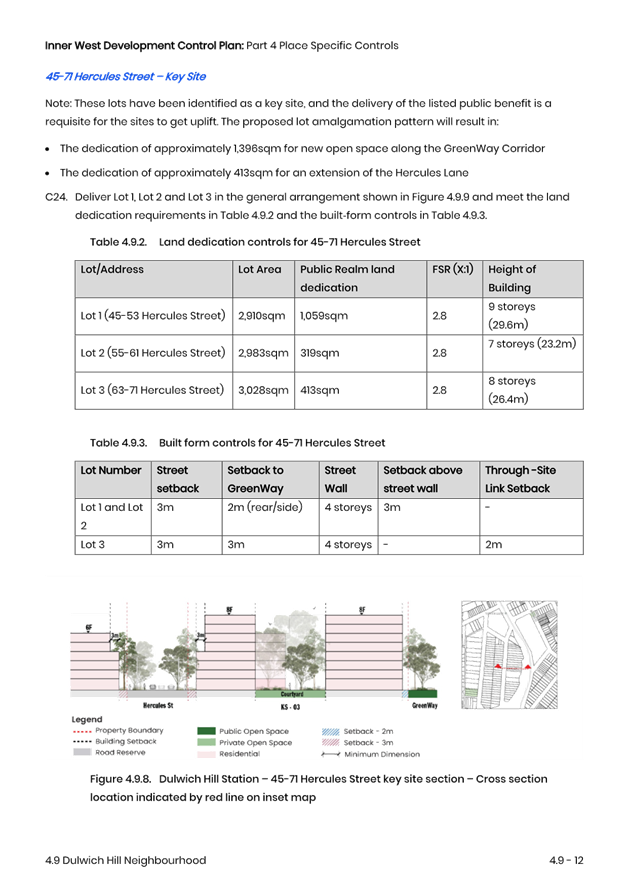
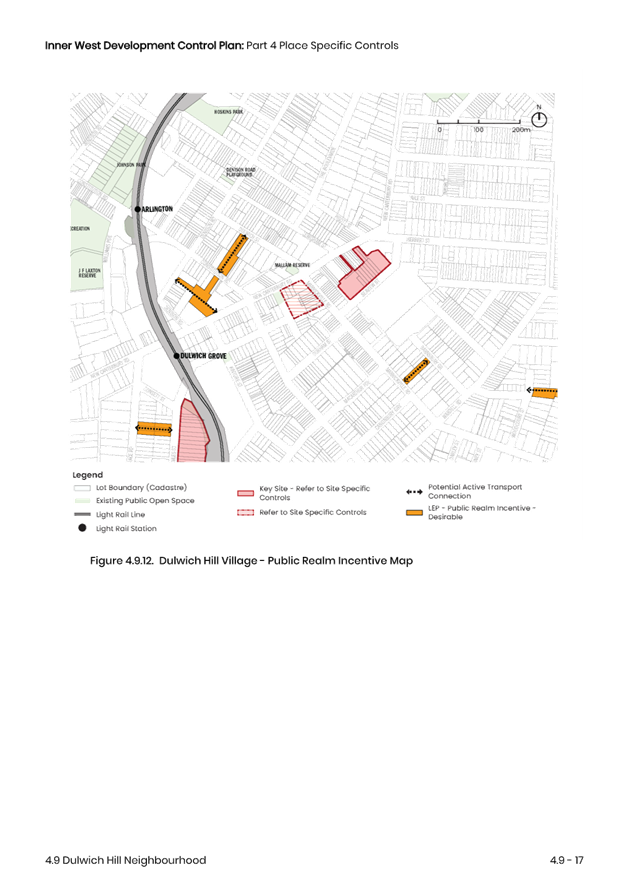
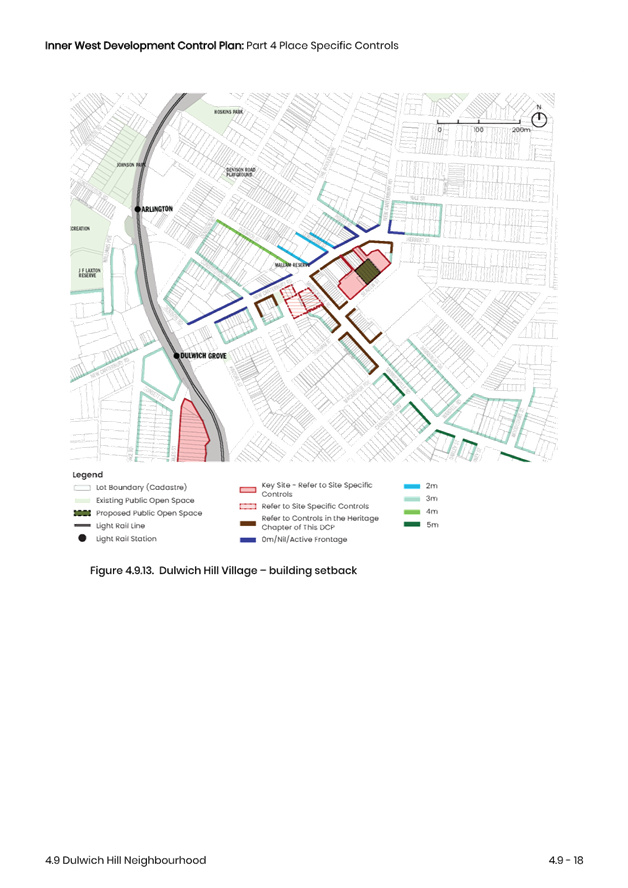
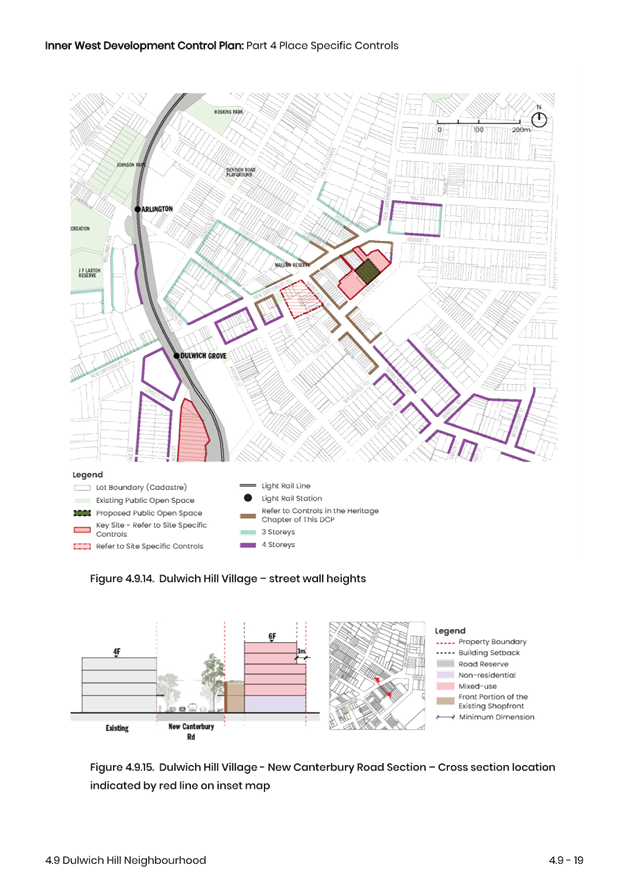
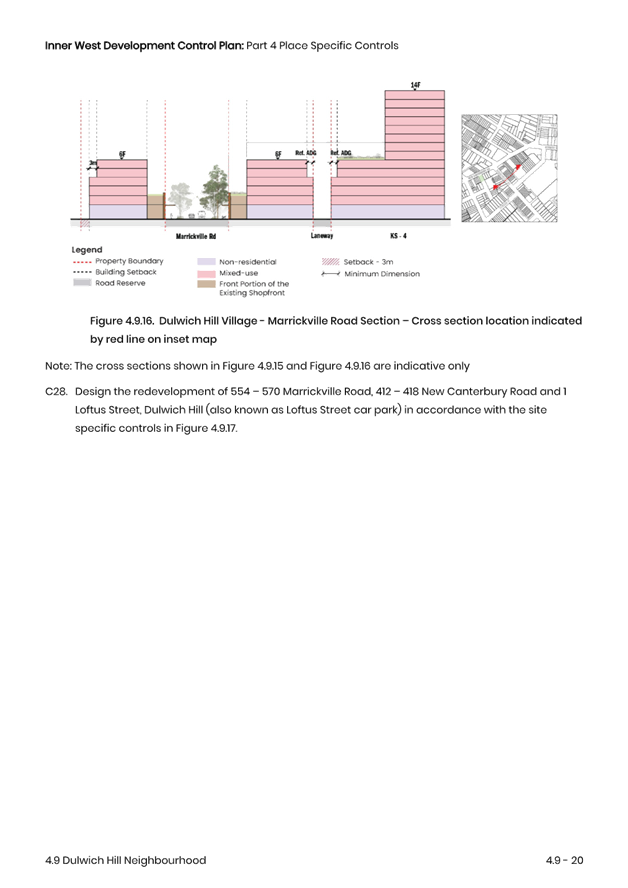
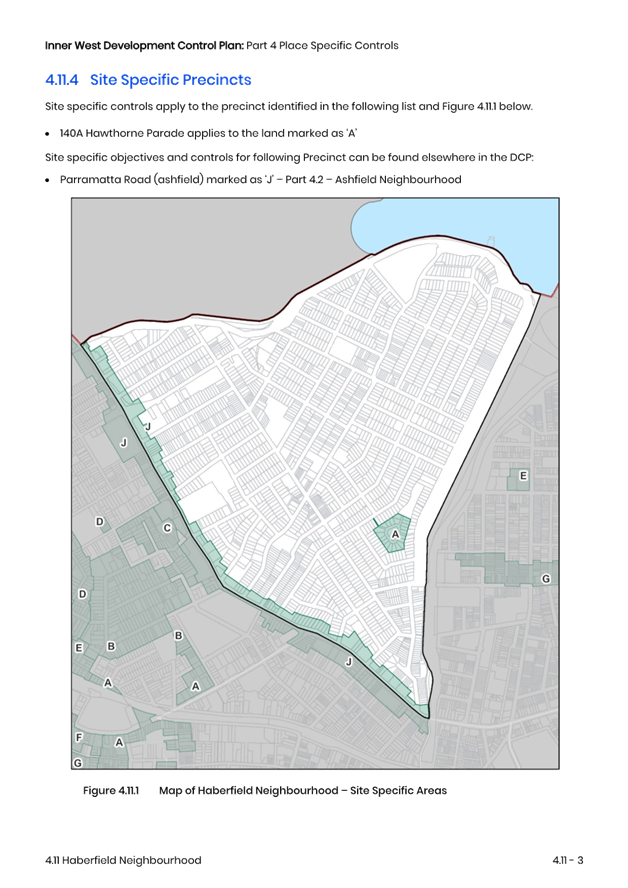
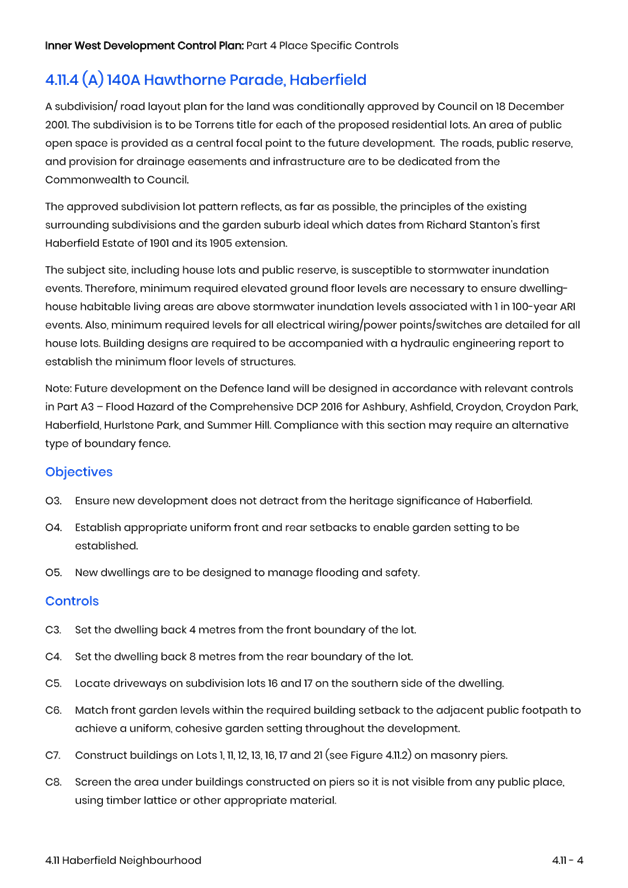
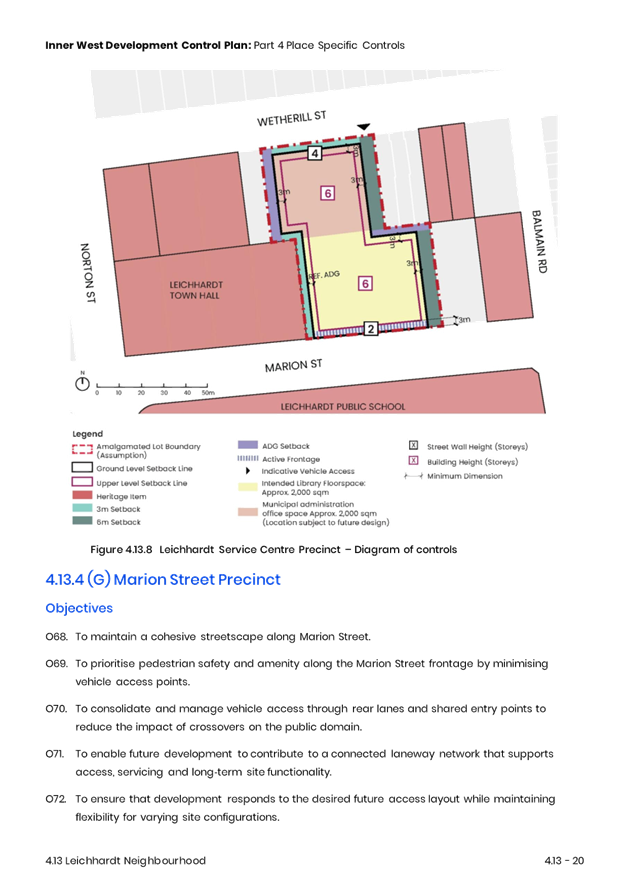
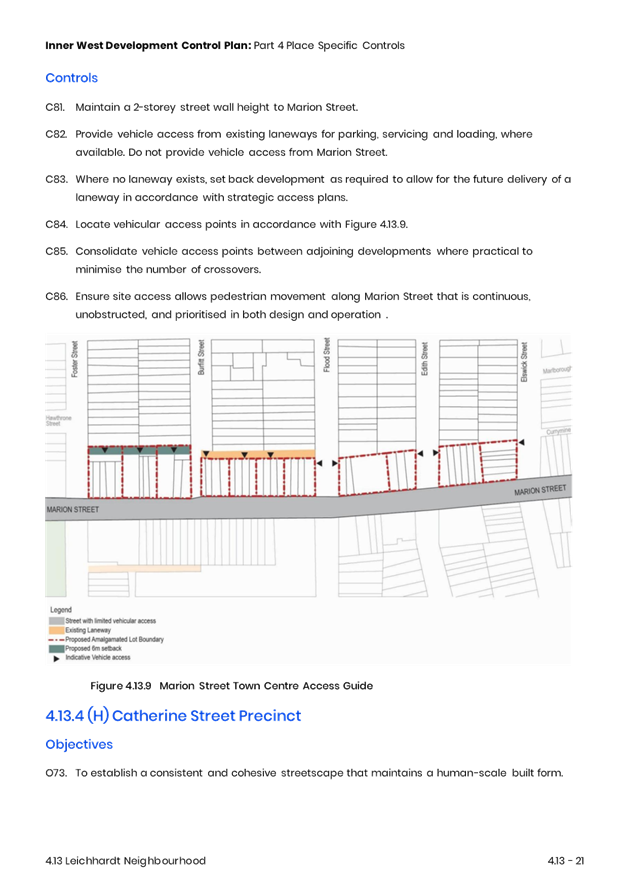
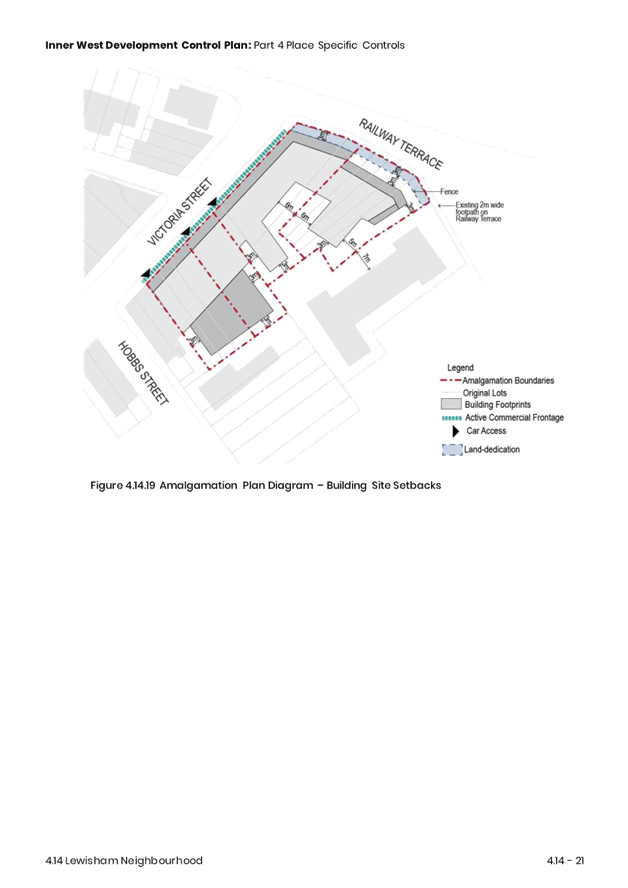
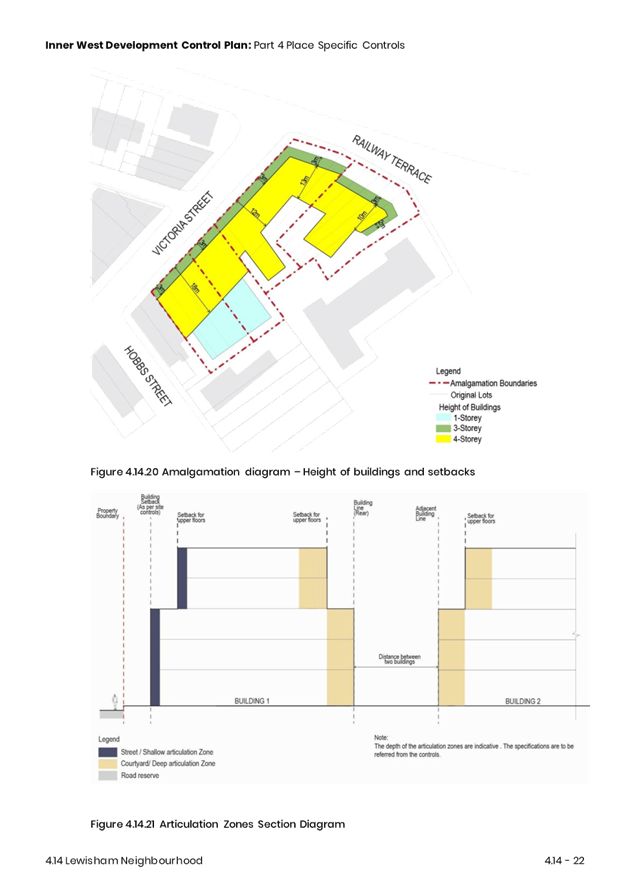
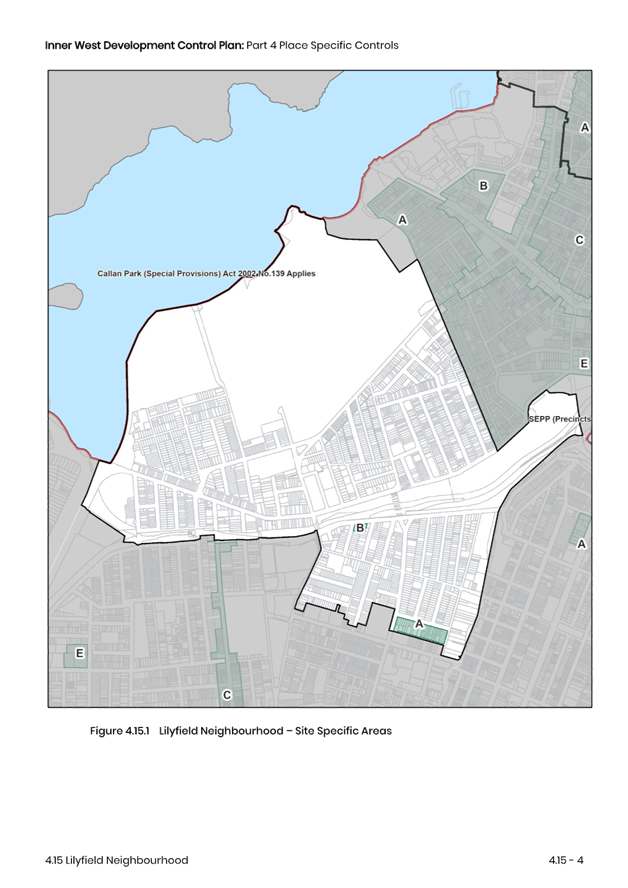
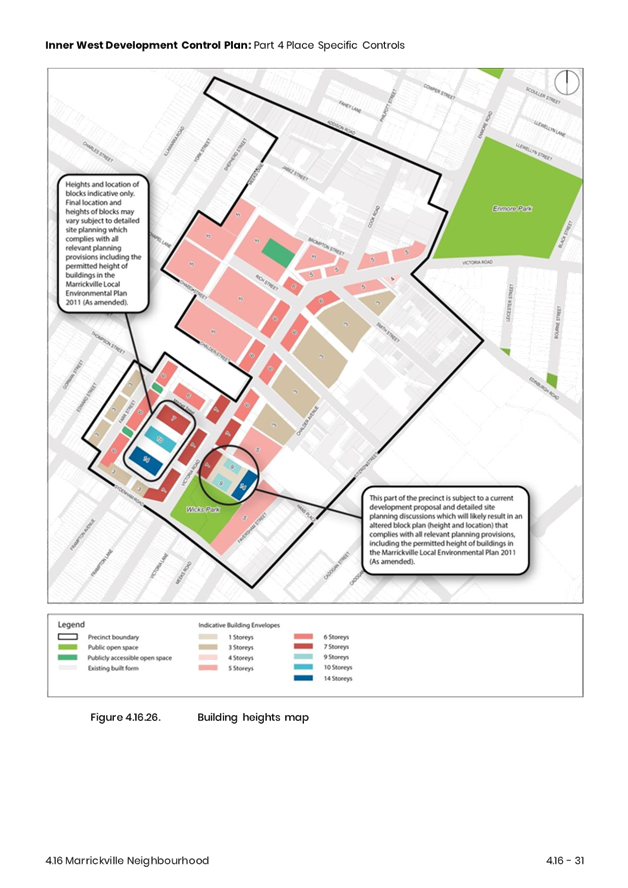
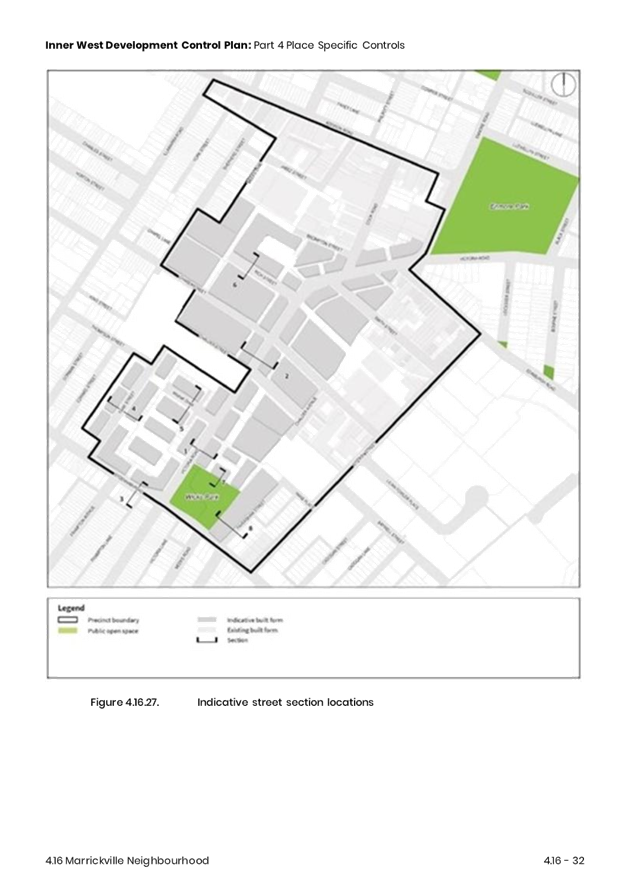
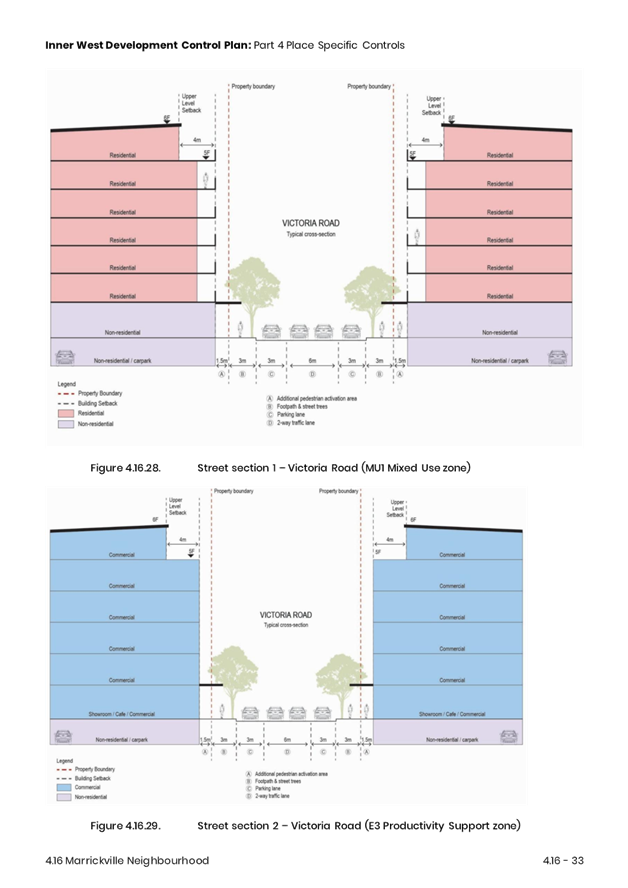
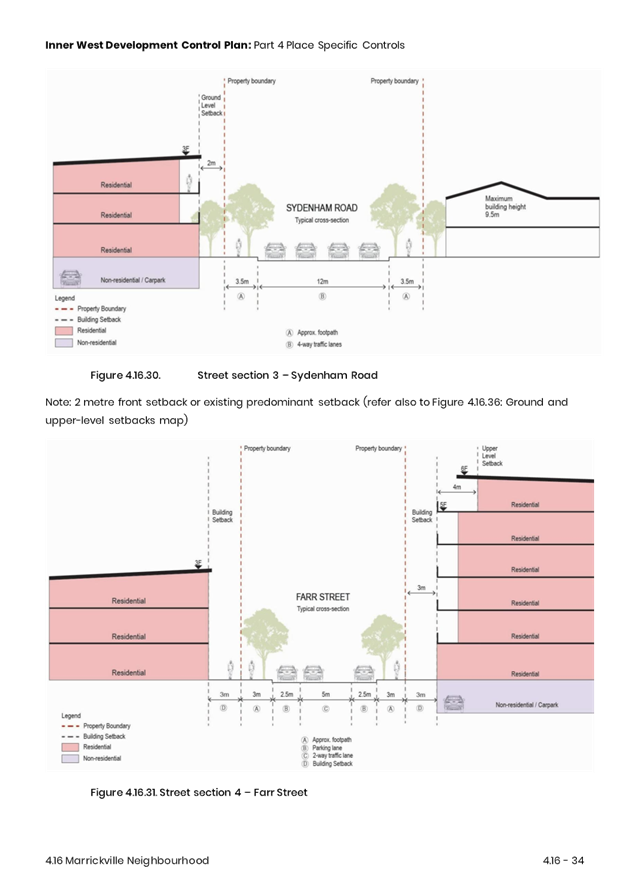
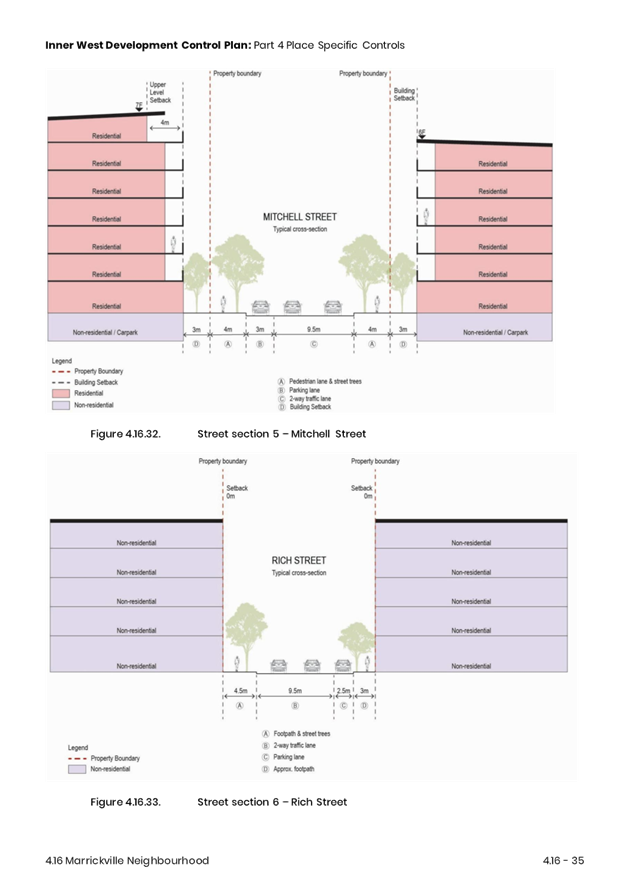
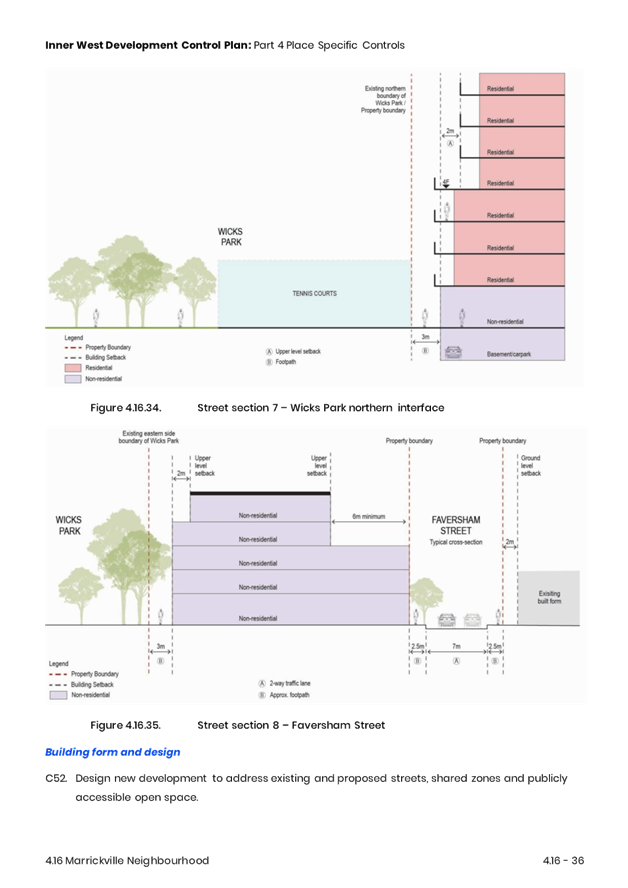
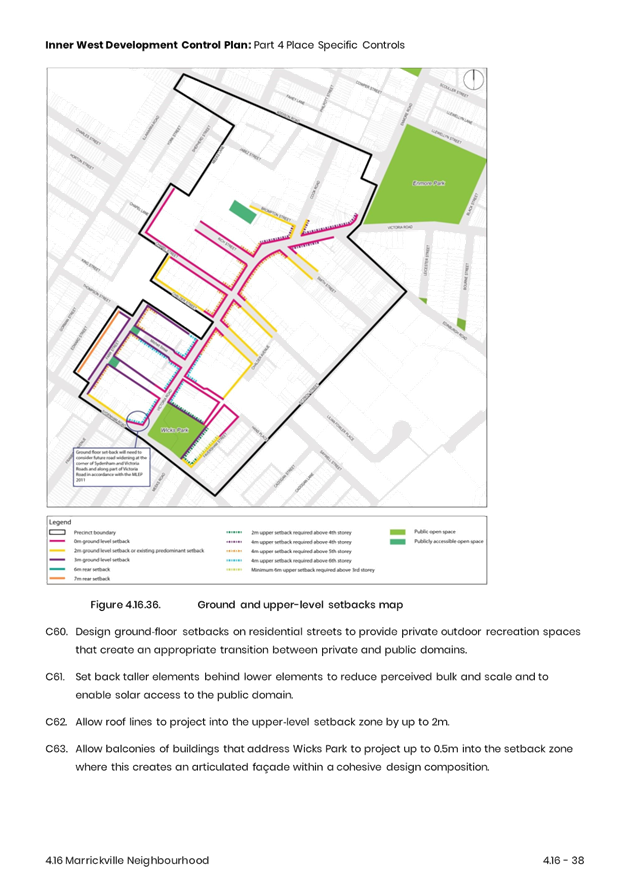
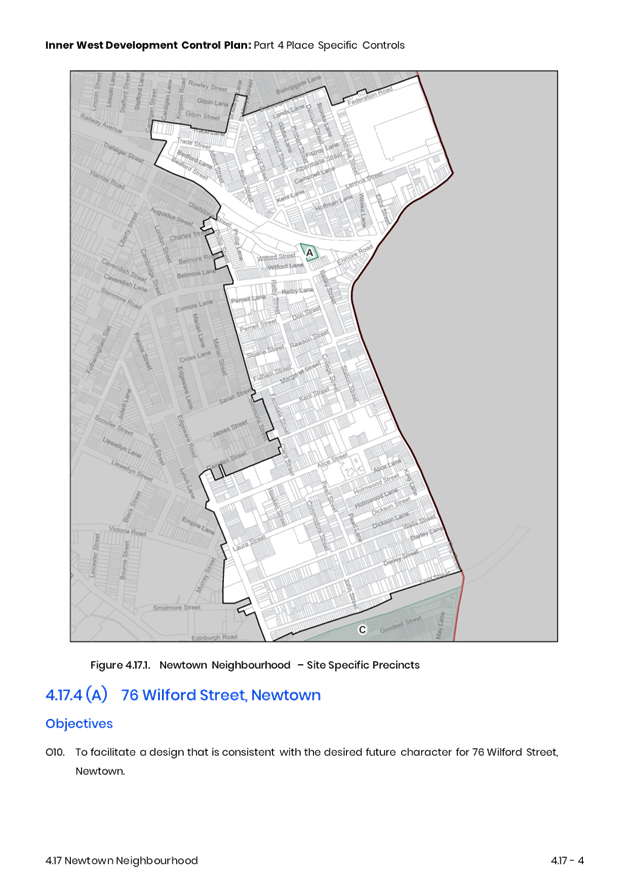
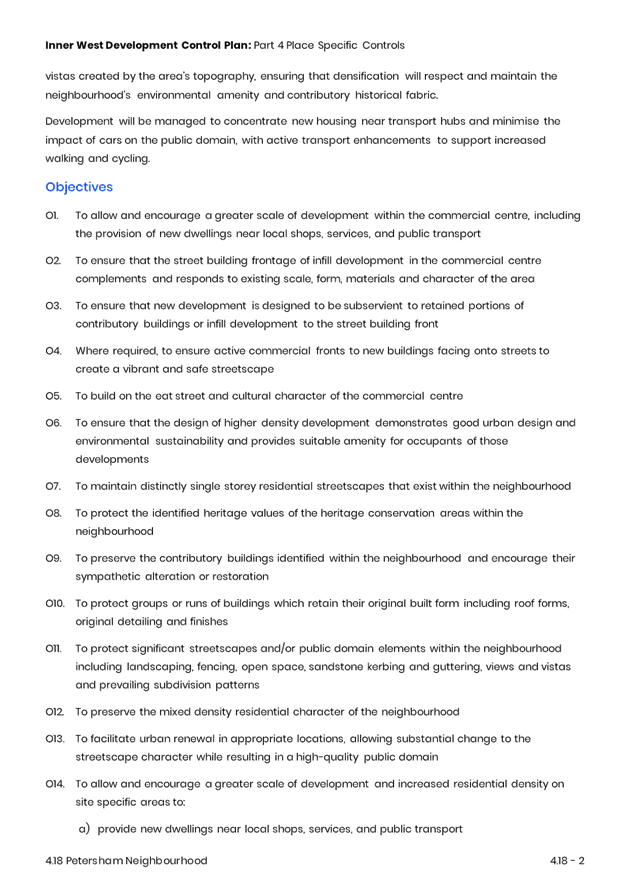
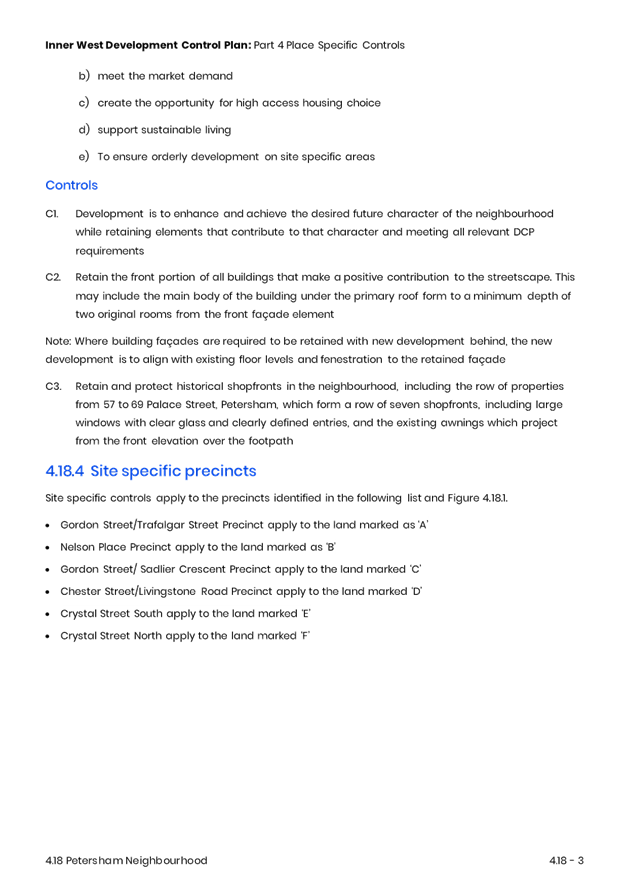
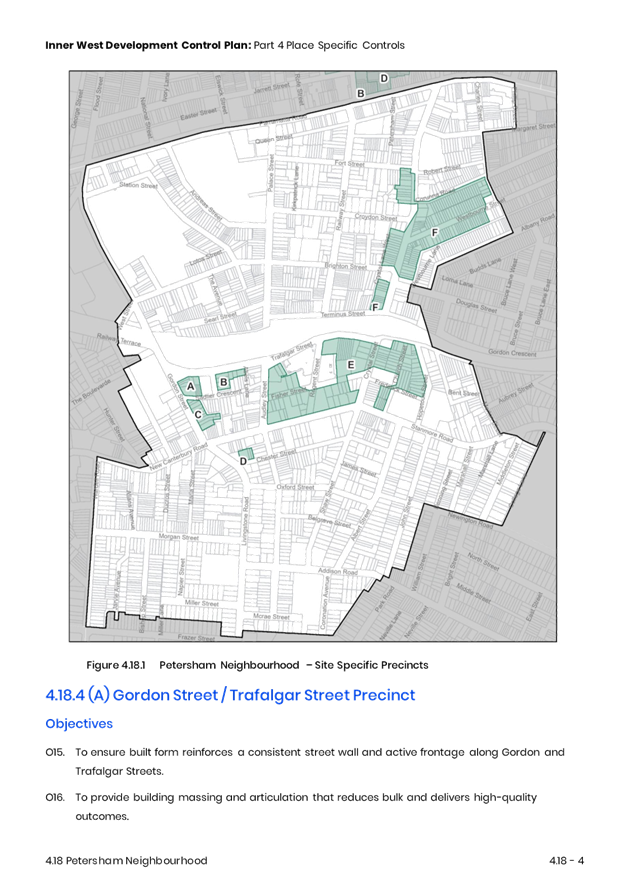
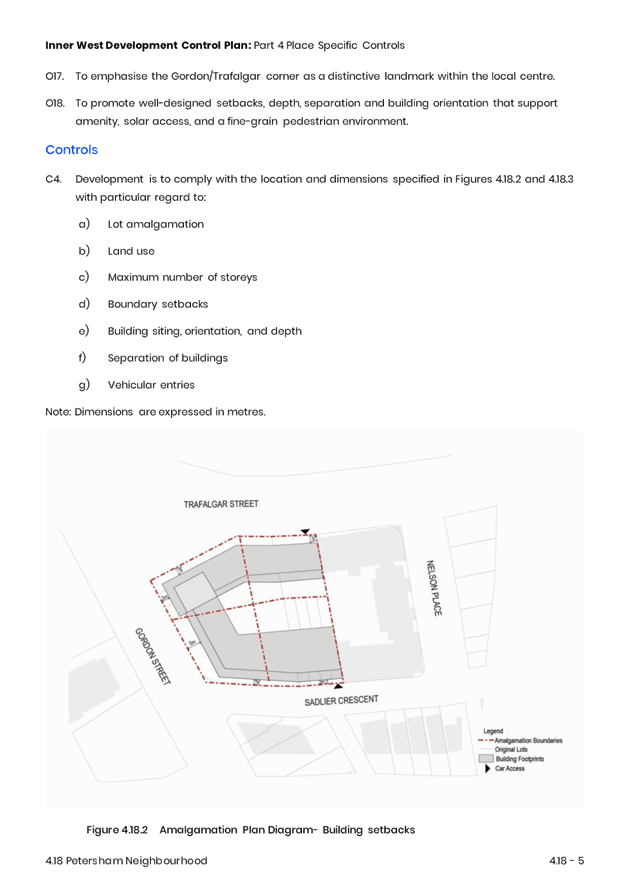
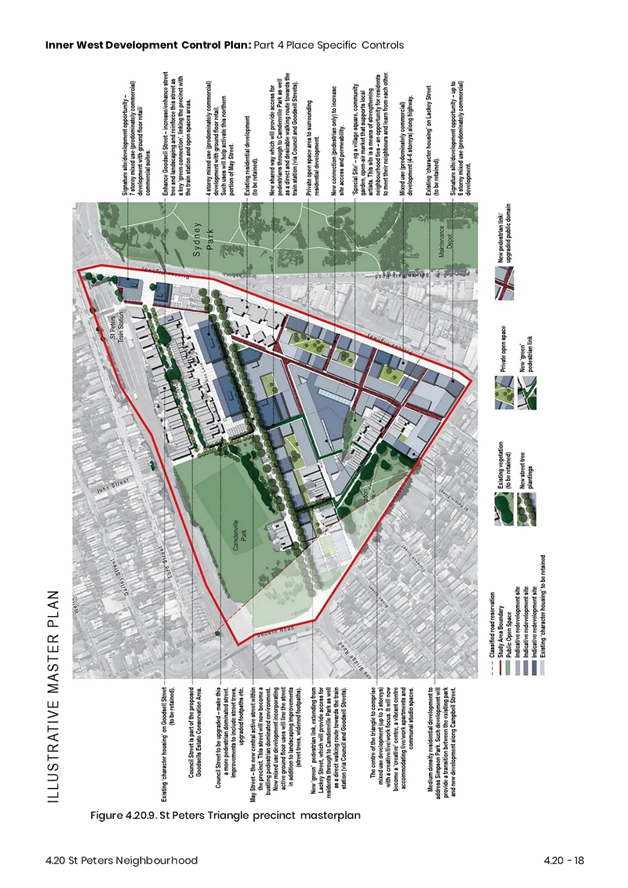
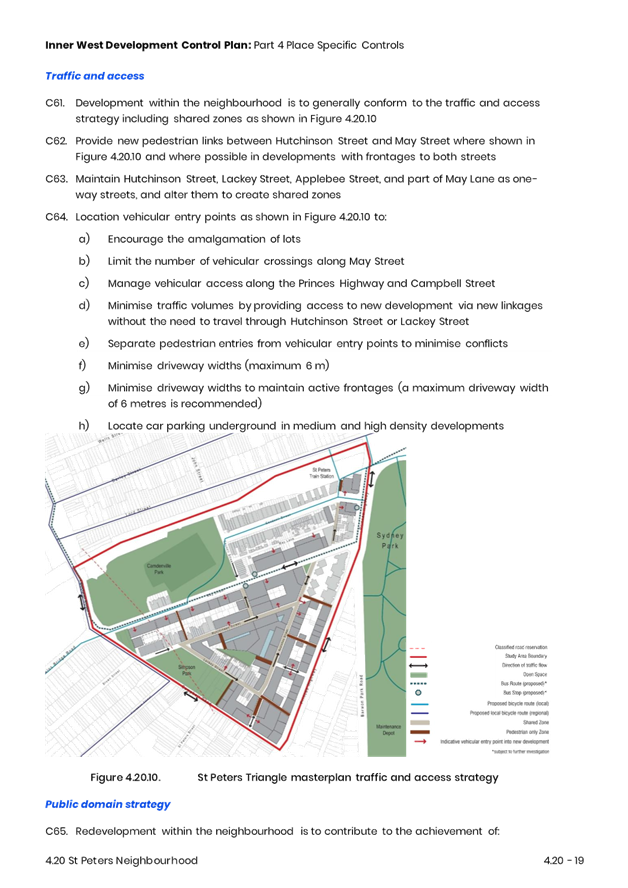
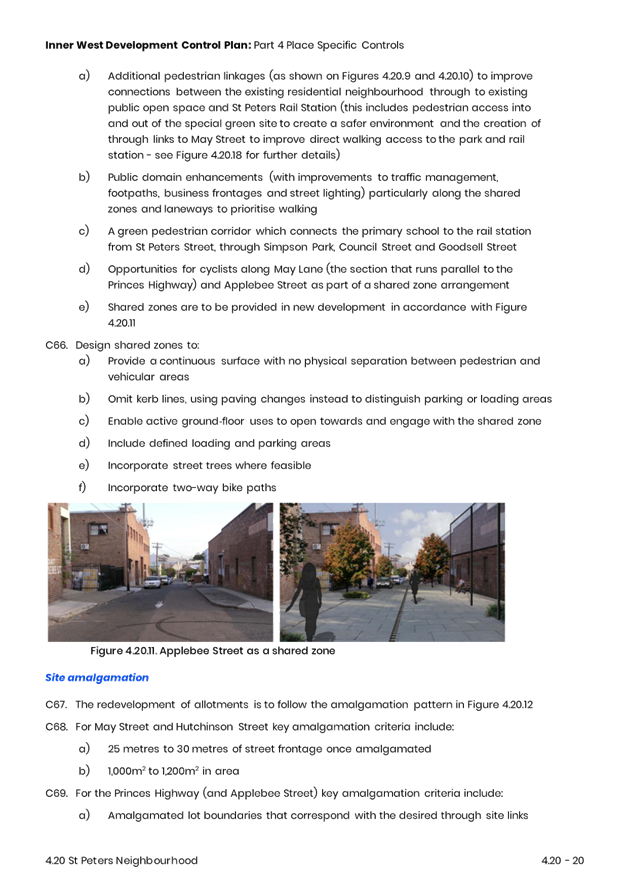
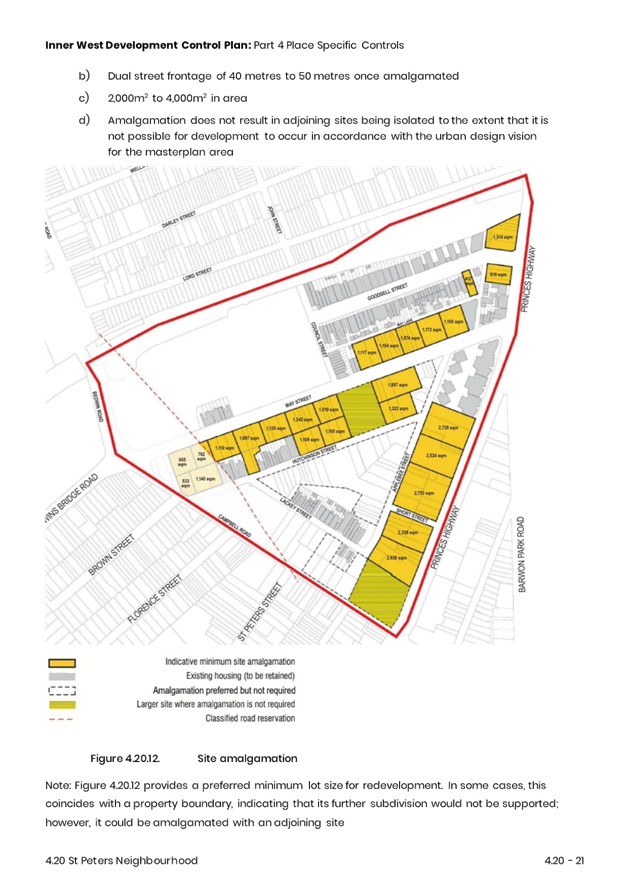
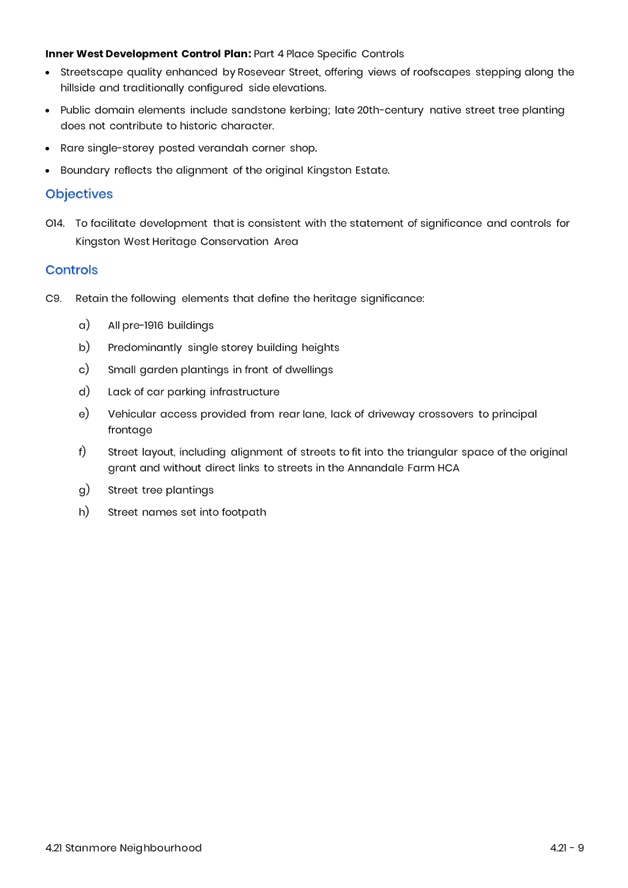
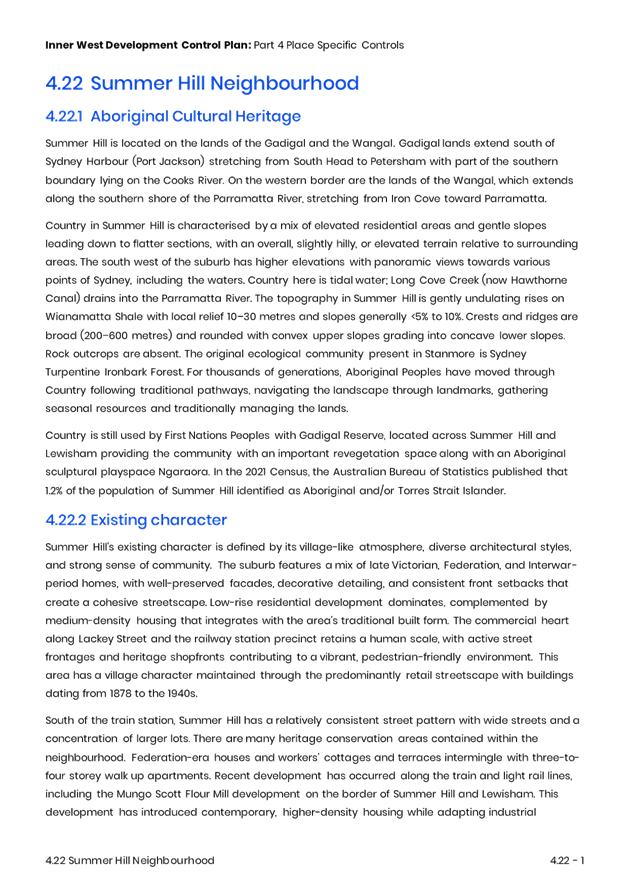
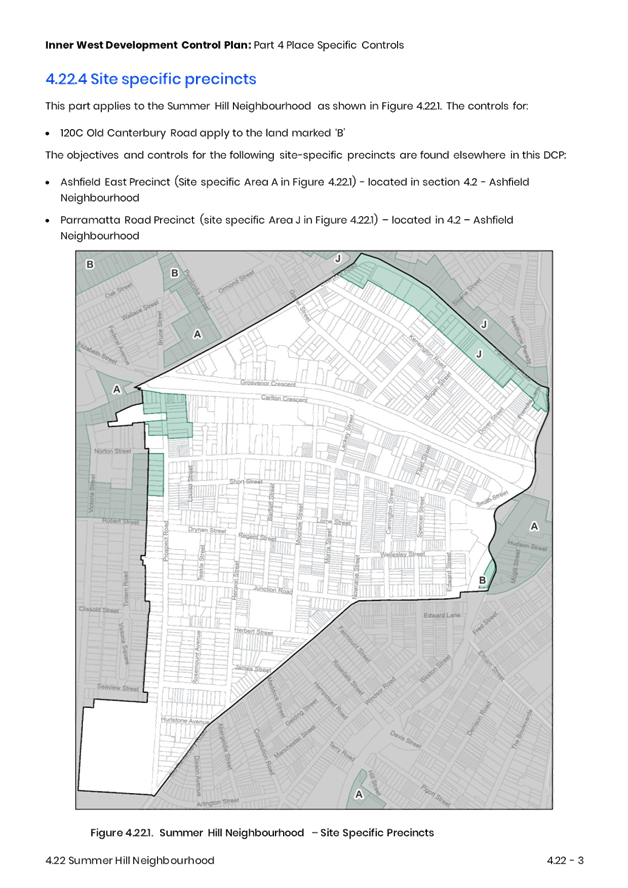
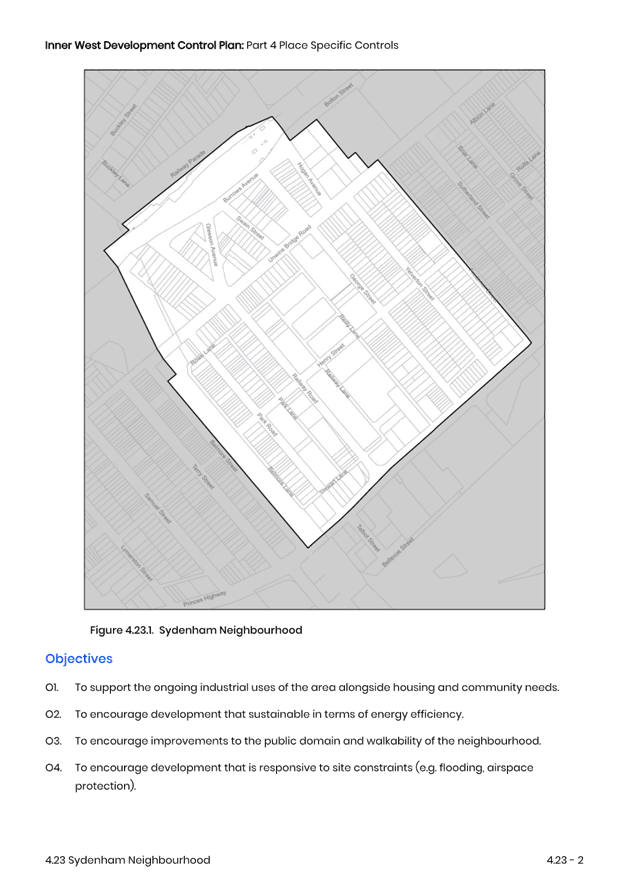
Includes statements on Country and Desired Future Character, plus additional controls for specific places governed by the DCP, such as neighbourhoods, heritage conservation areas and master‑planned sites
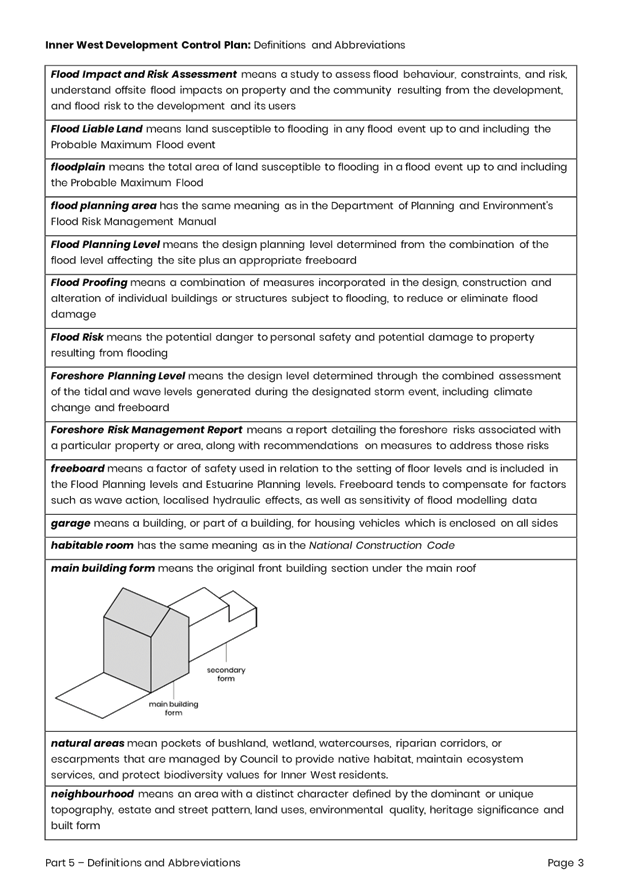
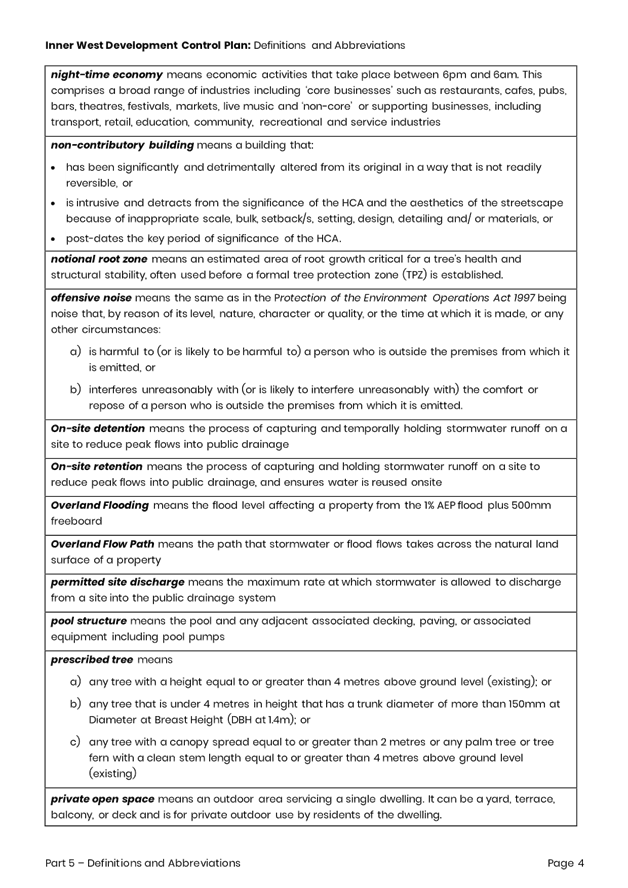
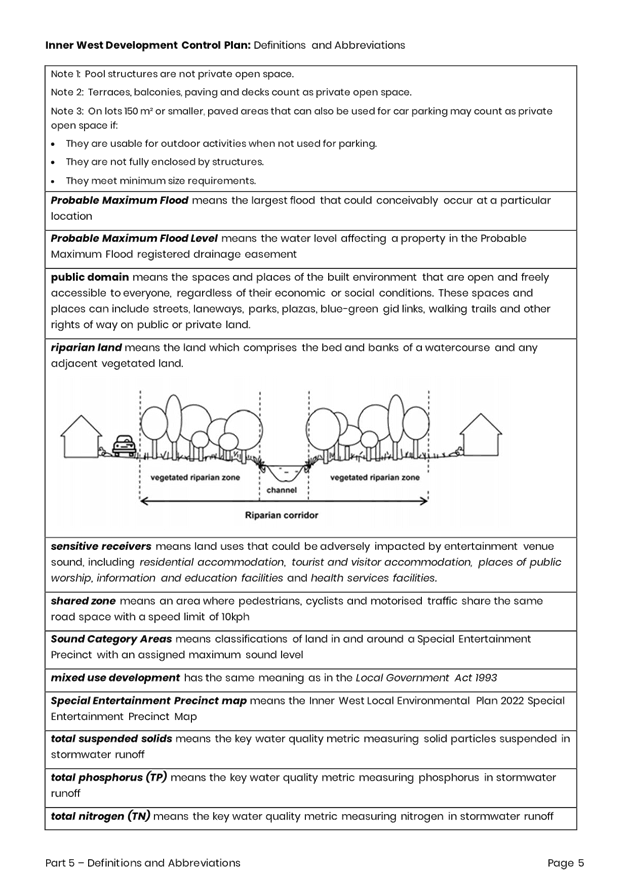
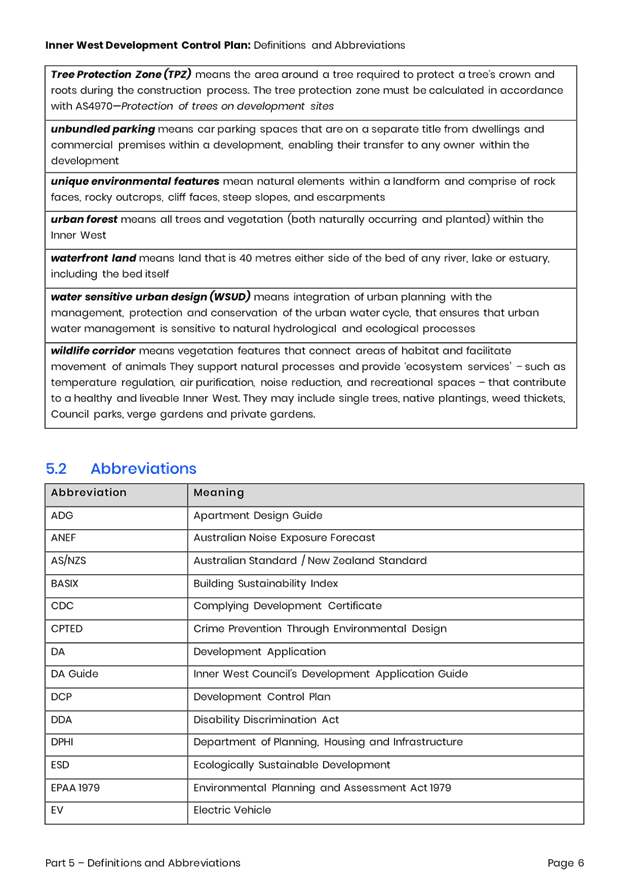
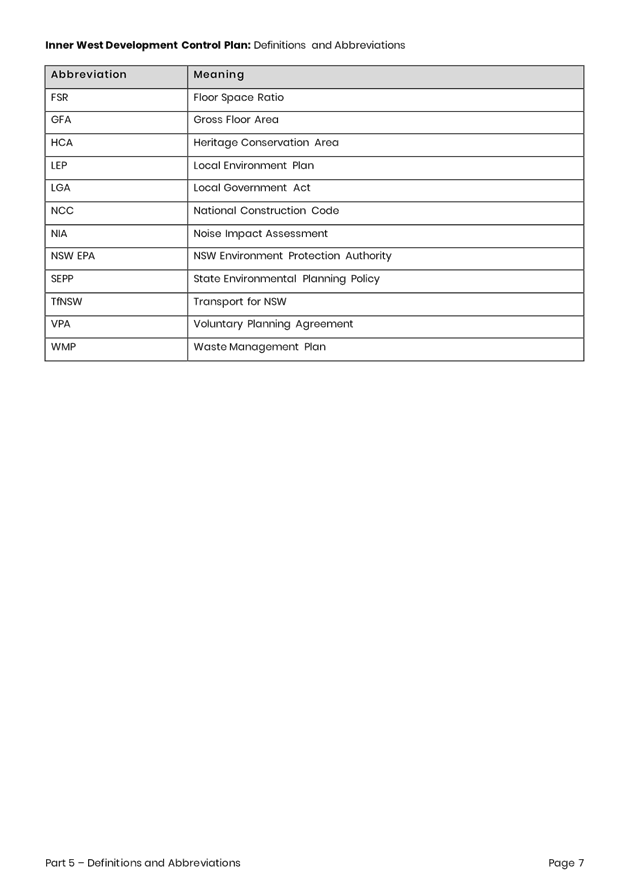
Part 5 – Definitions and Abbreviations
Defines key terms used in the DCP.
Approach to the IWDCP
The IWDCP has been informed by:
· Reviewing:
o DCPs across Sydney, particularly in areas in which they excel.
o NSW Government Guidelines
o The NSW Housing Pattern Book
· Interaction and compliance with NSW Planning Legislation
· Discussions with regular applicants, planners, architects
· Industry standards
· Discussions with relevant teams in Council including resources recovery, strategic transport planning, asset planning, ecology, legal, development assessment, community services
Some matters were addressed differently between the previous DCPs while others have evolved in response to new policy directions. To demonstrate consistent application and for clarity the approach to these matters is outlined below;
Parking
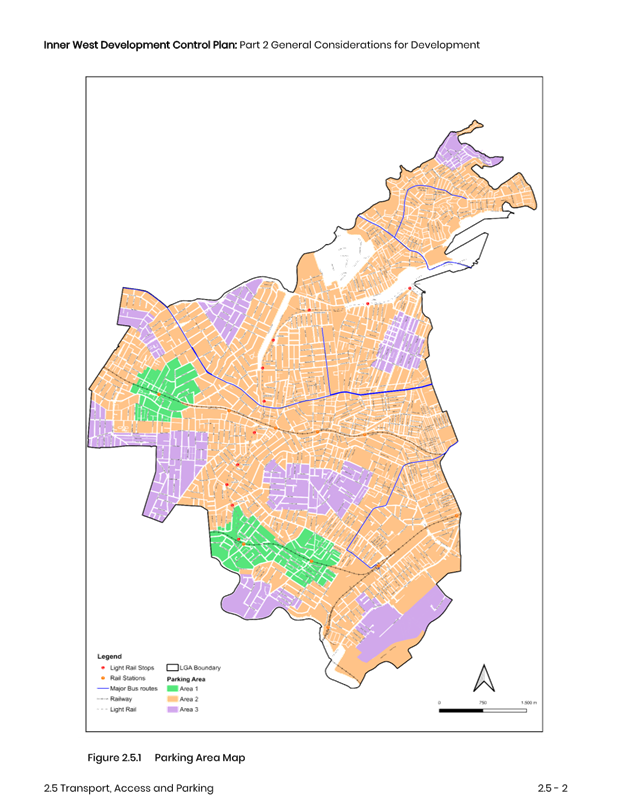
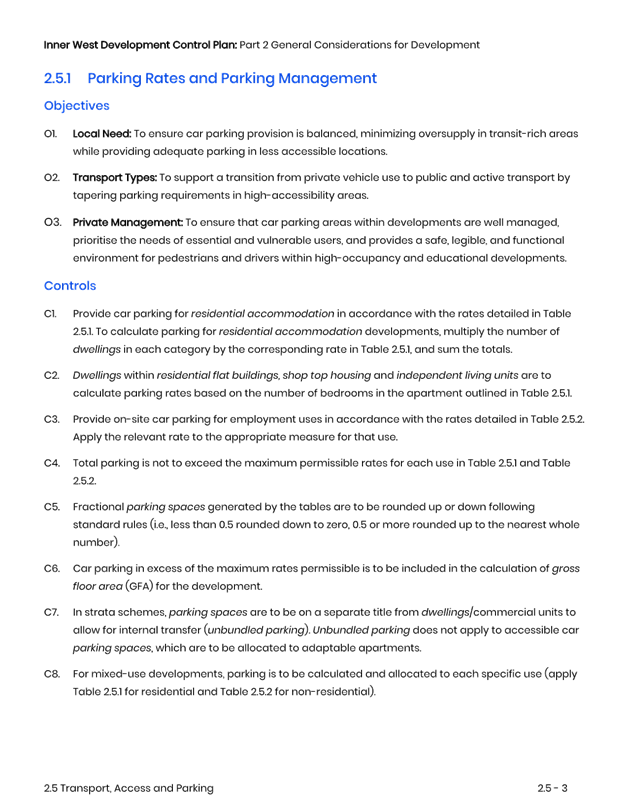
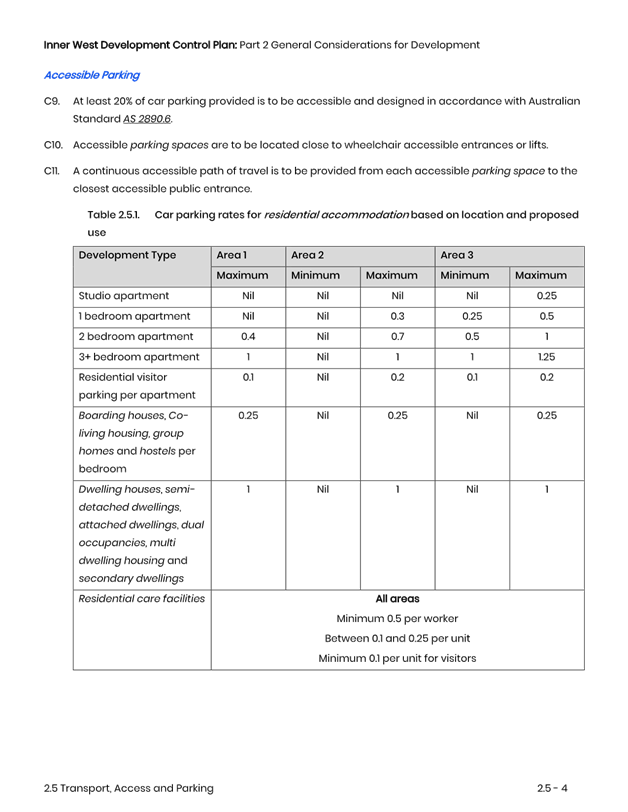
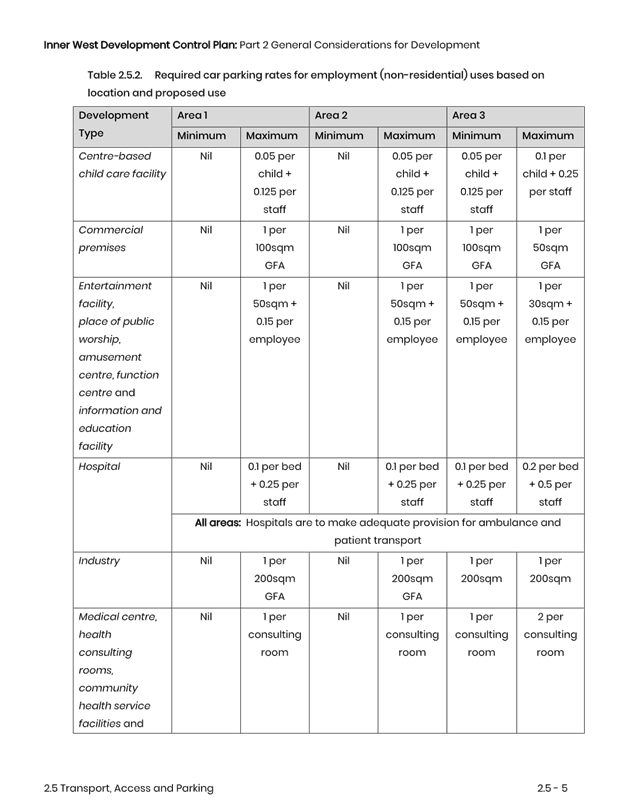
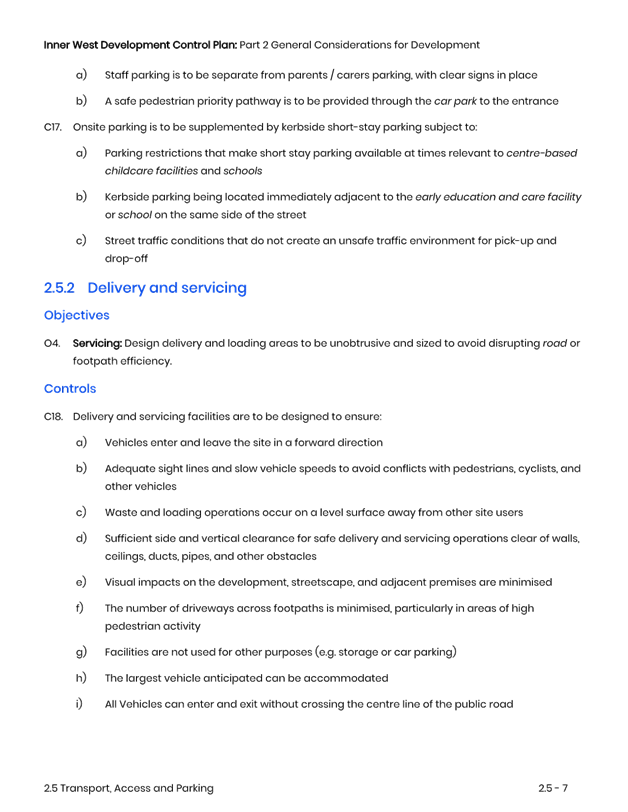
The approach to parking in the IWDCP is consistent with the approach outlined with Our Fairer Future Plan Design Guide as it seeks to minimise car usage in the Inner West through the use of maximum car parking rates. This is also consistent with the approach currently use in Leichhardt DCP 2013. The maximum car parking rates in IWDCP have been informed through Our Fairer Future Plan Design Guide and pedestrian catchment modelling that varies maximum parking rates depending on a sites vicinity to public transport.
Council’s Parking Strategy is currently on exhibition until 5 May 2026 and outlines how to manage parking better for residents, businesses and visitors. The Strategy aims to make existing parking better and to prioritise parking for people who need it most. It is consistent with the draft DCP and envisages maximum car parking rates as well as focussing on places where parking is hardest to find such as in town centres, around train stations and in dense neighbourhoods.
Heritage
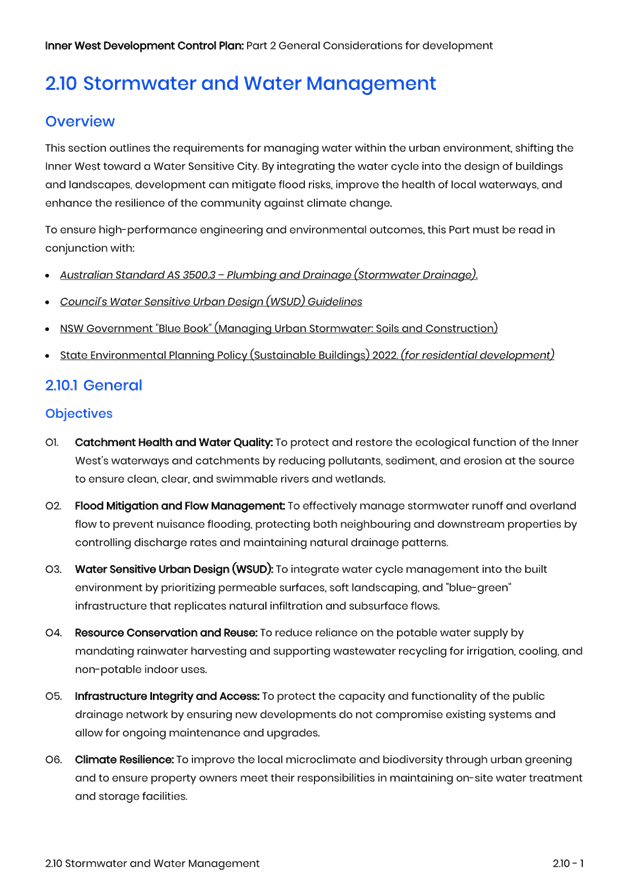
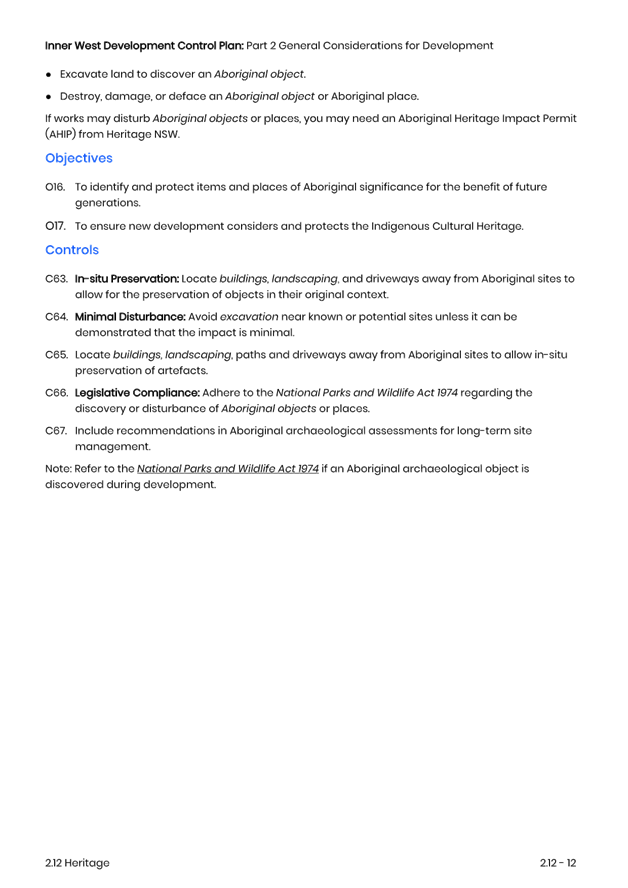
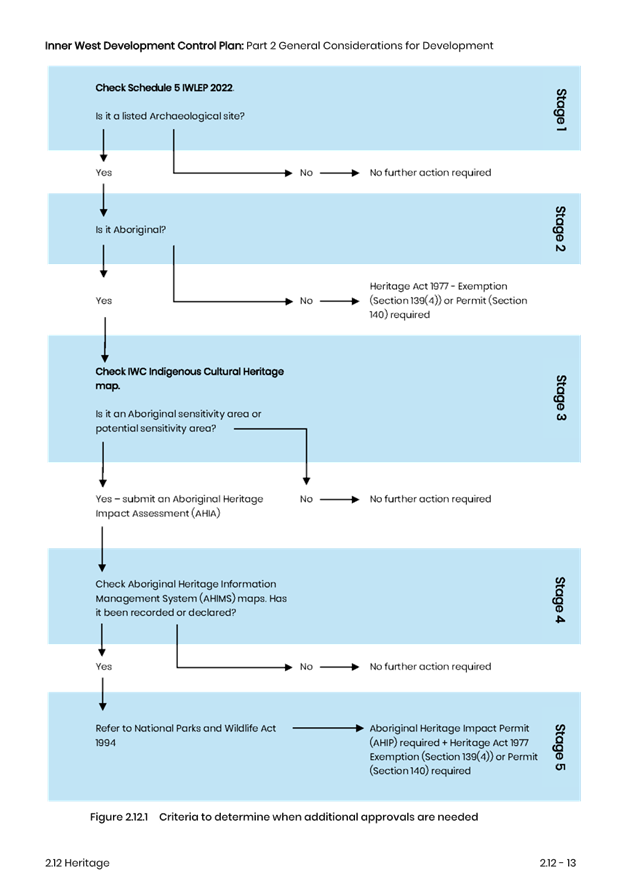
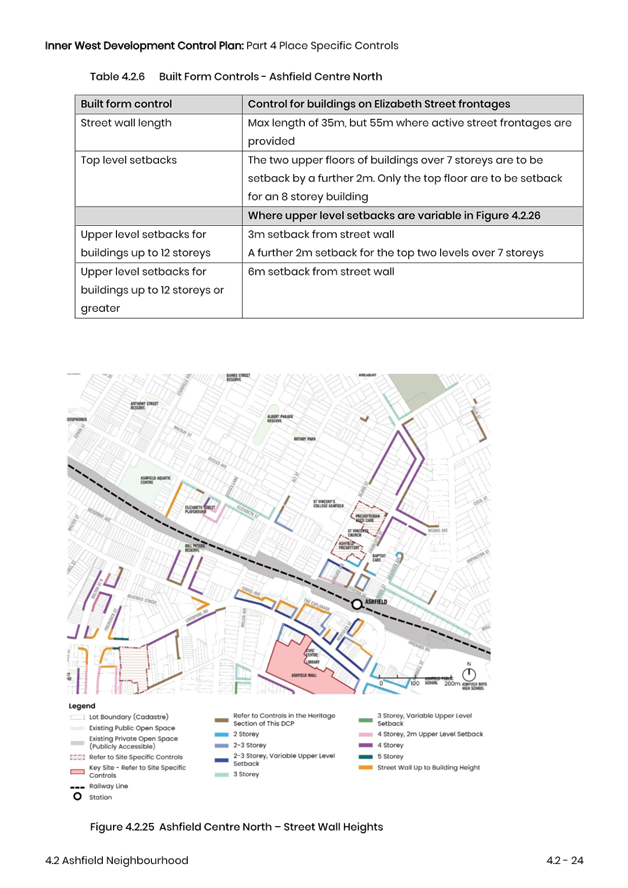
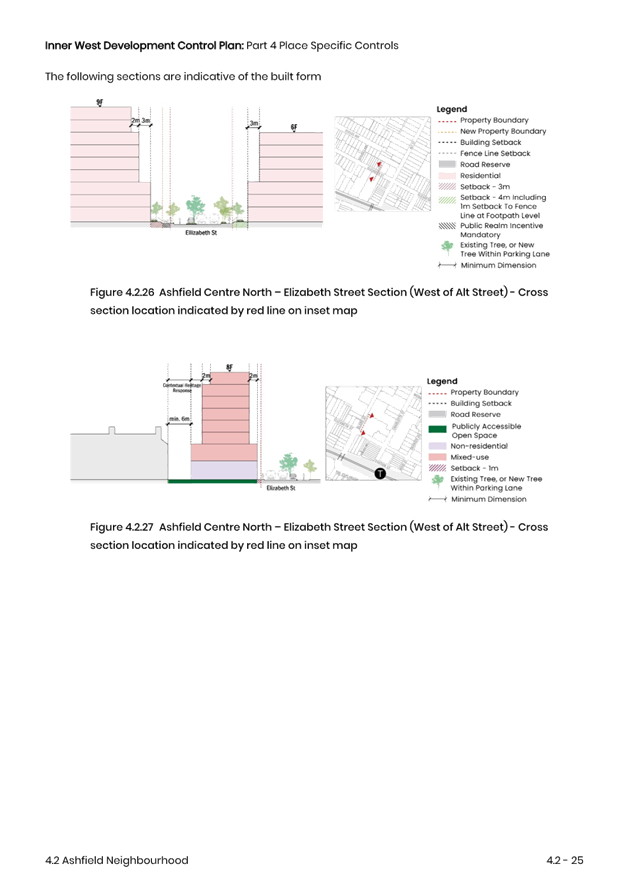
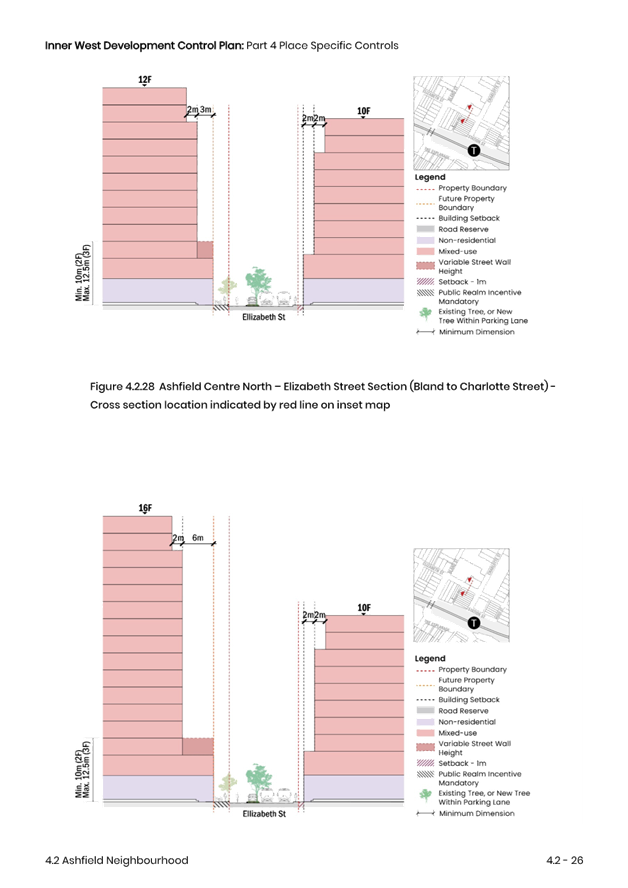
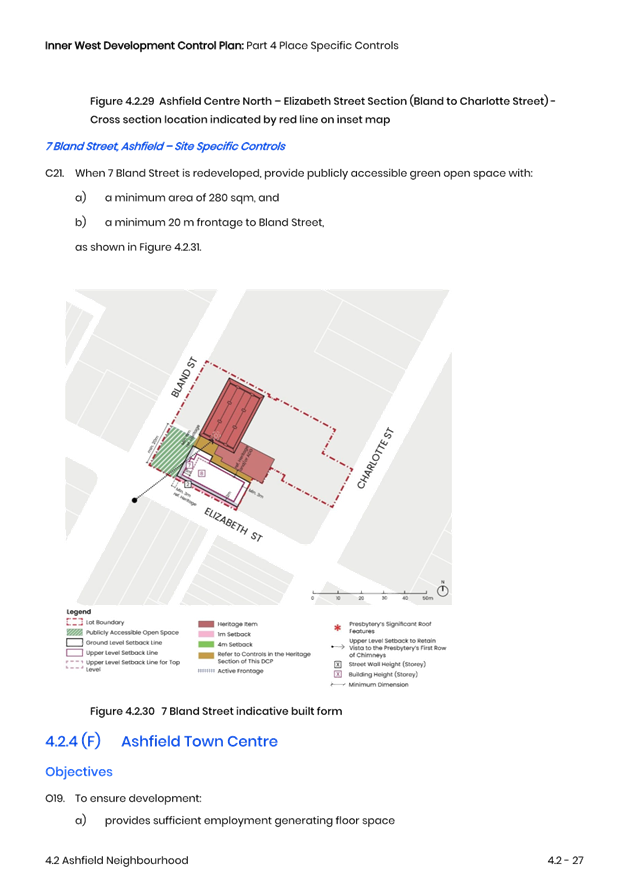
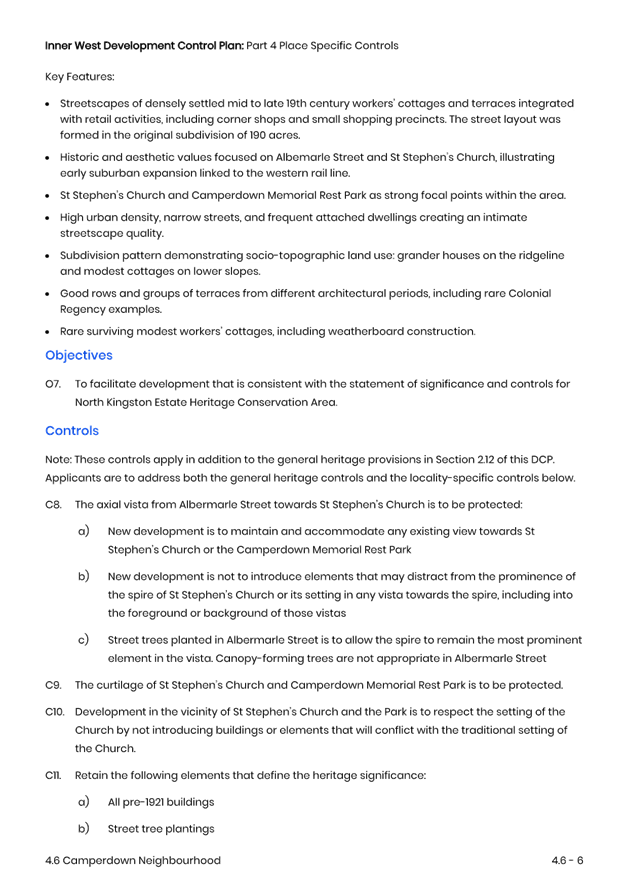
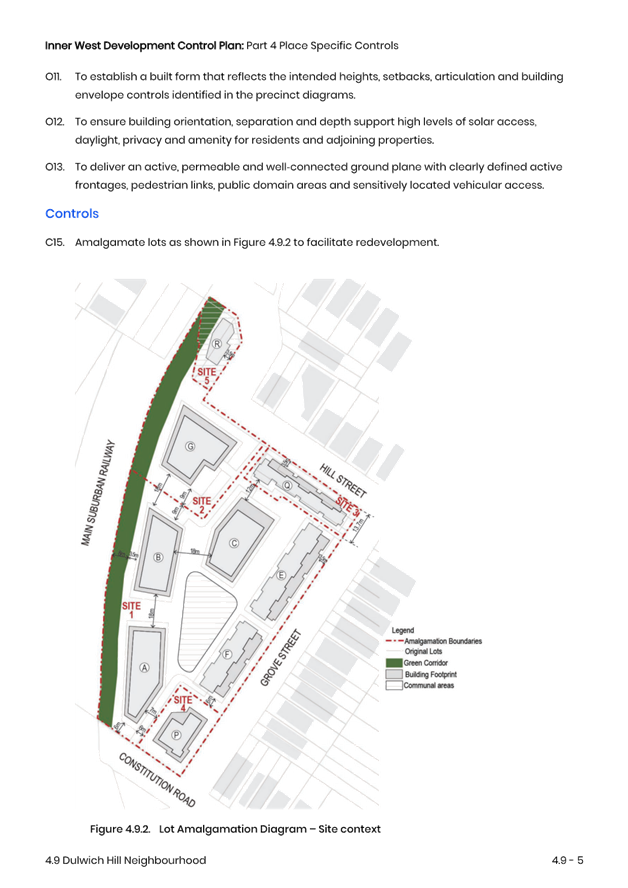
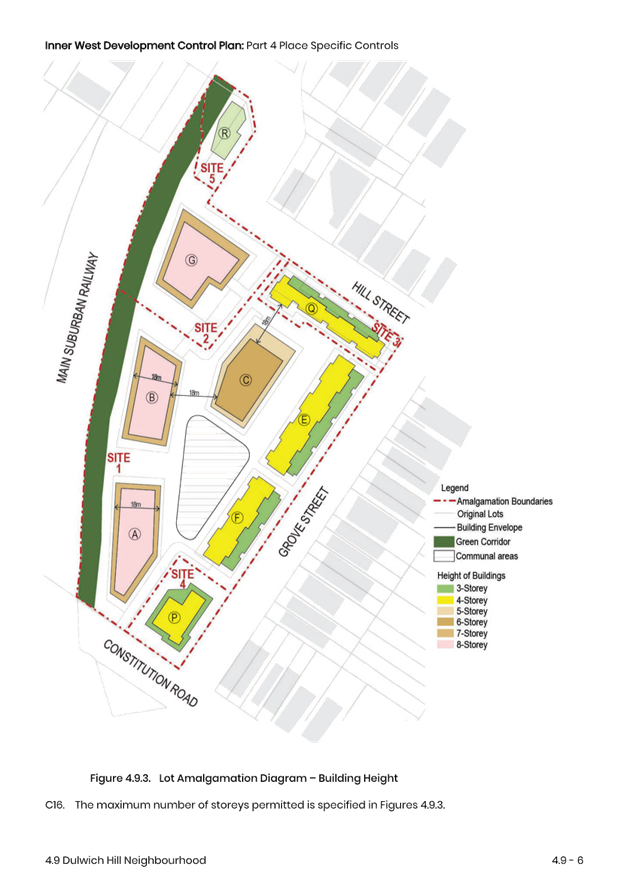
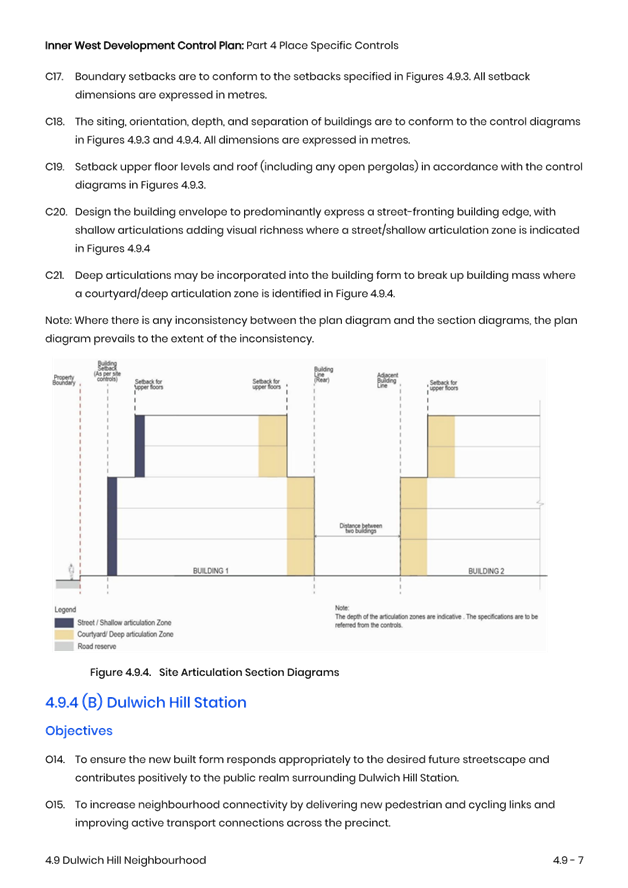
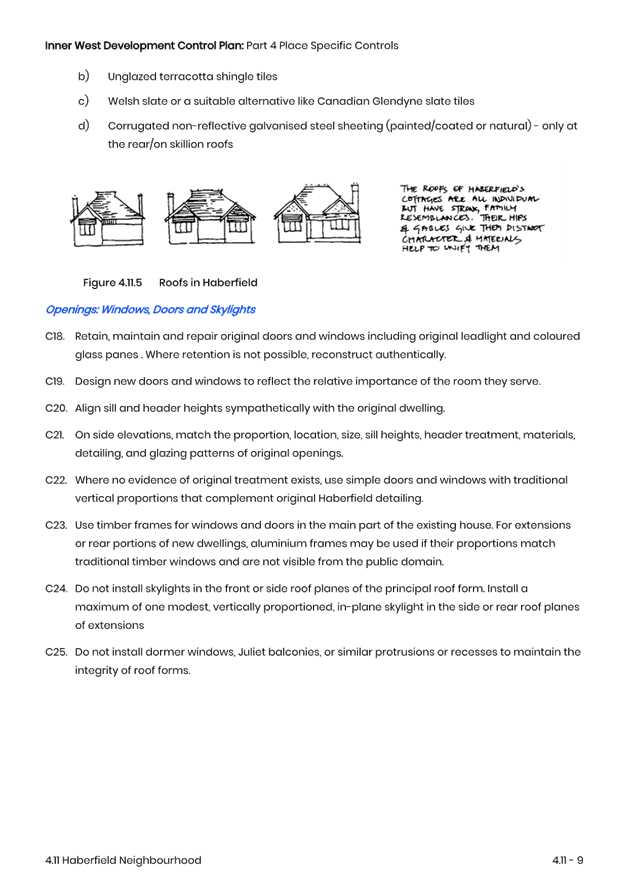
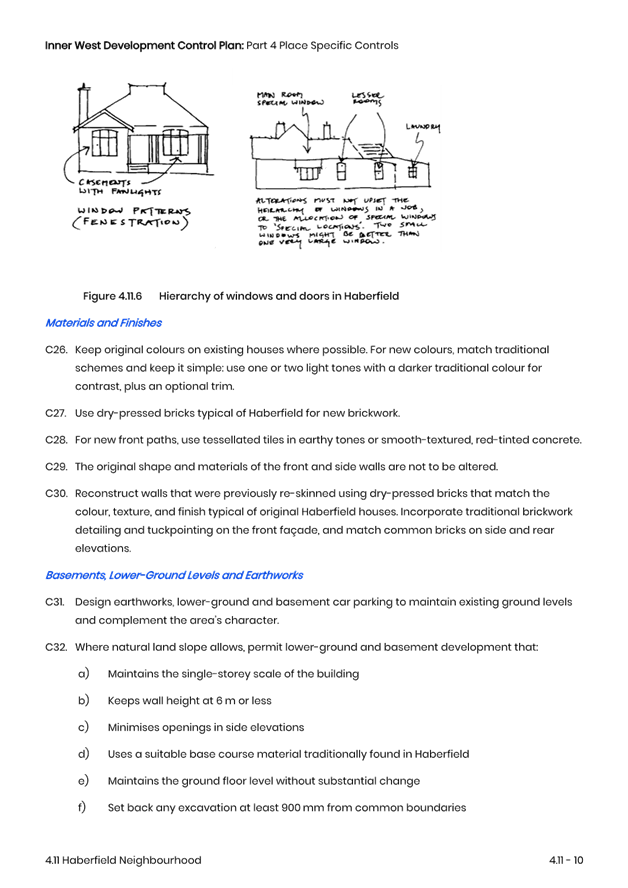
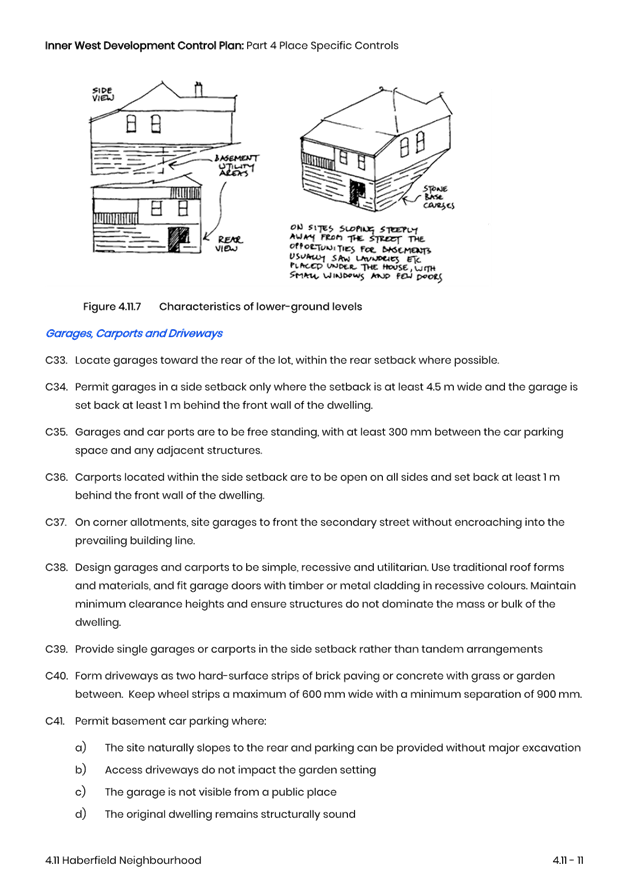
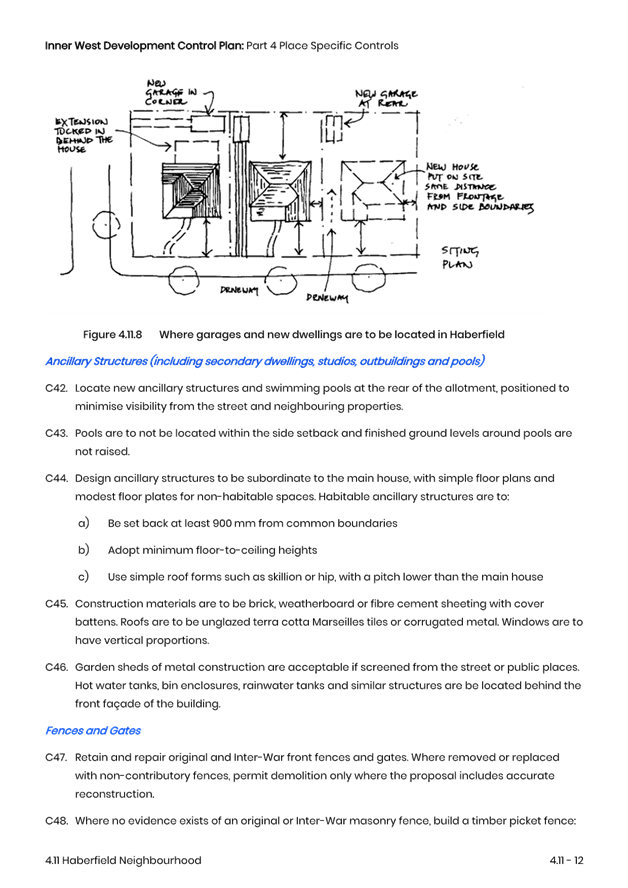
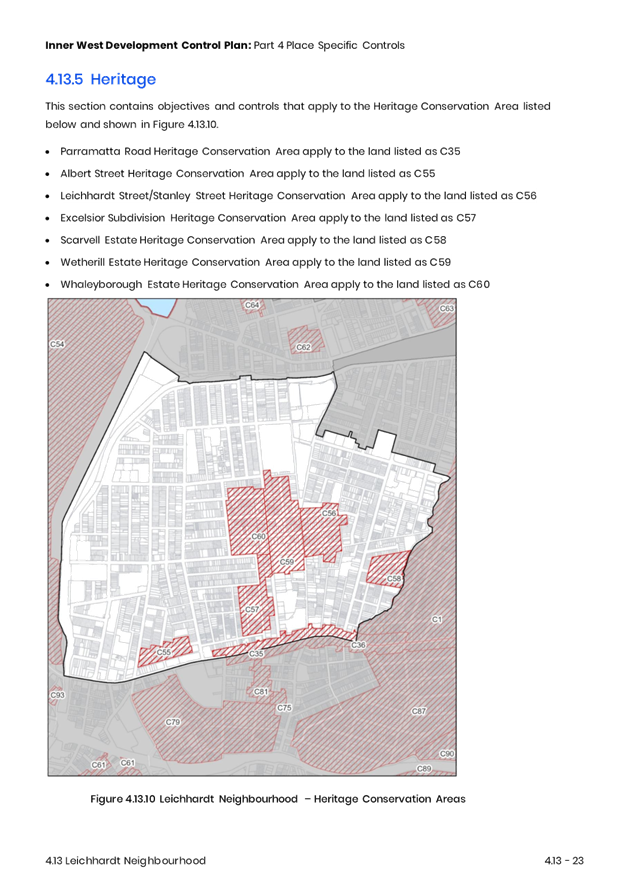
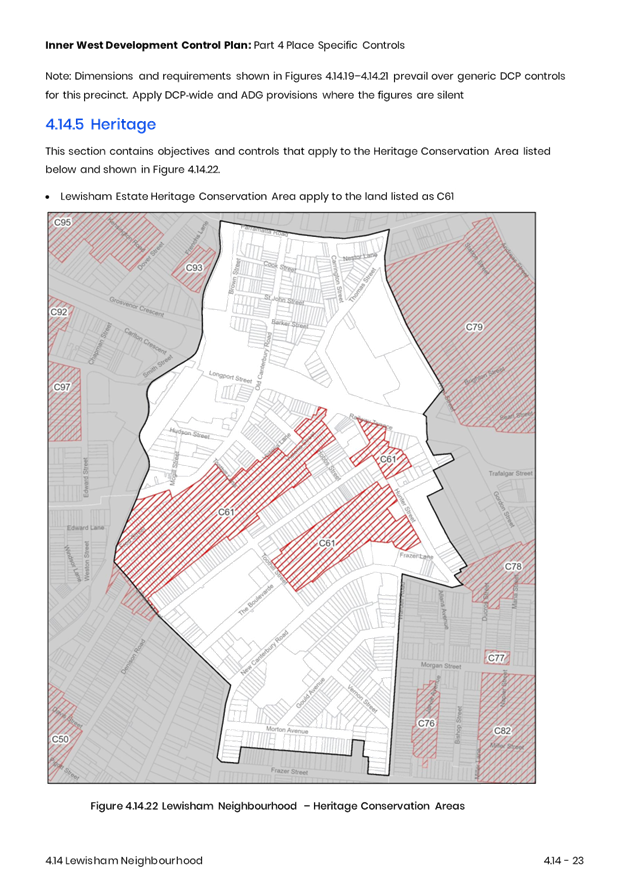
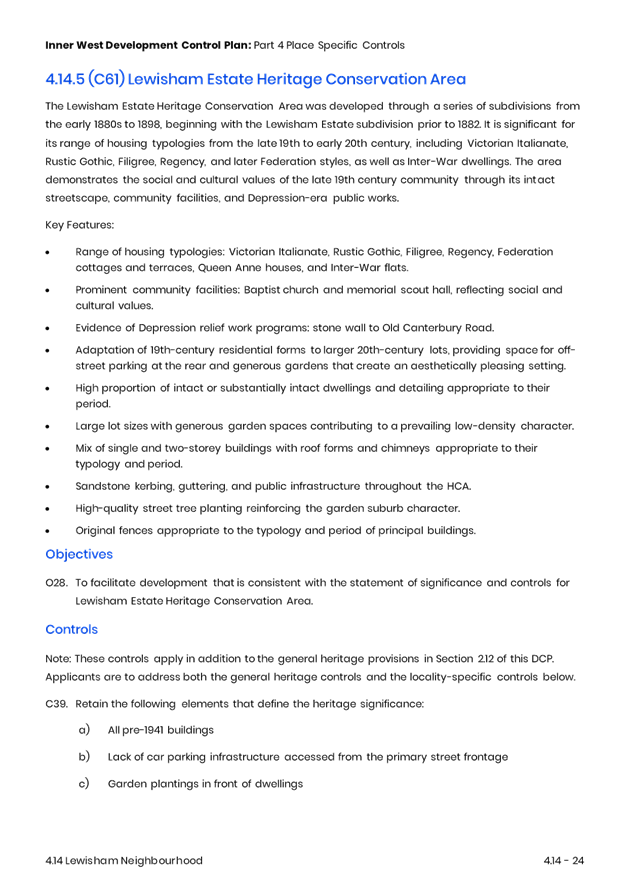
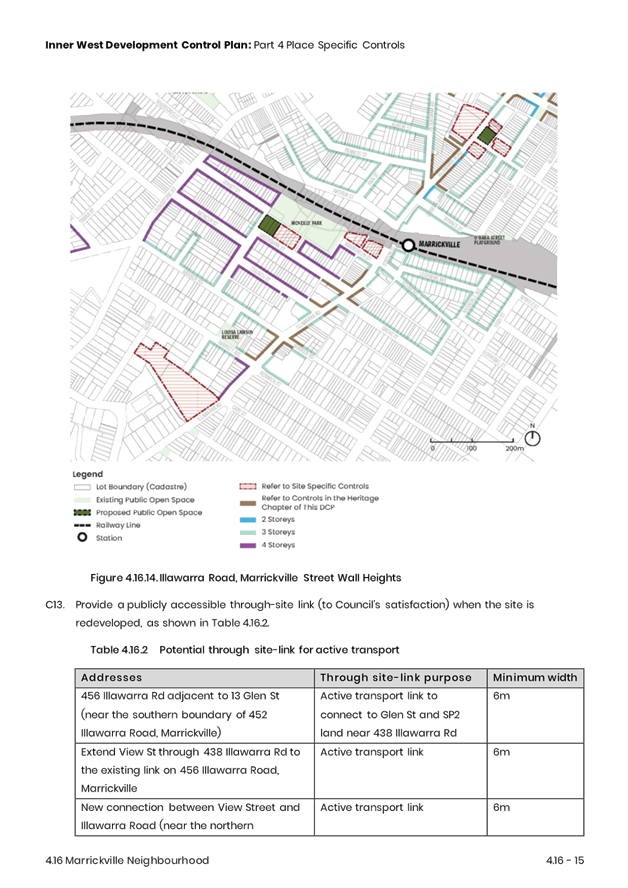
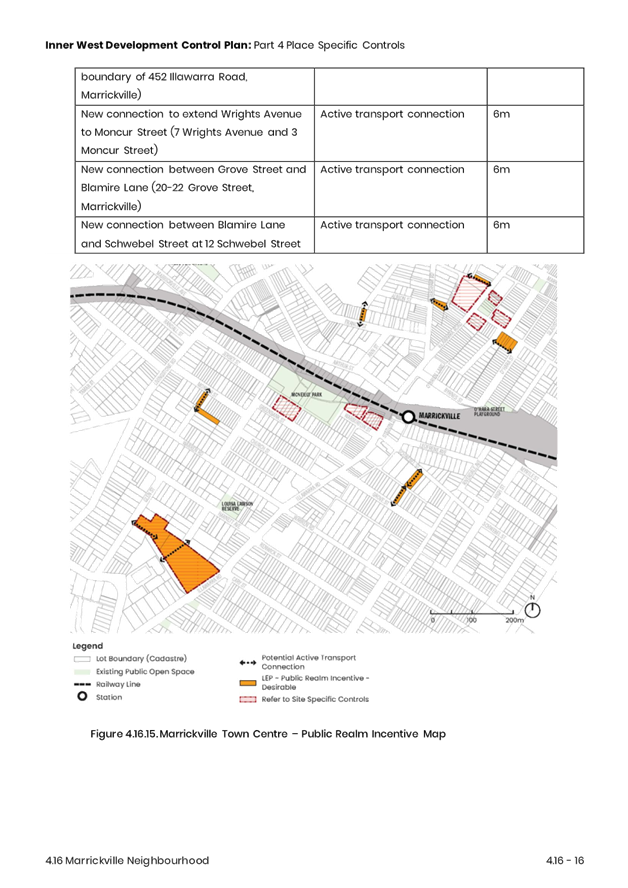
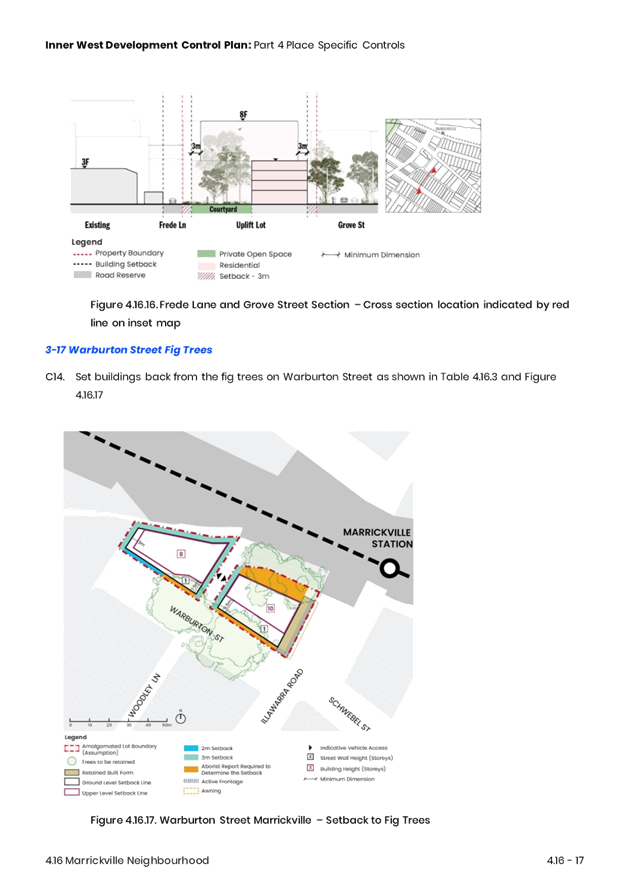
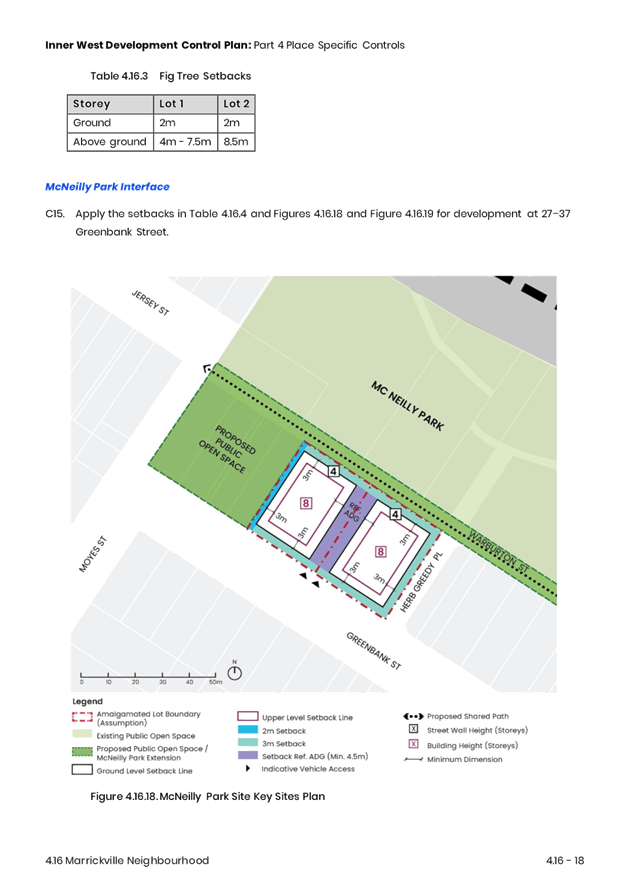
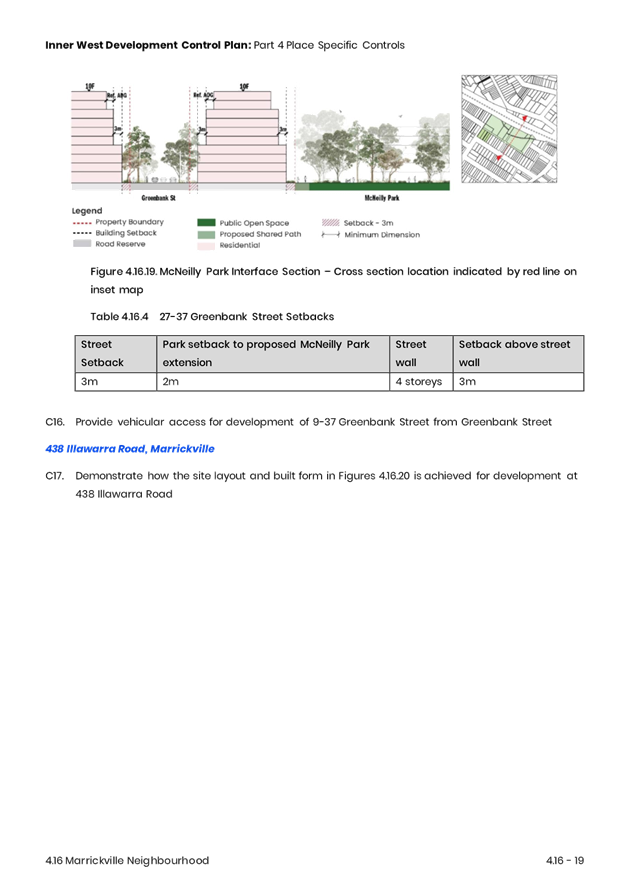
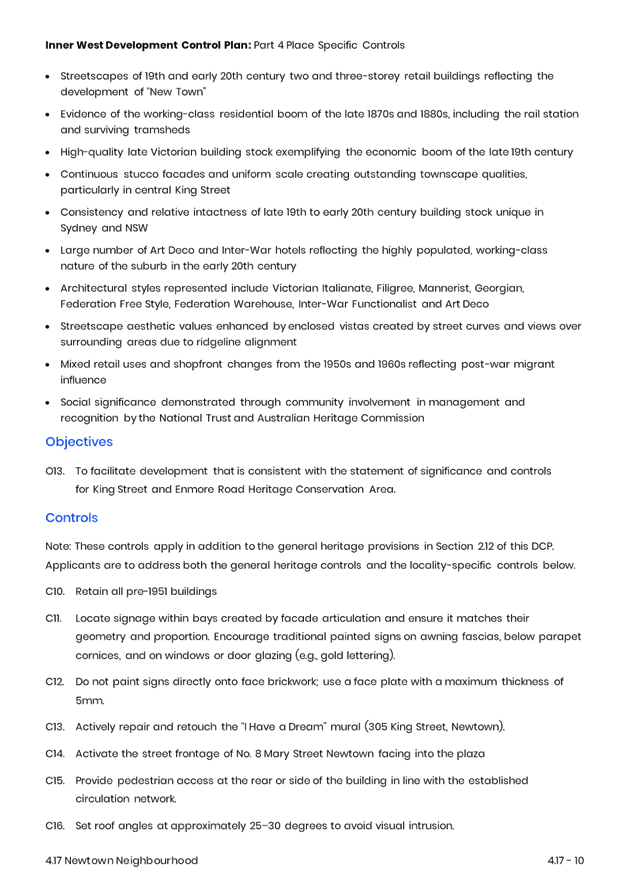
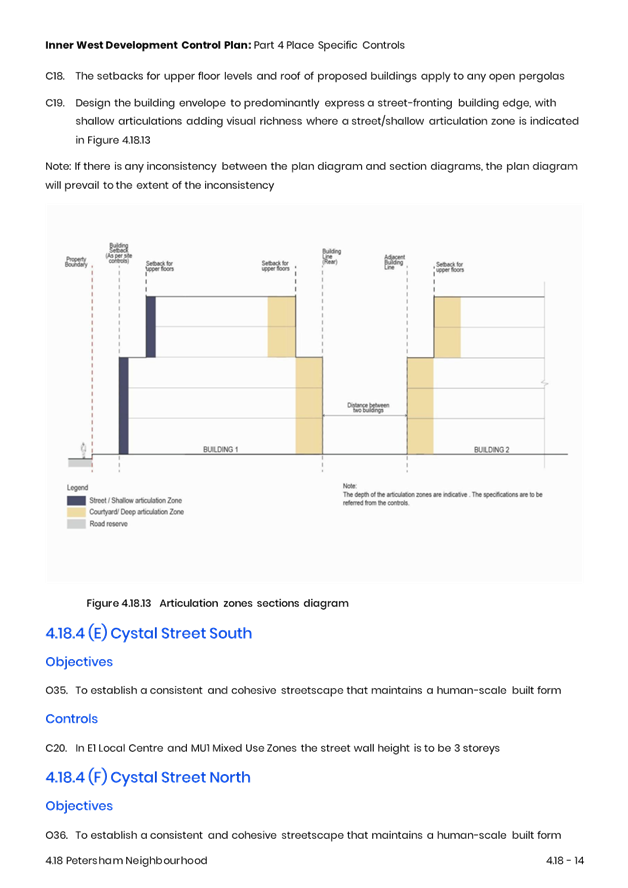
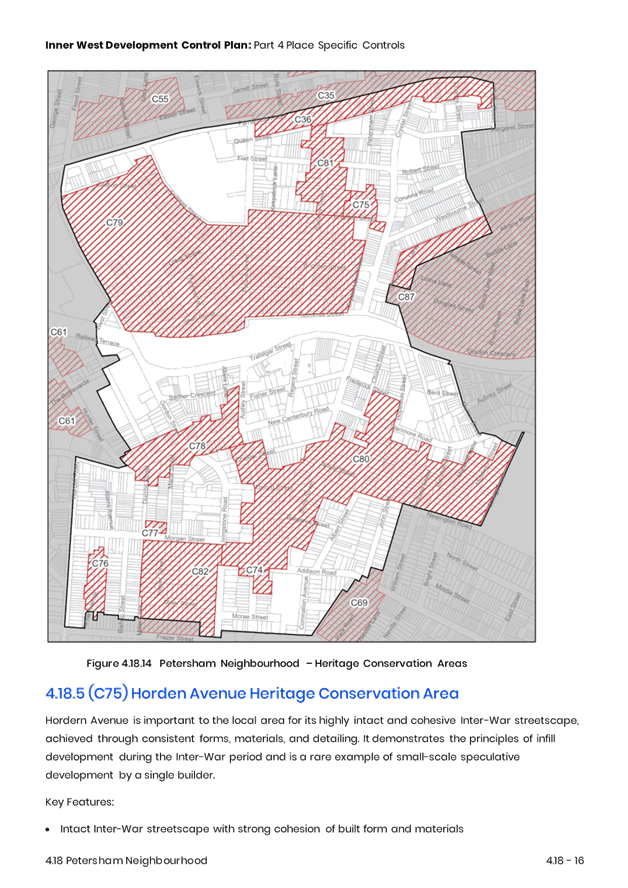
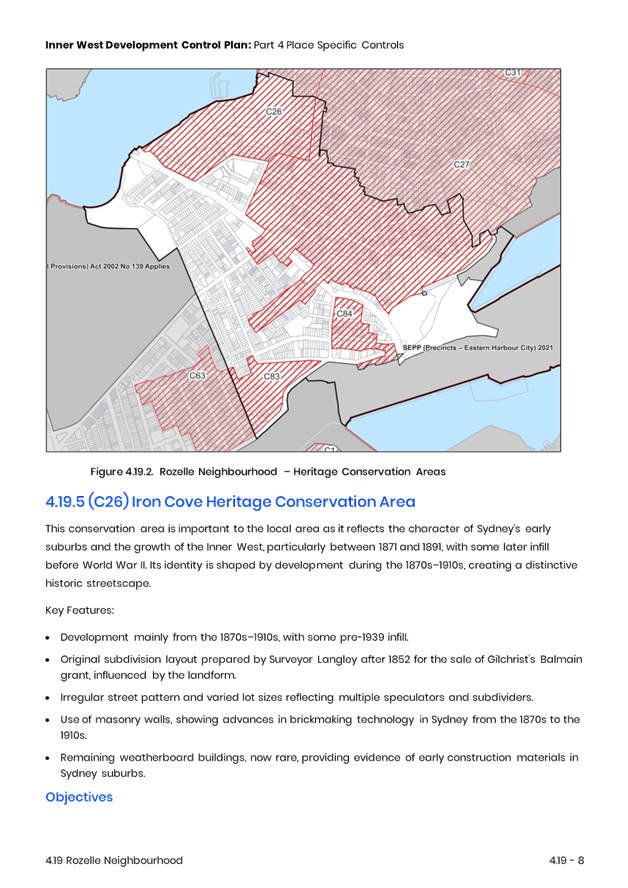
The heritage approach in the IWDCP clarifies what is significant in an area and outlines how development can appropriately respond to that significance, while allowing for new development that respects heritage values. The intention is to provide a more flexible approach to developing in Heritage Conservation Areas (HCAs). This has been done through providing general heritage guidance in Section 2.12, and detailed heritage guidance for specific areas in Part 4. Additionally, it seeks to balance new development through transition zones to heritage items/areas, retention of significant street façades.
The purpose of the Solar Panels Policy shown in Attachment 3 is to provide clear guidelines for the installation of solar panels in heritage conservation areas. Under Clause 5.10(3) of the Inner West Local Environmental Plan 2022, development consent through a DA is not required for certain works in a Heritage Conservation Area (HCA) such as solar panels where the applicant has submitted a fast track Heritage Exemption Certificate (HEC) and received written confirmation from Council before works commence. The policy signals that treatment of energy efficiency solutions is in line with recent changes to the Heritage Act and in particular facilitates solar panels in HCAs even where located on the front roof plane.
Landscaping
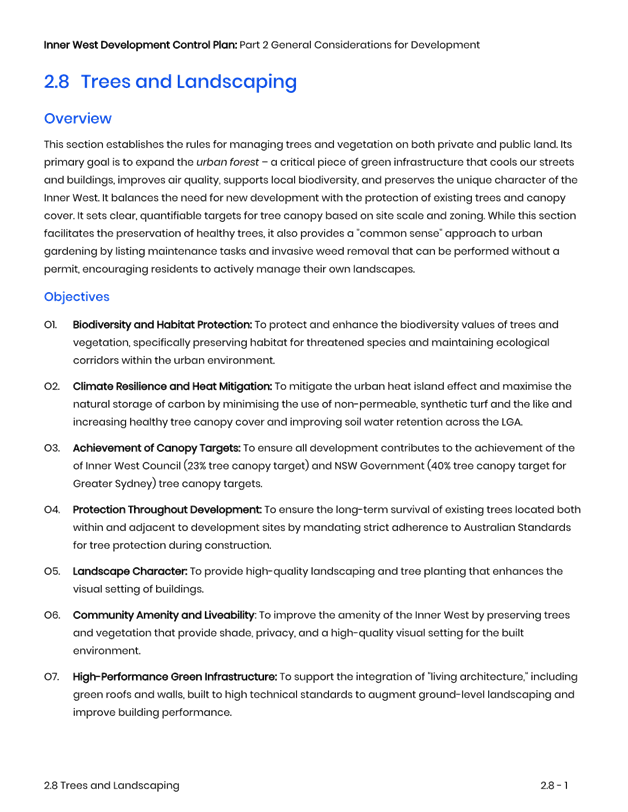
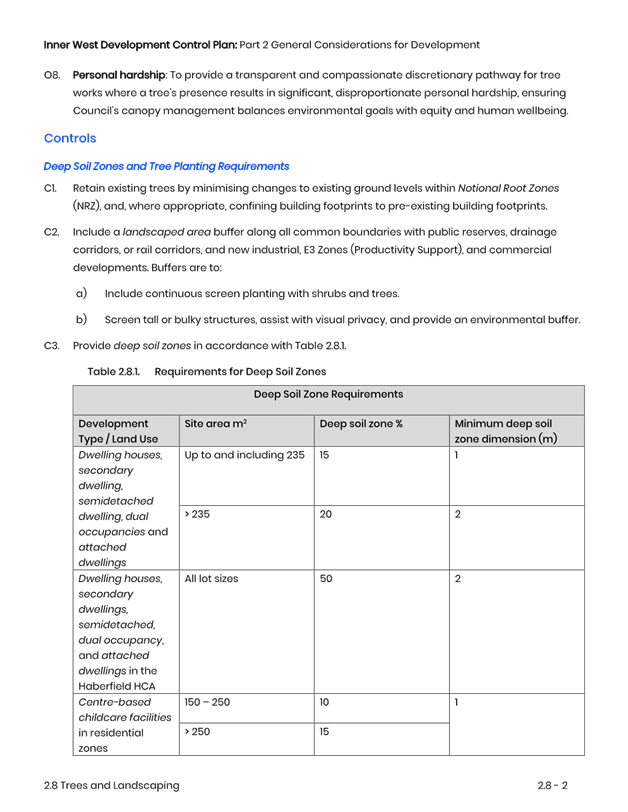
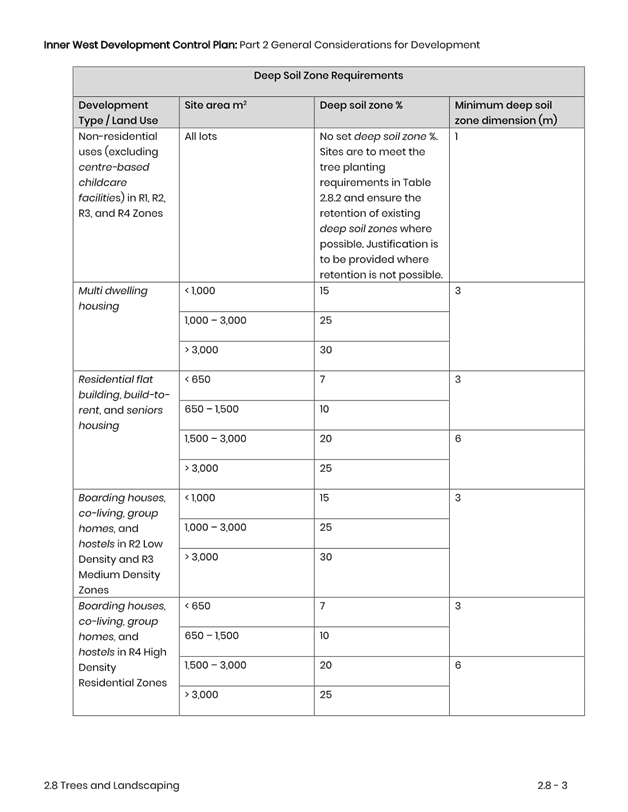
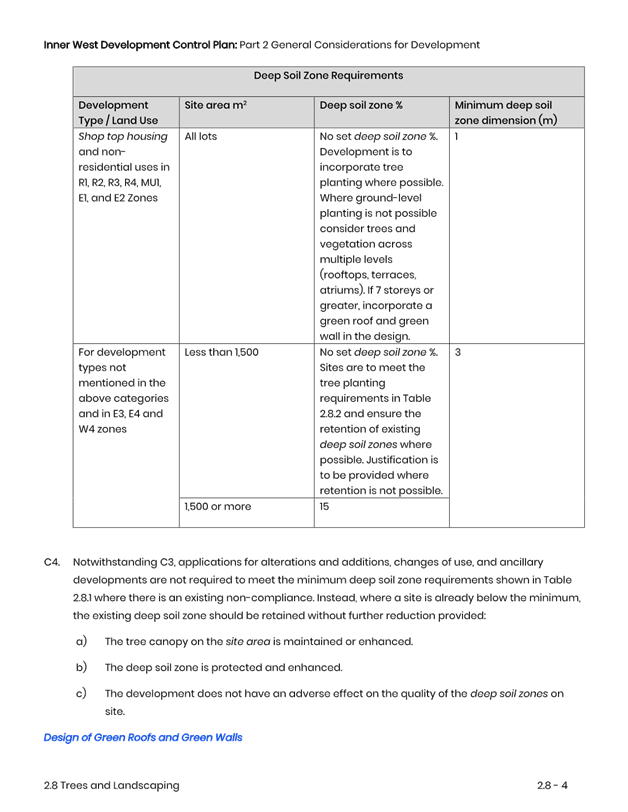
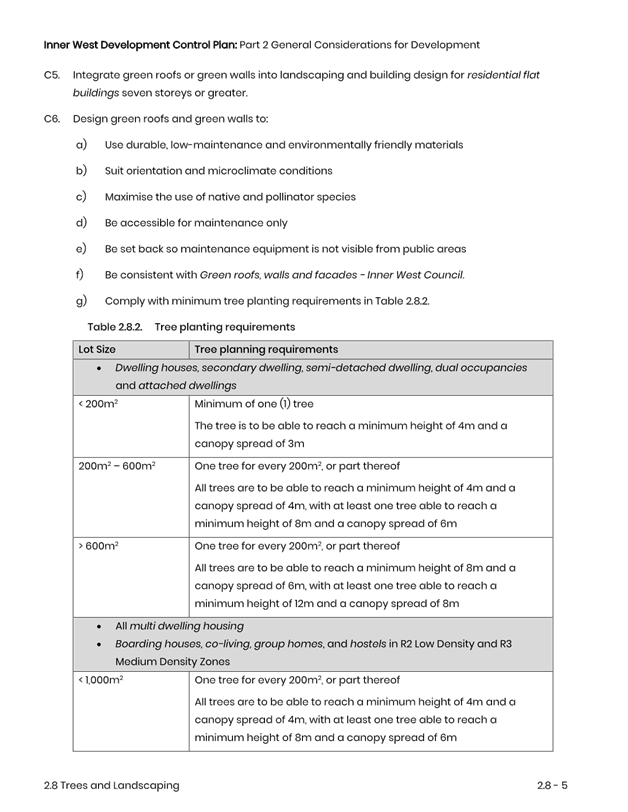
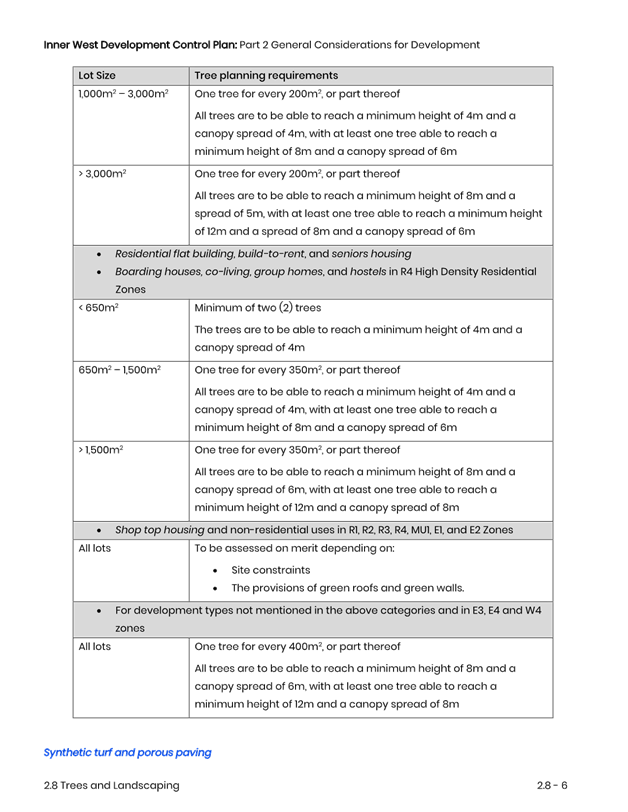
The IWDCP’s landscaping approach prioritises retaining space for tree planting within private development sites. This principle will be embedded more consistently through changes to be considered as part of Our Fairer Future Stage 2. Until then landscape area controls for Leichhardt remain in IWLEP2022 and consistent controls for deep soil zones are articulated within the IWDCP and will apply across the whole of the Inner West, including Marrickville and Ashfield.
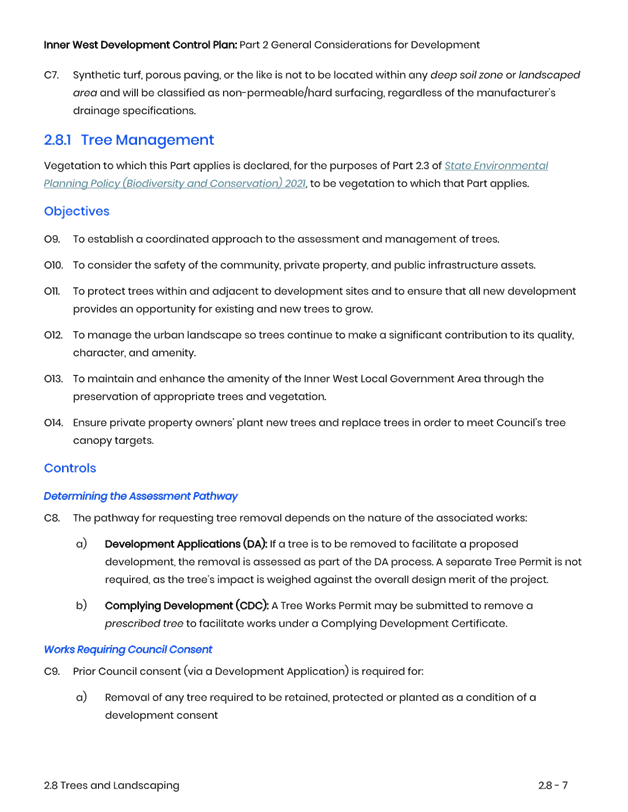
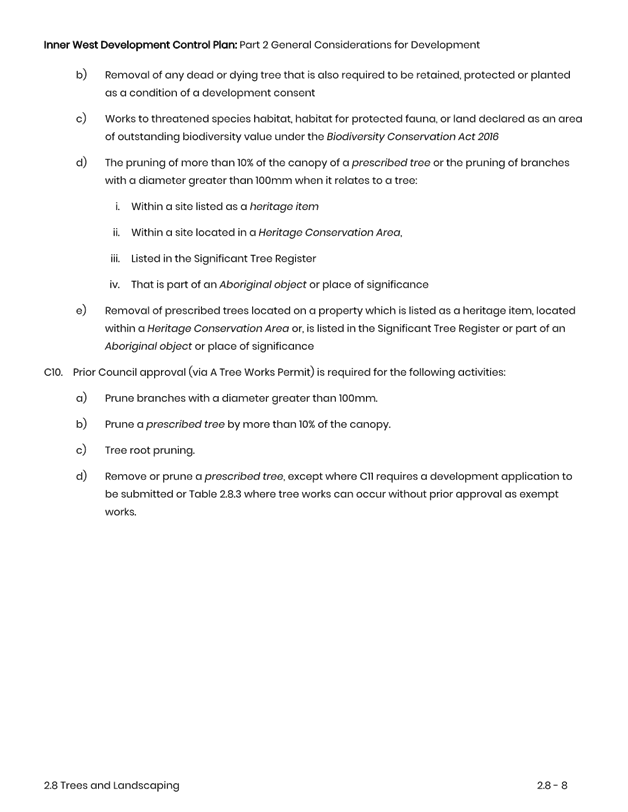
Trees
Private‑land tree removal controls have been reviewed and refined to provide a clearer and fairer assessment framework, while allowing flexibility for the removal of healthy trees in limited and well‑justified circumstances.
Interaction with NSW Planning Legislation
Several planning approval pathways in NSW do not require consideration of the Inner West DCP, particularly relevant to the Inner West are Exempt and Complying Development and State Significant Development (SSD). The IWDCP therefore does not apply to design quality for larger SSD projects. The draft IWDCP is consistent with the NSW Apartment Design Guide.
General Approach
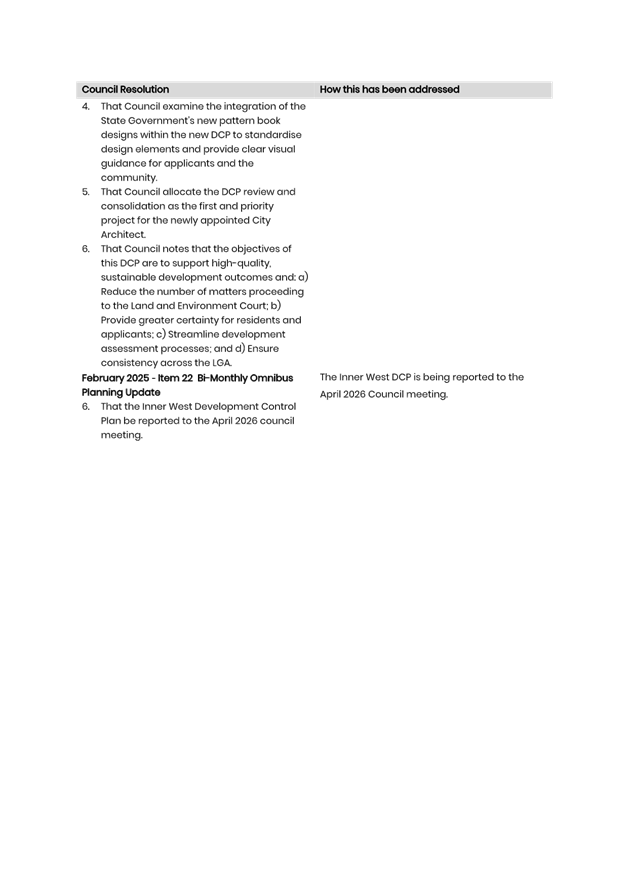
The resolution of the Ordinary Council meeting of November 2025 required specific attention to the following matters;
1. That Council notes the existing Development Control Plans (DCPs) are criticised for being overly complicated, archaic, and difficult to interpret.
The draft IWDCP has created to be a streamlined document with a new logical layout as well as an E-DCP version to assist applicants, residents and industry professionals to find the information they are looking for.
2. That Council reviews and consolidates the three existing Development Control Plans (Ashfield DCP, Leichhardt DCP, and Marrickville DCP) into a single, simplified, principles-based Development Control Plan for the Inner West Local Government Area.
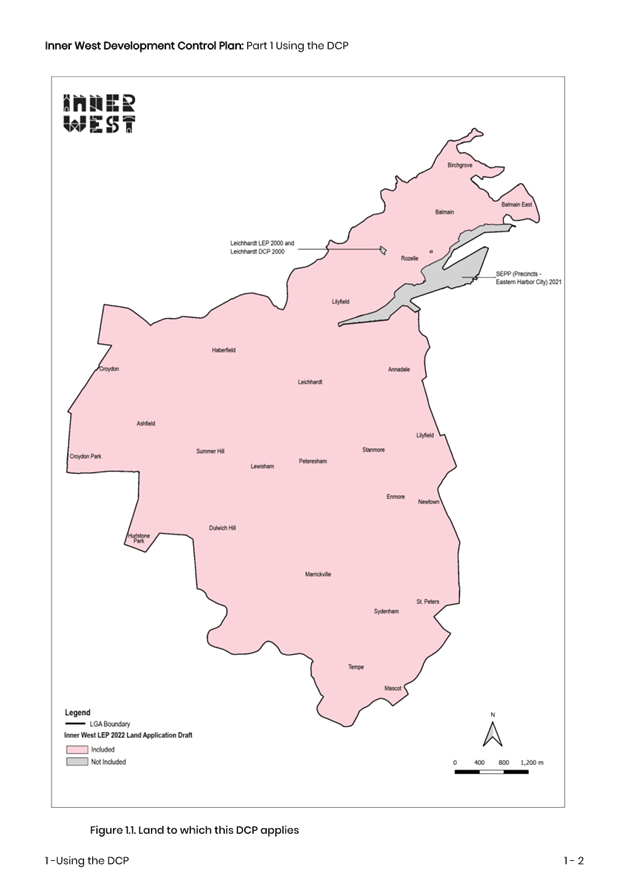
The IWDCP (Attachment 1) is a single, principles based DCP that applies to the entire Inner West LGA, excluding the Balmain Leagues Club Site, Rozelle. This site will remain subject to the Leichhardt DCP 2000 because the existing planning framework has facilitated the current development approval on the site and has calculated development standards such as floor space using an alternate method to the rest of the LGA. This is to facilitate any future modification proposed by the Club.
3. That Council develops the new DCP as a principles and objectives based instrument grounded in design quality, sustainability and climate resilience, and contextual responsiveness principles to prioritise design outcomes, provide flexibility for contextually appropriate development and enable professional judgment to guide site-specific design responses.
The IWDCP prioritises design outcomes and supports flexibility in site‑specific design responses. Design quality is addressed through the amenity provisions and land‑use controls in Part 3. Sustainability and climate resilience are addressed through DCP controls that are designed to complement and operate consistently with BASIX requirements under the State Environmental Planning Policy (Sustainable Buildings) 2022. Part 4 includes place‑based controls that support flexibility in design while ensuring development responds appropriately to local context.
4. That Council incorporates the Design Guide and all previous Council resolutions and adopted motions relating to development controls, including solar panels in heritage conservation areas and considers the transition from high, medium and low density areas.
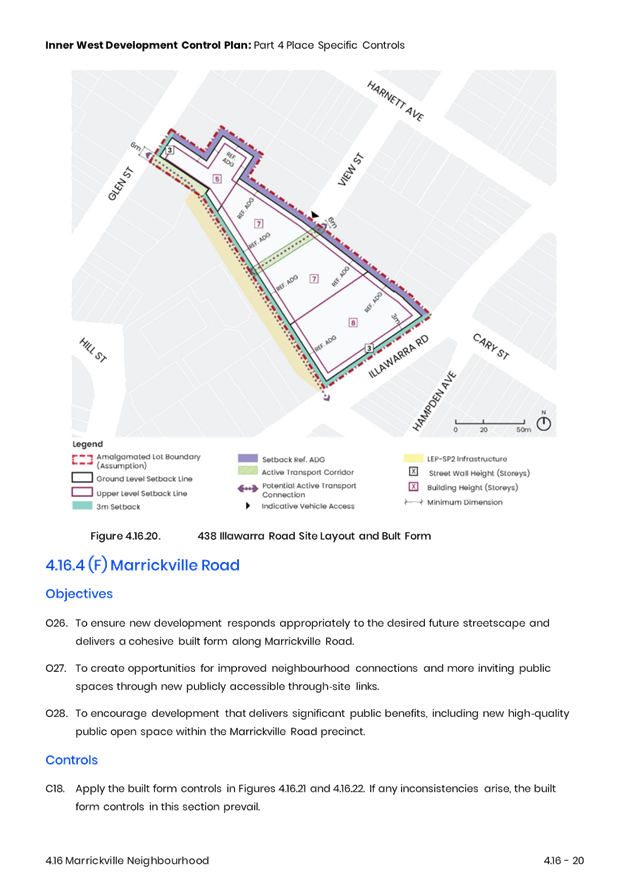
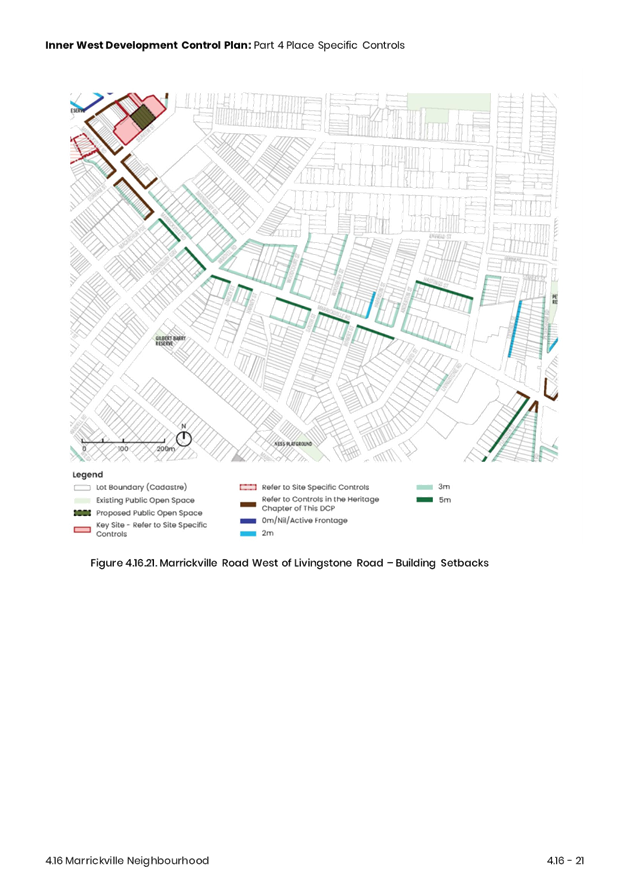
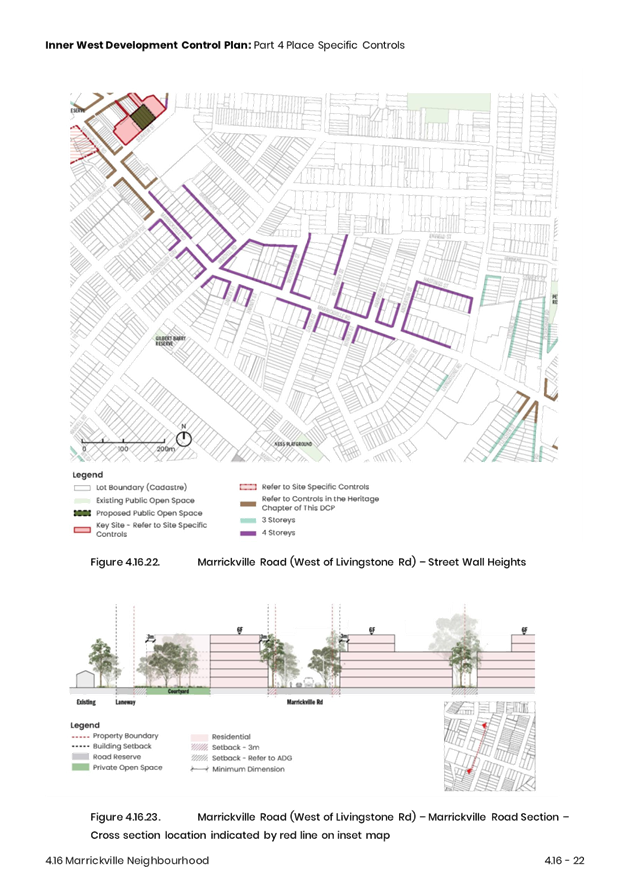
The IWDCP incorporates Our Fairer Future Plan Design Guide through the place‑based controls in Part 4, with relevant provisions also applied more broadly across the LGA where appropriate, including controls that manage transitions between different development densities.
All other relevant Council resolutions and adopted motions relating to development controls have been incorporated into the development of the IWDCP, as detailed in Attachment 2.
As mentioned earlier in this report measures to support the increased uptake of solar panels across the Inner West—particularly within heritage conservation areas have been included through a separate draft Solar Panels Policy in Heritage Conservation Areas. The Policy has broadened the criteria for approval of solar panels and enables eligible works to be assessed via a heritage exemption certificate rather than a development application. An approval from Council is required in a Heritage Conservation Area (HCA) in order for the installation to be lawful under the Environmental Planning & Assessment Act and regulations. This approach provides a faster and cheaper pathway for applicants and allows Council resources to be prioritised toward the assessment of development applications. Endorsement and concurrent exhibition of the draft Solar Panels Policy with the Inner West DCP is sought, and the draft Policy is provided at Attachment 3.
5. That Council examine the integration of the State Government’s new pattern book designs within the new DCP to standardise design elements and provide clear visual guidance for applicants and the community.
The State Government’s Pattern Book has been reviewed against the IWDCP, and the IWDCP is consistent with its principles.
6. That Council allocate the DCP review and consolidation as the first and priority project for the newly appointed City Architect to lead the DCP project and directly engage with local architects and planners, to ensure it reflects best practice.
The DCP review was established as a priority project for the City Architect on commencement. He has played a key role in finalizing the preparation of the document. Prior to the appointment of the City Architect there has been direct engagement with local architects and planners during preparation of the IWDCP through Industry Professionals Engagements, with further engagement programmed in the exhibition and engagement plan set out later in this report, to ensure the DCP reflects best practice.
7. That Council notes that the objectives of this DCP are to support high-quality, sustainable development outcomes and:
a. Reduce the number of matters proceeding to the Land and Environment Court;
b. Provide greater certainty for residents and applicants;
c. Streamline development assessment processes; and
d. Ensure consistency across the LGA.
The consolidation of the three existing DCPs into a single Inner West Development Control Plan supports more efficient and streamlined development assessment processes, ensures greater consistency in the application of controls across the LGA, and provides increased certainty for residents and applicants. The IWDCP has also undergone legal review to minimise ambiguity and reduce the likelihood of development matters proceeding to the Land and Environment Court.
8. That Council brings back a draft DCP to the April 2026 Council meeting for review prior to community consultation.
The draft Inner West Development Control Plan is provided in Attachment 1 for Council’s endorsement to exhibit in April 2026.
Further refer to Attachment 2 for Council officers response to other specific matters relating to the DCP from previous Council resolutions.
Consultation
Given the extended duration and complexity of the project, internal and external consultation has occurred in multiple forms over several years. This has allowed for a considered, well-informed, and balanced approach to the IWDCP. In addition to the preliminary consultation, the IWDCP will seek formal public consultation following the 21 April 2026 Council meeting.
Preliminary Consultation and Review
• Three (3) industry workshops with local architects and planners were held in 2024 and 2025 and the engagement outcomes incorporated into the IWDCP.
• Targeted internal consultation with relevant teams in Council.
• A survey distributed to Housing for All Local Democracy Group (LDG) members in 2026
• Targeted accessibility‑focused consultation with the Access LDG
• An internal legal review.
• An external peer and plain English review by a planning consultant and a plain English specialist.
Future Public Consultation
An Engagement Plan has been developed and includes:
· A four-week engagement period
· An online Your Say Inner West (YSIW) survey
· Email to YSIW subscribers
· Newsletter notification
· Targeted information and feedback sessions with Industry Professionals
· An evening drop-in community information event
· A workshop with Local Democracy Group (LDG) members as part of the Building Our Community combined LDG event
· A dedicated Strategic Planning email address for submissions and enquiries
· A Strategic Planning telephone hotline operating Monday to Friday, 9.00am–5.00pm, to respond to community and applicant enquiries
· Consideration of the IWDCP by the Inner West Architectural Excellence and Design Review Panel.
Electronic DCP (eDCP)
Council currently publishes its Development Control Plans (DCPs) as separate PDF documents. While this is common across local government, PDFs can be difficult to access and use. Users must download and store the files, navigation can be cumbersome, and it can be hard to find the relevant controls quickly.
To improve accessibility, transparency and ease of use, Council has developed an electronic DCP (eDCP) to be hosted on Council’s website. The eDCP enables users to read and navigate the DCP online, without first having to download lengthy documents, and makes it easier to find controls that apply to a proposal.
The eDCP is designed to work across devices, including laptops, tablets and mobile phones. It includes a search function and contents panel to help users move through the document. This will improve the experience for applicants, residents and practitioners and help people understand Council’s planning requirements.
A downloadable PDF version of the DCP will continue to be available for users who wish to print the document or access it offline.
LEGAL AND RISK IMPLICATIONS
The draft Inner West Development Control Plan will be exhibited in accordance with the Environmental Planning and Assessment Act 1979.
FINANCIAL IMPLICATIONS
There are no ongoing financial implications arising from the draft Inner West Development Control Plan. Costs associated with the engagement of external consultants for the development of the draft IWDCP have been accommodated within the existing Strategic Planning budget.
|
1.⇩ |
Draft Inner West Development Control Plan |
|
2.⇩ |
Previous Council resolutions related to the draft DCP |
|
3.⇩ |
Draft Solar Panels Policy |
|
|
Extraordinary Council Meeting 28 April 2026 |
Title: Leichhardt Park Aquatic Centre - Project Update
Prepared By: Peter Shields - Acting Director Property and Major Projects
|
That Council consider the matter contained in Confidential Attachment 1 at the Extraordinary Council meeting held on 28 April 2026.
|
STRATEGIC OBJECTIVE
This report supports the following strategic directions contained within Council’s Community Strategic Plan:
|
1: An ecologically sustainable Inner West 2: Liveable, connected neighbourhoods and transport 4: Healthy, resilient and caring communities |
BACKGROUND
The Leichhardt Park Aquatic Centre Project Upgrade involves works to its facilities. With Stage 1 works complete, the Stage 2 upgrade works include the construction of new heated 8-lane 50m pool and a heated 25m pool with associated works.
DISCUSSION
Council will move into closed session to deal with the Leichhardt Park Aquatic Centre – Project Update, for information which is classified as confidential under section 10A(2)(c) (of the Local Government Act 1993) that would, if disclosed, confer a commercial advantage on a person with whom the council is conducting (or proposes to conduct) business. Pursuant to section 10A(2), 10(2) and 10A(3) of the Local Government Act 1993, the media and public will be excluded from the meeting on the basis that the business to be considered is classified as confidential under section 10A(2)(c) of the Local Government Act 1993.
PUBLICATION OF CONFIDENTIAL BUSINESS PAPER
The Model Code of Meeting Practice prescribed by the Office of Local Government, and Council’s Code of Meeting Practice, requires confidential business papers to be published on Council’s website as soon as practicable after the information in the business papers ceases to be confidential. Council’s General Manager must consult with affected parties before publishing the information and provide reasons for why the information has ceased to be confidential.
Accordingly, this report recommends that Council consider the publication of this business paper, and Confidential Attachment 1, following the completion of the LPAC Stage 2 Upgrade (end of defects liability period), subject to consultation with affected parties.
|
Confidential Report - Leichhardt Park Aquatic Centre - Project Update - Confidential This attachment is confidential in accordance to information (Section 10A(2)(c) of the Local Government Act 1993) that would, if disclosed, confer a commercial advantage on a person with whom the council is conducting (or proposes to conduct) business. |